LOL X-Wings suck in X-Wing...now even Y's are better!

By Deadshane, in X-Wing

It's kind of like a title card in that way.

Effectively we have two types of ships in the game, and this has really been pretty much how we've always looked at it.

You have Generics and Named. Both are used for different reasons in different ways, and it's hard to compare the two really.

I don't think anyone really thinks you can compare a Rookie to Wedge accurately.

I don't see why you couldn't compare them, given that they have the statline in common.

But, I also think you can compare apples and oranges, given that they have the fact that they're both fruit in common. ;) (I generally prefer oranges, even if they tend to be more difficult because of the peel.)
I don't see why you couldn't compare them, given that they have the statline in common.

You can compare them point wise, although it's hard to quantify a lot of their abilities. How many points is Wedge's ability worth compared to Lukes?

Also as much as I respect the work MajorJuggler has done, I don't completely agree with everything he's said. There's far to many nuances involved in this game to break it down to pure formula.

Also I don't think he's ever tried to quantify the value of any named pilot, only the basic generic one.

You can compare them accurately. Go to Major Juggler. Ask him to compare them. review results.

I believe that MajorJuggler explicitly excludes named pilots, at least from his jousting calculations.

That's not to say that I think it's impossible to compare them, though... There are certainly lots of variables in abilities, but mostly PS... The cost of named pilots is very heavily tied to their PS, and (usually) has little to do with their abilities. In effect, you're typically paying for PS, and get some ability as a free bonus to go along with it.

Comparing Wedge and a Rookie is actually relatively straightforward. PS payment will almost always net Wedge the advantage over the target, and his ability effect is an easily quantifiable increase in damage output. Others will vary because the usefulness is more conditional - how often will Garven or Dutch provide a benefit? What's the value of Jax denying your opponent an offensive focus? What about Turr's free after-attack move? It can be difficult to separate those two things, though - Han beats out Chewie more for his PS than his ability.

When you have that many conditionals, comparison comes from experimentation. If you look at the Top 32 list very, VERY few named pilots survive - of the 52 named pilots in the game, only 13 (1 in 4) saw any use at all, and of those, close to half look to be single appearances (that one's hard to guess from the percentages, and I don't care enough to count it up). So that means somewhere around 1 in 10 named pilots in the game are competitive enough to appear at the top.

Players run experiments on these things every time they play a game. If named pilots worked, named pilots would get used.

Edited by Buhallin

1. I don't think it's a great indicator of power creep (at least with the numbers that we are seeing, if > 50% of the points spent were from the most recent wave, it would be different). It is a measure of what is effective in the current meta. Once Wave 5 becomes legal I expect that we will see an increase in A-Wings, Interceptors and Firesprays over what we had this year.

You say "effective in the current meta" like it's completely divorced from the actual game state. Yes, there is a bit of perceptive and local bias to a metagame state, but overall it is reflective of the underlying power level. That's especially true at a broad national event - a game state which is dependent on a corrupt local meta doesn't survive in a melting pot like Worlds.

Is it possible there's perfect list of TIE Advanced out there which is just being obscured because of a corrupt meta? It's possible, I suppose, but there's very little evidence to support that.

Again, I agree that what we have is not power creep in the traditional sense - in a way, I'd feel better if it were, because it would indicate that the devs had firm control of the game, which I'm not convinced they do... But the top squads at Worlds certainly is a meaningful data point, and if you're going to argue the competitiveness of a given wave, doing so without acknowledging that more than 90% of Wave 1 comes from TIEs, and 90% of Wave 2 comes from Falcons, is missing the point, at best.

Almost all of the waves are heavily weighted towards one particular ship though. The wave 4 numbers are a little more balanced but it's essentially split between two ships.

Assuming that 58 point Dash will cause the meta to shift once wave 5 is legal, I'd expect to see the number of Falcons drop and the ships like A-Wings and Interceptors which do poorly against Falcon's but are better able to get into Dash's donut to increase. I'd imagine that a lot of the increase in A-Wing usage may result in a decline of Z-95s as people are spending a couple of more points to get more nimble filler. That's not tied to the power level of the individual waves.

Top 32 results are useful but I think what they show is the ships and builds that are consistent and not very swingy. Ships in a build that crushes opponents 75% of the time but loses the 25% because the dice failed at the wrong time aren't under-performing but wouldn't be something that you'd want to bring to Worlds.

Could FFG balance things better? Sure. Is each wave progressively more powerful than the last? I don't think so.

Y-Wings are Utility Ships more so with MW and their access to Bombs.

The X-Wing's Role is to provide Elite Named Pilots. Much like the Interceptor does for the Empire.

How many times have you seen Alphas, or Avengers?

While Rookies at 21 points might be loosing their spots there's a long list of 21 pointers that they potentially lose out to.

------

Rookie Pilot — X-Wing 21

Gold Squadron Pilot — Y-Wing 18
Autoblaster Turret 2
R2 Astromech 1
BTL-A4 Y-Wing 0

Airen Cracken — Z-95 Headhunter 19
Wingman 2

Lieutenant Blount — Z-95 Headhunter 17
Opportunist 4

Bandit Squadron Pilot — Z-95 Headhunter 12
Assault Missiles 5
Shield Upgrade 4

Kyle Katarn — HWK-290 21

Roark Garnet — HWK-290 19
Jan Ors 2

Rebel Operative — HWK-290 16
Ion Cannon Turret 5

Green Squadron Pilot — A-Wing 19
Push the Limit 3
Chardaan Refit -2
Veteran Instincts 1
A-Wing Test Pilot 0

Green Squadron Pilot — A-Wing 19
Expose 4
Chardaan Refit -2
A-Wing Test Pilot 0

------

Once you start pressing towards the 25+ point range Investment Favor the X-Wings hold is quite strong.

But It's also around here that the Generics are still jockeying for a spot. But it's those 3 Named Pilots that would probably be taken before a Generic of similar cost.

------

"Hobbie" Klivian — X-Wing 25

Biggs Darklighter — X-Wing 25

Tarn Mison — X-Wing 23
R7 Astromech 2

Red Squadron Pilot — X-Wing 23
R2-D6 1
Veteran Instincts 1

Rookie Pilot — X-Wing 21
R2-D2 4

Rookie Pilot — X-Wing 21
Engine Upgrade 4

Rookie Pilot — X-Wing 21
Proton Torpedoes 4

------

The Role of the X-Wing is "Heroic Presence" not generic gunship.

Top 32 results are useful but I think what they show is the ships and builds that are consistent and not very swingy. Ships in a build that crushes opponents 75% of the time but loses the 25% because the dice failed at the wrong time aren't under-performing but wouldn't be something that you'd want to bring to Worlds.

A ship that loses you 25% of games for you is not a good ship. Reliability is a major component of quality, and that's true in any environment, not just Worlds.

Edited by Buhallin

I don't see why you couldn't compare them, given that they have the statline in common.

You can compare them point wise, although it's hard to quantify a lot of their abilities. How many points is Wedge's ability worth compared to Lukes?

Also as much as I respect the work MajorJuggler has done, I don't completely agree with everything he's said. There's far to many nuances involved in this game to break it down to pure formula.

Also I don't think he's ever tried to quantify the value of any named pilot, only the basic generic one.

Sure, there are nuances, but how important are those nuances really?

In a complex and nuanced environment you frequently have to choose the degree of fudge that you're willing to live with. If Major Juggler chooses to not MathWing it out, then I'm pretty sure that I'm not going to work it out. At that point, I might as well just keep matters analytically simple and assume that the nuances aren't so important that they'll render my analysis invalid.

What Major Juggler does is that he has theory (MathWing) and empirical data (the regionals/nationals/worlds reports). If the latter seems to match the expectations of the former, then I think there's justification in saying that the former is sufficiently valid.

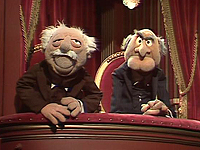
Until you can provide a model that can compete, then you're left to being little more than one of those old muppets in the gallery.

Edited by Mikael Hasselstein

A ship that loses you 25% of games for you is not a good ship. Reliability is a major component of quality, and that's true in any environment, not just Worlds.

No, it's very environment-dependent because the environment determines your tolerance for losses. X-Wing tournaments are on the extreme low end of loss tolerance, losing even a single game can drop you out of the top spots and if you lose a second game you might as well pack up and go home. But let's say instead that matches are best out of three games followed by a top-8/16 cut like in MTG, and, like MTG, there are enough rounds that even two-loss players are still competing. Suddenly that ship that loses 25% of your games but overwhelmingly wins the other 75% becomes a very good idea. Over an entire tournament you're almost certainly going to lose some games, but you have a fairly low chance of losing 2/3 games in a match and then doing it another 1-2 times to knock you out of the tournament.

Until you can provide a model that can compete, then you're left to being little more than one of those old muppets in the gallery.

The point is that it is impossible to build a model that accounts for everything in X-Wing because you can't quantify everything. Jousting numbers are great when you like up a bunch of naked generic pilots and roll some dice, and you really can't argue with the math in that situation. But you can't assign a similar value to things like having a free boost action, or the threat of a Blount assault missile changing how you set up your formation.

So yes, we should pay attention to MajorJuggler's jousting math, but we need to recognize that it has its limits and not treat it as some kind of indisputable value for every possible ship choice. And the fact that nobody has done the impossible and created that indisputable value should not stop us from recognizing the limits of jousting math.

Edited by iPeregrine

I don't actually think that looking at the top 32 results from Worlds is a good way to judge power creep and the general viability of ships. The specific requirements of that tournament will skew the results in favor of consistently performing upgrades and ships and ships that fit nicely into whatever the current meta is.

For reference, also see:

Tournament Results

2014 Worlds Results

2014 Nationals Results

2014 Miscellaneous Large Tournaments Results

2014 Regionals Results

2014 Store Championship Results

2013 Worlds Top 16

(Note: this list is linked in the thread in my signature)

It's kind of like a title card in that way.

Effectively we have two types of ships in the game, and this has really been pretty much how we've always looked at it.

You have Generics and Named. Both are used for different reasons in different ways, and it's hard to compare the two really.

I don't think anyone really thinks you can compare a Rookie to Wedge accurately.

Wedge is actually an easy one to calculate, because his ability directly translates into increased damage, which can be brute force calculated.

I don't see why you couldn't compare them, given that they have the statline in common.

You can compare them point wise, although it's hard to quantify a lot of their abilities. How many points is Wedge's ability worth compared to Lukes?

Also as much as I respect the work MajorJuggler has done, I don't completely agree with everything he's said. There's far to many nuances involved in this game to break it down to pure formula.

Also I don't think he's ever tried to quantify the value of any named pilot, only the basic generic one.

I agree that not everything can be broken down into formula, especially some of the named abilities that cannot be directly translated to probability models, like Biggs. However, I do at least note where the total predicted ship efficiency is uncertain, and why. You can also get the "required efficiency" of a ship out if it's jousting efficiency; i.e. regardless of what it's dial/etc is, you need to be [this] much better than its stat line for its cost to get your investment back.

I have actually done a lot of work to update the model. Wedge is specifically calculated. Vessery is calculated. Super Dash is calculated. Many of the others I simply assign a value of 1 point for their ability and then work backwards to get their PS1 cost. I have also updated the methodology to be more accurate. Ship durability, PS1 cost, and general curve fit are all much more refined now. The only major thing to nail down is the precise action economy, and that will take a significant amount of research.

TL;DR: I'll be updating this thread soon, and it will have a TON of updates in it, including all the spoiled wave 5 and wave 6 ships.

Until you can provide a model that can compete, then you're left to being little more than one of those old muppets in the gallery.

The point is that it is impossible to build a model that accounts for everything in X-Wing because you can't quantify everything. Jousting numbers are great when you like up a bunch of naked generic pilots and roll some dice, and you really can't argue with the math in that situation. But you can't assign a similar value to things like having a free boost action, or the threat of a Blount assault missile changing how you set up your formation.

So yes, we should pay attention to MajorJuggler's jousting math, but we need to recognize that it has its limits and not treat it as some kind of indisputable value for every possible ship choice. And the fact that nobody has done the impossible and created that indisputable value should not stop us from recognizing the limits of jousting math.

I don't think anyone treats it as being indisputable. And, remember, it's not just jousting math; it's backed up by the empirical assessments as well.

Edited by Mikael Hasselstein

I don't actually think that looking at the top 32 results from Worlds is a good way to judge power creep and the general viability of ships. The specific requirements of that tournament will skew the results in favor of consistently performing upgrades and ships and ships that fit nicely into whatever the current meta is.

For reference, also see:

Tournament Results

2014 Worlds Results

2014 Nationals Results

2014 Miscellaneous Large Tournaments Results

2014 Regionals Results

2014 Store Championship Results

2013 Worlds Top 16

(Note: this list is linked in the thread in my signature)

Just a cursory examination of the other threads makes it look like while Falcons and TIEs are consistently over represented that there is a decent amount of variety among the other ships doing well at tournaments. Is that an accurate statement?

I don't think anyone treats it as an indisputable value.

Maybe not literally indisputable, but I see a lot of posts that give way too much credit to the math and don't acknowledge its limits.

And, remember, it's not just jousting math; it's backed up by the empirical assessments as well.

No, it is just jousting math. The model explicitly assumes that all ships are jousting until one side is destroyed. The things that deviate from this model are subjective personal opinions about how much an action/ability/etc is "worth". The empirical data from tournament results does support the conclusions about ship values, but isn't directly used in calculating a ship's value. It just demonstrates that jousting math is a very important factor in who wins a game of X-Wing.

I don't think anyone treats it as an indisputable value.

Maybe not literally indisputable, but I see a lot of posts that give way too much credit to the math and don't acknowledge its limits.

That's because it's the only real game in town. Nobody else has done MJ's amount of homework on the matter with as much transparent methodology behind it.

No, it is just jousting math. The model explicitly assumes that all ships are jousting until one side is destroyed. The things that deviate from this model are subjective personal opinions about how much an action/ability/etc is "worth". The empirical data from tournament results does support the conclusions about ship values, but isn't directly used in calculating a ship's value. It just demonstrates that jousting math is a very important factor in who wins a game of X-Wing.

The empirical data are a test of the theory, and the empirical data fails to reject the theory. Again, until you have a method, a model, and an empirical test that performs better than what MJ has, you're no better than a grouchy Muppet in the gallery.

1_statler_waldorf.jpg

Except that aside from the Gold, you can't get them for 21 points.

And yes, every ship has a place where it shines most.

A 21pt rebel Y wing is not superior to a 21pt rebel X wing. One-on-one, I'm giving that fight to the Xwing. Superior dial, superior firing range

Though I might give the overall edge to a 21pt Green.

Except the basic premise of the OP was that a 21 point Gold is indeed better than a 21 point Rookie. On the Gold, you are looking at an A4 title, Autoblaster turret, and an R2. At that point cost, the Gold has a better dial, significantly more durability, and a dramatic increase in Range 1 firepower that compensates for the R2 and R3 reduction. In fact, the Gold likely has slightly greater overall firepower than the Rookie due to the fact that fixed forward arcs are unable to maintain long range.

MJ's model is very valuable, but limited as has been noted. It is also true that it is supported by the empirical data. This is because shooting and being shot at are something pretty much every ship you bring is going to do at some point, so a representation of how good your ship is at those two tasks is valuable information to have.

Edited by KineticOperator
MJ's model is very valuable, but limited as has been noted. It is also true that it is supported by the empirical data. This is because shooting and being shot at are something pretty much every ship you bring is going to do at some point, so a representation of how good your ship is at those two tasks is valuable information to have.

Indeed.

In order to conceptualize about the non-calculables, perhaps it's worthwhile thinking about this in the way we think bout symmetric vs. asymmetric warfare. The idea is that the better you are at conventional warfare, the more you will want to lure your enemy into a conventional war (battle tanks, soldiers, close-air-support bombing). Conversely, the more that your enemy outclasses you at conventional warfare, the more you will want to shake up how things are done (urban guerrillas, terrorism, covert activities).

To bring it home: if your squad is great at jousing, try to force your opponent to joust with you. If your opponent outclasses you at jousting, try to lure him into the rocks and outmaneuver him.

So, at that point, knowing the jousting values is very valuable, because you'll have an idea of what you'll be having to do in order to make the odds favor you.