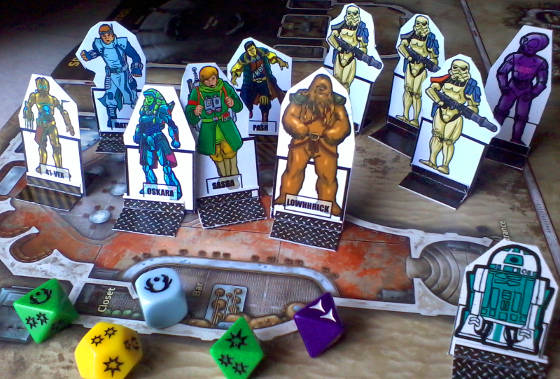
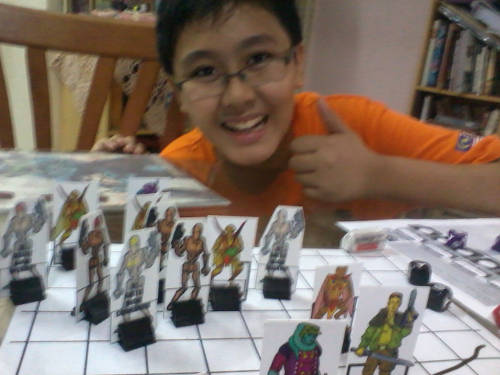
I'm firmly planted with Grimmshade as far as experience and usage. I think many players have a very limited and particular view on minis based on Pathfinder or D&D 4. You say "mini" and people automatically think about grids, movement rules, and "board game" play. That's just one tiny slice of the pie. Even my best Mind Theater players are hard pressed to keep up with everything in an urban combat when there are 5 player characters, 10 allies, 20 enemies, and environment/terrain features all over the scene. In-depth fleet battles with AoR will no doubt fall under the same spotlight. The whole abstract nature of narrative play allows for huge, expansive encounters, not simply 4 heroes vs. a cube in a hallway type scenarios. Having a small, aesthetically pleasing visual representation on the table generally encourages faster, smoother narrative that focuses on the actual engagement, rather than details of how the stage is set. My table sees a nice mix. Many times there's nothing on the table outside of character sheets and the whole thing is worked out verbally. Other times we have a table full of minis and maps. The worst thing I could do as a GM, in my mind, is subscribe to one method or another exclusively and force it on my players. As always, your mileage may vary.
balanced and flexible. do you do yoga, keeop?

I do, actually  Namaste.