Action card vs. Henchmen

By Treehorn, in WFRP Rules Questions

I got a question regarding effects of some action cards against henchmen.

One of my players used his Corps-a-Corps card against a group of henchmen. A successful roll results in the target getting knocked down (prone).

Now, do I ignore the prone effect and just calculate the damage (if any) or does it mean that the whole group of henchmen gets sweeped off their feet?

He let his Coup-de-Grace card follow which meant that the whole group was annihilated in one turn. That's a nasty combo which can lead to your beloved antagonist's demise in no time. That particular character is able to deal out up to 30 damage in one turn. llorando.gif

So I wonder how to deal with these kind of cards when they are played against henchmen.

(Is it just me or do others also got the impression that monster action cards are way inferior and less versatile compared to the player's cards?)

T.

From what I've read (just got into 3rd edition), many GMs give player action cards to NPCs in order to ramp up difficulty some, where suitable.

Indeed

PC action cards are more versatile and powerfull than NPC action cards. I would recommend you

1) Give PC action cards to your monsters

2) Stop using henchmen

I don't know if it 's "right" according to the rules (and I don't have my rulebooks here), but I generaly only let the players kill one henchman per action used.

As an example:
A henchmen group with Toughness 4 and Soak 1:
A hit making 20 damage to a group of henchmen for example would only kill 1 of the henchmen in the group, just as a hit for 10 damage would kill one.
There are actions that hit multiple opponents, in those cases all the henchmen in the group would be hit (and killed if the damage was enough to kill them).

I've found that this makes henchmen worthwhile, I have 4 players so two groups of henchmen will generally take 2 full rounds of fighting for my group to kill if all of them are focusing on the henchmen groups. I at least find henchmen very useful in combat. Because of this they mainly use their melee strike/ranged shot when dealing with henchmen.

To answer your questions (how I would rule it in my games that is):
I'd only allow the Coup-de-Grace to kill one henchman in the group, making it less worthwhile against henchmen.
Corps-a-Corps would only do damage (if any) to one of the henchmen in the group but it would knock the whole group prone. You could say that the henchman hit by Corps-a-Corps falls and trips the rest of the group, or falls into them knocking them all on their asses.

The henchmens (only) advantage is their numbers, and by not allowing a single hit to kill more than one henchman at a time this advantage becomes more apparent.

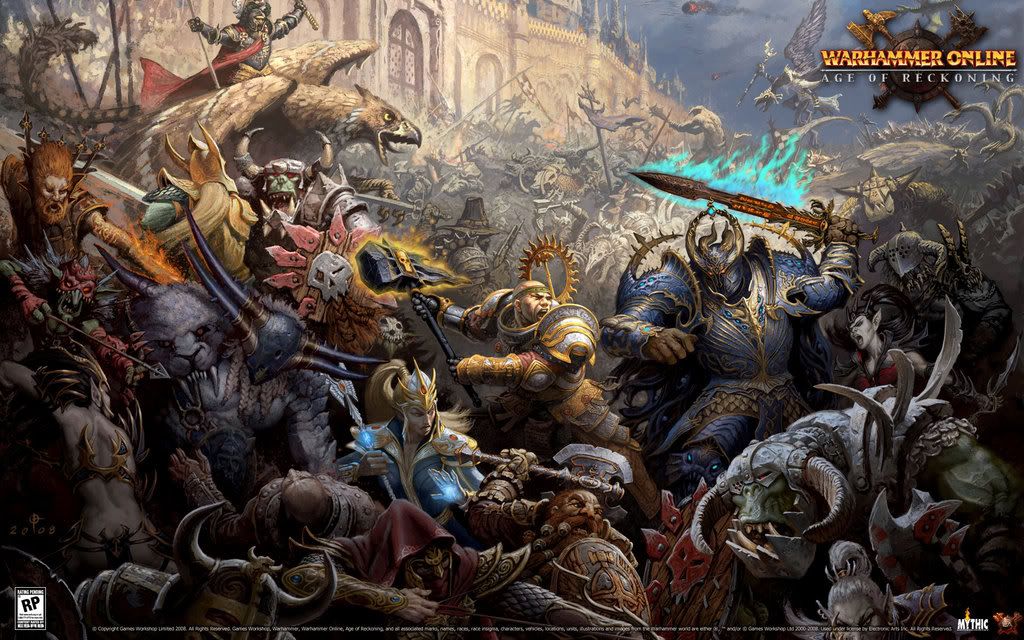
Henchmen are adversaries packs made to be crushed ! Think about those baddies in grey in the back of the huge wallpapers from warhammer battle...

If not in an army battle, you may also use henchmen to brawl some no-name team of putty patrolers from power rangers

You may only use henchmen to represent real ennemies when your players are true beginners because PCs are yet baddass at creation... Or if you're in a hurry because they die quicker once they don't have anymore wounds points (instead of real NPC who need >To critical wounds + no wounds points)

I allow actions vs Henchmen to "affect the lot of them" - it's to permit suitably heroic actions etc. The musketeers romping through nameless guardsmen until a worthy opponent shows up.

This does have to fit with narration and effects. If your arrows kill 4 henchman then archer that means you expended 4 arrows (we're not getting so uber heroic it's one arrow through four at a time) - okay? (the elf archer in the party goes through lots of arrows, has nearly run out once or twice). Nobody is using blackpowder weapons (yet) so not sure how I would handle that. The player has to be able to narrate something believable given the situation, action they used and if so, fine.

On the PC actions for NPC's, I do give them PC actions at times but mostly for "improved" NPC's and only if there are no NPC cards that suit/fit. The way Schullman in Gathering Storm had PC spells. Baron Manfred von Holzenhauer the "duelist" has several PC duelist type actions but he's meant to be kick-ass in my game.

On using henchmen or not, I use them fairly often myself. They're nice to give that effect of "you took on a mess of goblns" but 3/4 of the mess was henchman groups with a shaman, boss goblin and another specialist goblin being the rest of them. I like the mob gets extra fortune dice approach to their actions effect.

Rob

Actions are abstract, so as suggested a single action does not necessarily mean it is a single strike (although it could be).

Another thing to keep in mind is that Henchmen are made to be slaughtered by the dozens. Almost always single actions attacks, if they hit, will kill multiple henchmen. Henchmen are designed to simulate movie heroics where the heroes kill dozens of faceless enemies quickly and easily. Gimli and Legolas killing orcs at Helms Deep, etc. They are made and intended to die fast.

If you want more challenging opponents, use the enemies as single foes rather than henchmen. Instead of having a single henchmen group of 8 goblins, send 8 individual goblins. Those 8 individual goblins are significantly more dangerous and difficult to fight than the single henchmen group of 8 goblins.

Treehorn said:

One of my players used his Corps-a-Corps card against a group of henchmen. A successful roll results in the target getting knocked down (prone).

He let his Coup-de-Grace card follow which meant that the whole group was annihilated in one action. That's a nasty combo which can lead to your beloved antagonist's demise in no time. That particular character is able to deal out up to 30 damage in one turn. llorando.gif

So I wonder how to deal with these kind of cards when they are played against henchmen.

T.

Can you kindly telle me how a chacacter can deal out 30 damage with one attack?

With a 2handed weapon and a strengh of 6 (the maximum for a human) you can deal 7+6 damage= 13

Some cards (reckless cleave for exemple) double your strenght or damage value of the weapon but I still can't make the 30 damage you mentioned.

30 damage is a bit much. There are some careers, such as the Zealot and Swordmaster, that can artificially increase their damage by an additional amount as well. So 20-25 damage is possible for such PCs. It would take something extraordinary, I think, to reach 30.

Giantslayerability : +1 damage to all melee attacks

Str: 6 (+1 white die)
Tou : 5
Agi: 2
Int: 2
Wil: 3
Fel: 2

Weaponskill: Trained and Zweihander specialized

The Zweihander has a DR of 7+1, so his damagepotential is 7+6+1+1=15

Action Cards: Bloodspatter, Mighty Swing, Reckless Cleave, Wrath of Morgrim, Improved Parry, Riposte, Corps-a-Corps and Coup-de-Grace .

Talents (equipped): Exploit a Weakness (+1 damage vs critical wounded opponents), Relentless Approach

The player's favourite approach: Corps-A-Corps to knock his opponent prone. Based on his high Str he often gets enough successes that he doesn't just knock his adversary prone but also is allowed to do damage -2 (13 max). Now comes his reaction card Coup-de-Grace into play (engaged with a target who just has been knocked prone). As a consequence he might be possible to add another 17 damage (damagepotential with three successes (+2)).

I know it's a worst case scenario but those 30 damage happend more than once in my sessions. I know that there is still soak and defense to subtract. The char is min-maxed and is bound to pick up some insanities quickly due to his low agi and mental attributes. But until then he hacks away pretty much through anything I throw at him.

Another thing is that I (feel I need to) grant the player another fortune die against knocked down enemies.

That is 30 damage spread through two actions!

therefore that is

corps-a-corps # of wounds caused = 13 - damage reduction (To + Soak)

coup-de-grace # of wounds caused = 17 - damage reduction (To + Soak)

As a result, this combination will kill 1 average monster (like a Gor or an Orc) per turn.

Yep, two actions but one turn .

And that char is able to put even stronger opponents than one Gor to rest in one turn. Monsters in 3ed rarely have above 20 wounds. And To + Soak is rarely +4. So even standard Rat Ogres or even Trolls might be put down in one round by this Slayer.

That's not 30 damage. That's 13+17 damage.

Against a stone troll the difference after soak would be

30 damage = 21 wounds

13+17 damage = 12 damage

A very significan difference!!!

If you're playing with the higher lethality optional rule... ditch it. The game doesn't need it and isn't balanced for it.

Agreed with Gallows. There is a significant difference. That might be 30 "potential" wounds, but since it is done by two hits, toughness and soak are subtracted from both hits, which could significantly reduce the actual amount of damage taken. A strong opponent might soak as much as 8 per hit, so instead of 30 wounds inflicted, it might be half that in actual wounds. Yes, it will hurt ... but WFRP3e combat is bloody. Any two hits from a powerful opponent will make most foes hurt. Turn that on the players, for example. If the Slayer had the same happen to him, he'd be hurting too.

As a GM, if you dislike this combination ... use defensive reaction cards and A/C/E dice to prevent or minimize the Corps-a-Corps. It can be done. Or, throw an additional enemy at the PCs in each combat, specifically assuming the Slayer will kill one enemy with this combo.

In fact, it might be funny to design an enemy to use this exact combination against the Slayer at some point ... just to see the look on his face. gran_risa.gif demonio.gif

I had a field day in D&D 3.5 when I turned my specially created Fighter/X/Y uber class-combo spiked chain wielding, improved trip NPC onto the party.

Basically, don't be afraid to turn their own tricks against them. :)

Hehe did that with immobilizing shot a few times as the players really used it a lot in one particular session. What you have to realise as a GM is that it's your own fault. I had let them abuse immobilizing shot, because I hadn't set up the encounters with some ranged opponents and such.

I also had a shield wall of NPCs using guarded position charge the players. I try to find ways to challenge the players, but I'm also fair, so if they find a way to deal with the encounter than I hadn't thought of, they may win a fight easily that I had planned as difficult. It has happened only a few times, but it was actually good fun :)

Sure, that's one turn. But then the slayer has a recharge of 3 and 4 on those cards, so to do the same combination again the slayer has to wait for 3 turns. Also, Corps-a-Corps has 2 purple dice as a difficulty to start with. Use more active defences and guarded positions with the monsters the slayer's fighting. Adding a lot of negative dice to the pool might make him end up with 1-2 successes or even no successes at all. I'd surely defend myself if a crazed slayer came running with a Great Weapon.

Furthermore you do not have to hand out fortune for those knocked prone, Coup-de-Grace has this factored in allready as the action adds a fortune. Corps-a-Corps has a specific boon line which gives the allies a fortune die when attacking the target.

Lastly, does it matter that he does a lot of damage? After all, killing is what slayers do. It's almost the only thing they do so at least he does that well and he can still only kill one enemy per turn, so a larger number of enemies could prove more challenging (the slayer could still only take out one enemy per turn when facing a lot of opponents with a low number of wounds).