Proper Tournament Etiquette

By FATMOUSE, in 1. AGoT General Discussion

First, let me say that I have never taken an intentional draw in a game. I have been in a game where a friend conceded to me at Gencon (Sam Tham) in the final round of swiss, and that concession resulted in me moving to single elimination and Sam sitting out (which he knew would happen before he conceded). Was that unsportsmanlike because we didn't actually play the game?

I can't say I would never take an intentional draw, but so far, my pride just doesn't let me do it. All that being said, I feel people are making up their own definition of "unsportsmanlike". More than a few have let personal emotions and feelings dictate how they look at that term.

I hate to be "that guy" that brings actual definitions of words to an arguments, but here goes...(from one of the many online dictionaries)

unsportsmanlike - violating accepted standards or rules

Those of you that keep calling the taking of an intentional draw unsportsmanlike, I think you should change the adjective you use. If you want to say it is distasteful to you? Fine. It violates your own spirit of tournament competition? Fine. But unsportsmanlike? Uhh, I don't think so.

I completely agree with Finite that many of us come to win a tournament. I know I do. And if the rules allow for draws, then there is nothing unsportsmanlike in taking the draw.

Now, I am really intrigued by Fatmouse's proposal. It has been a long time since Game of Thrones allowed winners and losers in a game where someone did not meet their victory condition, but it has been done (pre-Valyrian I think). And anyone who has run a tournament knows that ties muck up the swiss rounds.
Dobbler said:

I hate to be "that guy" that brings actual definitions of words to an arguments, but here goes...(from one of the many online dictionaries)

unsportsmanlike - violating accepted standards or rules

This is really no different than what Stag said and doesn't support either side of the issue more than any other. Here, we're either defining "sportsmanlike" by the codified rules alone, or a little deeper by asking people to hold to additional (albeit potentially subjective) standards of behavior. "Violating accepted standards or rules" doesn't clarify anything when participants feel that there are both standards and rules involved.

Dobbler said:

Now, I am really intrigued by Fatmouse's proposal. It has been a long time since Game of Thrones allowed winners and losers in a game where someone did not meet their victory condition, but it has been done (pre-Valyrian I think). And anyone who has run a tournament knows that ties muck up the swiss rounds.

Until Agendas. The problem being that no one could agree whether "14 out of 15" beat "16 out of 20." As long as different win conditions exist, declaring winners and losers when no one has met their victory condition can get sticky. And ties don't muck up the Swiss pairing that much, particularly since most people use some kind of software these days, anyway.

ktom said:

This is really no different than what Stag said and doesn't support either side of the issue more than any other. Here, we're either defining "sportsmanlike" by the codified rules alone, or a little deeper by asking people to hold to additional (albeit potentially subjective) standards of behavior. "Violating accepted standards or rules" doesn't clarify anything when participants feel that there are both standards and rules involved.


Until Agendas. The problem being that no one could agree whether "14 out of 15" beat "16 out of 20." As long as different win conditions exist, declaring winners and losers when no one has met their victory condition can get sticky. And ties don't muck up the Swiss pairing that much, particularly since most people use some kind of software these days, anyway.

But not taking intentional draws are not an accepted standard. If they were, we wouldn't be having this discussion. There are people who don't like them, but that doesn't make then a "standard" at all. As you mention, there is much subjectivity there, which makes it an opinion, not a standard.

And I don't see Agenda's mucking up power total at all...you simply make the rule "He/She who is closes to their victory condition wins. So 14 out of 15 beats 16 out of 21. And 9 out of 10 beats 13 out of 15, so on and so forth.

Dobbler said:

As you mention, there is much subjectivity there, which makes it an opinion, not a standard.

I think you are looking at standards the wrong way. lets look at the food industry for example. There are minimum requirements for cleanliness as proscribed by some board (aka the rules). then there are the standards each establishment holds itself too (i.e. its own opinion of what is right or not). Mcdonalds, the local diner, and 5 star places all have different standards of cleanliness and while they are all acceptable under the rules certain people prefer different sets of standards and while either go to one of those places or not based on those standards. therefore its is fine for people to hold intentional draws up to differeing sportsmanship standards.

That being said, I personally would not take an intentional draw (not because I think they are bad or unsportsman like, but because I would be bored even playing a casual game. One of the reasons I go to tournaments is to play at a different level (or at least try to...) then I do at my casual game nights). I'm also not going to get mad at someone for taking an intentional draw, its their choice and while its not a desicion I would make, I won;t bregrudge them for it.

Interesting. Here's my defintion:

un·sports·man·like (n-spôrtsmn-lk, -sprts-)
adj.
Not displaying the qualities or behavior befitting a good sport.
from: http://www.thefreedictionary.com/unsportsmanlike (with oen google search)

What's a good sport then? Why, let's look at what defines sportsmanship in whole:

Sportsmanship is defined as:

playing fair
following the rules of the game
respecting the judgment of referees and officials
treating opponents with respect

from: http://kidshealth.org/teen/food_fitness/sports/sportsmanship.html

So is it fair to collude with an opponent to take an intenional draw to ensure you make the elimination round? I say its clearly not. Fatmouse and Finite have different defintions - that i completely disagree with. And clearly so does the majority of the community.

Sorry dobbler; didn't realize I needed to spell out the deifintion. But my assertion was not based on emotion - it was very much based on what my sense of fairness entails. To ahve a fair result demands that all competitors try their best, under the ruels to win their competitions. Not trying to win a scheduled game, whiel legal is not fair to the competitors who do have to play their games out. Hence: not sporting. Period.

Lars said:

Dobbler said:

As you mention, there is much subjectivity there, which makes it an opinion, not a standard.

I think you are looking at standards the wrong way. lets look at the food industry for example. There are minimum requirements for cleanliness as proscribed by some board (aka the rules). then there are the standards each establishment holds itself too (i.e. its own opinion of what is right or not). Mcdonalds, the local diner, and 5 star places all have different standards of cleanliness and while they are all acceptable under the rules certain people prefer different sets of standards and while either go to one of those places or not based on those standards. therefore its is fine for people to hold intentional draws up to differeing sportsmanship standards.

As long as you are not holding others to your standards. You can't expect others to only go to 5 star places if that is all you will accept.

What I am seeing is numerous different people defining spoprtsmanship (in different ways) and then trying to hold someone else up to that. I was always taught to never hold others up to your own standards. I think that is the valuable lessen here. Different people have different standards and as long as the system allows for it people will do it and there is abasolutely nothing wrong with that even if your standards will not allow you to do it.

I have been on the outside looking side of the intentional draw. Not once did I blame the ID on me not advancing. I said "If I had played better then I would be in."

rings said:

Not if everyone can scout, right?

Wrong. Those with larger metas working together can scout out every close or drawn out game and over a roound or two have scouted every deck in a tournament giving them a much higher advantage than someone who comes with a couple to no meta mates. Just because it is impossible to completely stop is not a reason not to curtail it where it potentially interferes with others ability to play the game. If I am playing a game and I know someone is sitting and taking notes, physical or mental on my plots and my strategies it might affect my ability to play. That is just uncool. anyone who is doing so, knowing that it may make people uncomfortable is not being a good sport in my book. I see little difference in that than the person you are playing doing something they know annoys or distracts you to take you out of your game. Either your skill and deck are good enough to win on their own or they are not.

Personally I'd be a lot happier with a blanket rule that said players may not watch other players games while they are still in the tournament. Let them play their last opponent again or go grab a smoke, or coffee, or read a book. I'd add to that that discussion of other players decks or tactics is discouraged. Sure you can't really enforce this rule, but a mature player base should be able to police itself.

Stag Lord said:

So is it fair to collude with an opponent to take an intenional draw to ensure you make the elimination round? I say its clearly not. Fatmouse and Finite have different defintions - that i completely disagree with. And clearly so does the majority of the community.

What if it isn't in the ending rounds of swiss? What if it is in the first round of swiss? Does that make a difference? And again, you use a word which implies cheating : "Collude". And I don't think they cheat anyone out of anything. Everyone has a right to win all their games. If you win all your games it doesn't matter who else does what.

Look Stag Lord, I actually agree with you that I wish it didn't happen. Like I said, I've never done it. But if someone is operating within the rules of an event, I am definitely not going to throw around a term like unsportsmanlike, which I think is one of the greatest insults you can give someone who is competing.

finitesquarewell said:

I haven't really seen any effective argumentation here as to *why* it's unsportsmanlike; it just seems that most of you find it shady for reasons which, when broken down, don't make much sense logically.

(2) "You came here to play, right? So play, for cryin' out loud" (ktom), or "As a player, I enjoy playing too much and get too few opportunities to play to want to pass up on a game" (LetsGoRed), or "You came to play. Put on your big boy pants and play all the games out" (Dormouse).

This is simply refuted by the fact that when I draw with an opponent, I often proceed to play a game with them (whether its with our tournament decks, or with other decks). In fact, because there's less on the line in a relaxing game post-draw, and thus less need to strain over the more difficult play decisions, I sometimes get multiple games in instead of just one. There are other reasons I'd rather do something else than playing out a strategically important game, too. If I draw with Dan or Corey, part of it is that I just don't want to play against either of them. When we show up to a tournament together, we know each others' decks card for card, and have played each of the match-ups many times over during preparation; it makes for painfully boring tournament games. Instead, because a tournament usually lasts close to eight hours, I'd rather sit around and chat with people and/or get something to eat. ~After all, I need time to wander around, scouting other players' decks, and pointing out to everyone with a Blackfish on the table that their deckbuilding skills are nothing short of superb, right? ;-)


The rest of the comments are just stuff along the lines of "I hate when people do this", or "it's not noble", or "against knightly ideals," or "it's unsportsmanlike" with no reasoning to any of it. Thus, if my goal is to win a tournament, I've seen nothing in this thread that would cause me to think twice before taking an intentional draw if it helps me to do so.

finitesquarewell said:

(2) "You came here to play, right? So play, for cryin' out loud" (ktom), or "As a player, I enjoy playing too much and get too few opportunities to play to want to pass up on a game" (LetsGoRed), or "You came to play. Put on your big boy pants and play all the games out" (Dormouse).

This is simply refuted by the fact that when I draw with an opponent, I often proceed to play a game with them (whether its with our tournament decks, or with other decks).

Well only if you read the word play by its base definition and exclude its context. Let me elaborate, "You came to play this game competitively in this tournament. Put on your big boy pants and play all the games out." The tournament format is, explicitly, for you to be paired up with another player. To play that player. To report the results of the game you played to your TO. Wash. Rinse. Repeat. While no where in the tournament rules does it state you cannot arbitrarily take a draw, no where in the rules does it state that you can manufacture results that give you the result you want.

And on the competitive side of it, if you really came to compete, knocking out someone who is a threat with a high SOS when you get the chance improves your chances once in the final cut of winning the entire thing. If you judge your ability to play the game well based on your making the final cut versus your placement in the final cut then sure, I can see where the draw makes sense. But if winning the whole thing is what really shows your skill then you've just let a strong player into the final cut, someone who may prevent you from getting that big win. Eliminating them before the cut, after the cut or being eliminated by them in either has no bearing on whether or not you are top dog, only coming in first.

I say plotting to eliminate another player from the final cut, outside of the tournament mechanic of playing them is unsportsmans-like behavior, can you refute this?

Dobbler said:

Stag Lord said:

So is it fair to collude with an opponent to take an intenional draw to ensure you make the elimination round? I say its clearly not. Fatmouse and Finite have different defintions - that i completely disagree with. And clearly so does the majority of the community.

What if it isn't in the ending rounds of swiss? What if it is in the first round of swiss? Does that make a difference? And again, you use a word which implies cheating : "Collude". And I don't think they cheat anyone out of anything. Everyone has a right to win all their games. If you win all your games it doesn't matter who else does what.

Look Stag Lord, I actually agree with you that I wish it didn't happen. Like I said, I've never done it. But if someone is operating within the rules of an event, I am definitely not going to throw around a term like unsportsmanlike, which I think is one of the greatest insults you can give someone who is competing.

It is collusion. Nothing less. You are agreeing with an opponent to not compete to ensure you both make the final cut. If the term collusion has unsavory connotations, it is because this is unsavory behavior. Its not cheating, but its defiitely gaming the system.

I stand by my contention that it is completely unsportsmanlike to take a draw in the cut round to esnure a place in elims. Don't really care if it offends anyone who has done so - the bahavior has and continued to offend me.

For several reasosn, I'm glad we're kind of on the smae side of the issue dobbs. Parenthetically, you should ask melnick and sithlord what i said to them about their behavior on the flight home from ChiCon II in 2007. For the record, i'm holding back and being polite here because i am in the presence of strangers.

...gaming the system...

An interesting term. I guess in my mind that is all part of the metagame. Understanding player tendencies, deck building tendencies, tournament structure, rules errata, etc, etc...all part of the metagame to me. For instance, lets say you are playing against someone who gets very frustrated if you continually shuffle your cards around in your hand throughout the game (I've known several Thrones players who did this, probably as a nervous habit or something). If you know it frustrates them and possibly knocks them off their game, do you do it? Its not against the rules, but someone might consider it unsportsmanlike since it has nothing to do with cards on the table. But to me it is all part of the game. I personally would not do something like that, but I could understand if someone else did. Last year in a game at Gencon I played Corey Flaherety, who I knew was using the exact same deck as Finite (based on conversations we had weeks before), and I was also very sure they would have a similar playstyle. As such, I decided to play Valar first turn (which I would not have done had I not had that knowledge). It was the key to winning that game. There was no scouting at all involved, just pre-tournament, pre-existing knowledge. I would claim I actually gamed the system, but in this situation the system was not the tournament structure, it was instead player tendencies.

The honest key to ending this discussion is to institute a rule similar to Fatmouse's that would eliminate intention draws. Other than ktom sharing a few cautions, I haven't seen anyone disagree with the proposal.

Intentionally agreeing with an opponent not NOT RISK A LOSS and agree to NOT PLAY and take a timed draw is leagues away from shuffling in hand, nervous tics, talking during a game - what have you. i cannot possibly equate distracting in game mannerisms with a premeditated, conscious arrangement to rig 25% fo the elimnation round bracket.

To answer your question; No. I see no equivalency between the two examples.

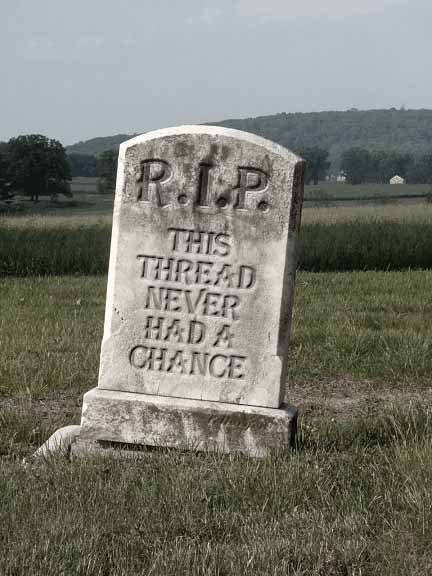
this thread is dead

Stag Lord said:

Dobbler said:

Stag Lord said:

So is it fair to collude with an opponent to take an intenional draw to ensure you make the elimination round? I say its clearly not. Fatmouse and Finite have different defintions - that i completely disagree with. And clearly so does the majority of the community.

What if it isn't in the ending rounds of swiss? What if it is in the first round of swiss? Does that make a difference? And again, you use a word which implies cheating : "Collude". And I don't think they cheat anyone out of anything. Everyone has a right to win all their games. If you win all your games it doesn't matter who else does what.

Look Stag Lord, I actually agree with you that I wish it didn't happen. Like I said, I've never done it. But if someone is operating within the rules of an event, I am definitely not going to throw around a term like unsportsmanlike, which I think is one of the greatest insults you can give someone who is competing.

It is collusion. Nothing less. You are agreeing with an opponent to not compete to ensure you both make the final cut. If the term collusion has unsavory connotations, it is because this is unsavory behavior. Its not cheating, but its defiitely gaming the system.

Is it really "Gaming The System" if it is a part of the system, purposely or not, put into it?

I'm pretty much neutral on the whole thing, just for future reference.

dormouse said:

rings said:

Not if everyone can scout, right?

Personally I'd be a lot happier with a blanket rule that said players may not watch other players games while they are still in the tournament. Let them play their last opponent again or go grab a smoke, or coffee, or read a book. I'd add to that that discussion of other players decks or tactics is discouraged. Sure you can't really enforce this rule, but a mature player base should be able to police itself.

I can see why this is good for the competitive environment. But what about those people who honestly just want to watch a game? We are all here to play a game we love and watch and be around others who do the same. I see all sides of the argument. But I know personally, I enjoy watching games as well.

So far, on the scouting issue (which I have never encountered such a big deal about in any other game), I think it would be fair to simply ask the players you want to watch if you may. If they say no, alright then.

finitesquarewell said:

While I usually try to stay away from these endless forums debates, :-), it seems there might be value to presenting the case for the affirmative side of the intentional draw debate.

I think the following argumentation is best prefaced with a description of my frame of mind. I don't think it's any secret that I'm a hyper-competitive human being; I prefer to engage in activities at which I can compete, and I work pretty hard within time constraints to rise to the top of every competition. I'm a collegiate debater; I did math competitions throughout high school and undergrad; I've run for various offices in university-wide elections; I've played CCGs competitively since middle school. (I probably wouldn't even have gone to grad school had it not been at a top-ranked program.) While I enjoy each activity for the sake of the activity itself, to be sure, I get a hell of a lout out of winning (there's no other explanation as to why anyone would seek election to a body for university governance), and the more public the win the better the jollies. I don't know what went wrong in my childhood to give me the internal drive to make a life out of kicking the crap out of others intellectually, beyond the usual personal satisfaction one takes in doing well at things, but there it is. :-)

So when it comes to competing in and winning AGOT tournaments, my view, like many other hyper-competitive CCG players, is two-dimensional. I'm looking to win each and every game I play, and I fret over being able to do so to the point where the DC meta as a whole is way overworked in the weeks leading up to a tournament. (This in part has resulted in a meta in which the average player skill is ridiculously high; the other part being that Corey Faherty is a world-class CCG deck builder, and always figures out for us exactly what to play. See, for example, last weekend, before which Corey told us to play his Stark/NOBLE/Direwolf deck. Dan built Corey's deck; I didn't.) That said, my primary objective is winning the overall tournament; it's by far more enjoyable than winning, losing, or drawing in any particular game. And I view it as a simple matter of course to use all legal and kosher methods available to do so. This includes being very well prepared and trying not to make mistakes during games; it also means not playing a game and taking a draw with an opponent in a situation in which it's tournament-optimal for both of us to do so. I see it as nothing but sportsmanlike in that we're both in the tournament to win, and to me it seems silly that someone *wouldn't* want to do so simply because I don't understand the point of entering a tournament a by-definition competitive venture if you're not going to do your best to win the whole thing. (I could understand if a player showed up to a tournament just for the sake of playing a bunch of games of AGOT, but it seems that that player wouldn't care about intentional draws going on between players at the top of the Swiss anyway.) In my head, intentional draws are another part of the strategy to winning a competition which consists of a sequence of constituent games, and nothing more. There's a parallel with manipulating an opponent in a melee game to go for the win when I'm sitting in a solid second place, and know that a second-place finish will be enough to propel me to the final table. The difference, of course, is that most of you guys view a joust tournament game-by-game; I, along with other hyper-competitive CCG players, do not.

I haven't really seen any effective argumentation here as to *why* it's unsportsmanlike; it just seems that most of you find it shady for reasons which, when broken down, don't make much sense logically. There have been two arguments made in the thread:

(1) "It sucks to be on the lower end of it" (Rings), or "the problem is that someone always loses out" (Shenanigans); that is, implication that a player might be kept out of the top x cut of a tournament due to two players higher in the Swiss rankings intentionally drawing.

I think the easiest refutation to this is pretty obvious: A tournament is just a sequences of wins, losses, and draws on the part of players; no matter how things shake out, there are people who get screwed out of the top four by legal mechanisms (usually by people winning more than they do, but intentional draws included). That's just the nature of competition. The fact that others are competing to win the whole tournament, and thus take the legal actions available to them to do so, should be expected. Indeed, I think a person goes into a competitive venture like a CCG tournament with a reasonable expectation of not making the final cut. If you go 4-1 in a tournament and end up in the top four ahead of someone who went 3-2, but who really wanted to be in the top four and thus is disappointed, how is it at all logical to weigh the disappointment that person feels from participating in a fundamentally competitive venture as more legitimate if instead you went 3-1-1?

An example: Consider the player who isn't usually successful, but he's gone 4-0 in a five game tournament and sits down across from Dobbler. Odds are, the player is about to take his first loss of the day. If that player asks Dobbler for an intentional draw, and Dobbler doesn't accept, proceeds to roll the player over, and the player is the last of the 4-1's and doesn't make the cut to top four, Dobbler, knowing that he likely had the advantage coming into that game just based on relative play skill, effectively screwed that player out of the top four when instead he had a chance to let that individual in at no real cost to his own tournament record. The player feels disappointment at not making the top four (we can't reasonably expect anyone to walk away completely satisfied with having done well that day just based on a good overall record). How is this situation to be weighed "morally" as any different from the situation in which Dobbler draws with the player, thus screwing someone else out of the cut and causing disappointment in some other player? Because the two situations seem to be morally equivalent when you view a tournament as a sequence of competitive games, with the option to draw being legal as per the rules of the tournament, this argument just sort of rolls over and dies. The fact that this situation can be seen in two ways (from the standpoint of someone getting screwed out by the draw, it's as if the players are conspiring to keep them out; and to the two players taking a draw, it's a conspiracy to stay in the tournament when they have the legal means of doing so), it seems that this argument is a wash at worst even if you don't think people should be "so competitive" even when we're talking about participating venture of a fundamentally competitive nature.

Another particular case: *Not* taking an intentional draw with a meta-mate in the last round of a tournament when it's legal and optimal for both players to do so can generate the same sort of ill will that a player might experience when they're excluded from the cut due to an intentional draw between two players above them. If I sit down across from Steve in the last or second-to-last game of a tournament, odds are he's about to take a loss (this, i'm proud to report, is becoming less true by the day). Obviously, I care more if Steve bears a grudge against me for excluding him from the top four when I had the legal means to do so, rather than if some non-meta member bears a similar grudge for me taking an intentional draw, thus shutting them out instead.

(2) "You came here to play, right? So play, for cryin' out loud" (ktom), or "As a player, I enjoy playing too much and get too few opportunities to play to want to pass up on a game" (LetsGoRed), or "You came to play. Put on your big boy pants and play all the games out" (Dormouse).

This is simply refuted by the fact that when I draw with an opponent, I often proceed to play a game with them (whether its with our tournament decks, or with other decks). In fact, because there's less on the line in a relaxing game post-draw, and thus less need to strain over the more difficult play decisions, I sometimes get multiple games in instead of just one. There are other reasons I'd rather do something else than playing out a strategically important game, too. If I draw with Dan or Corey, part of it is that I just don't want to play against either of them. When we show up to a tournament together, we know each others' decks card for card, and have played each of the match-ups many times over during preparation; it makes for painfully boring tournament games. Instead, because a tournament usually lasts close to eight hours, I'd rather sit around and chat with people and/or get something to eat. ~After all, I need time to wander around, scouting other players' decks, and pointing out to everyone with a Blackfish on the table that their deckbuilding skills are nothing short of superb, right? ;-)


The rest of the comments are just stuff along the lines of "I hate when people do this", or "it's not noble", or "against knightly ideals," or "it's unsportsmanlike" with no reasoning to any of it. Thus, if my goal is to win a tournament, I've seen nothing in this thread that would cause me to think twice before taking an intentional draw if it helps me to do so.

Awesome comments on this thread. I appreciate all the responses on Scouting and Intentional Draws.

On Scouting, I tend to believe that since some scouting is impossible to stop, to be fair to all players (including that solo Dunk that showed up) it should just be out in the open. I agree it should be discouraged in abstract at least but how to deal with:

-preventing meta-mates from talking between rounds

-policing where people look during their own matches, since you can "scout" the games next to you

On Intentional Draws:

First on the definition of sportsmanship or being a "good sport" or sportsmanlike conduct. I am honestly surprised at reading some people's idea of sportsmanship.

I cannot speak for others but I grew up playing competitive club soccer and also baseball, football, basketball and individual sports like track and field and snowboarding. In none of those sports have the connotations of sportsmanlike conduct/sportsmanship been *only* about following the rules. Sportsmanlike conduct, in every sport I ever played has *always* been far more about the WAY you play than just fitting your play into a dictionary definition of not breaking any rules.

One example, there is nothing in the rules about players or coaches shaking hands after the game. But from youth soccer to California's CIF high school football playoffs to the World Cup when France's coach refused to shake the hand of South African coach after the game, intentionally refusing to shake hands after the game is almost universally (across all cultures) viewed as unsportsmanlike to some degree. Nothing in the "written rules" about shaking hands though ;)

In soccer there is nothing in the written rules forbidding players from "acting" or dramatizing or blatantly faking an injury to get a foul call since pretty much impossible to enforce. "Faking" is not against any written rules but again it is almost universally viewed as unsportsmanlike (depending on the extent to which this is exploited).

I am honestly surprised that some people actually believe that only following the written rules somehow constitutes sportsmanlike conduct. Not from any experience I had. Following the rules constitutes being a rule abiding player. As these examples and others illustrate, it is not correct to use 'following the written rules' as determining sportsmanship/sportsmanlike conduct/etc in any way. Following the rules and sportsmanship are different concepts.

Even if you want to get semantically technical, Oxford's (OED) defines sportsmanship as including "fair, generous and polite behaviour". That means much more than just following the written rules.

finitesquarewell said:

The rest of the comments are just stuff along the lines of "I hate when people do this", or "it's not noble", or "against knightly ideals," or "it's unsportsmanlike" with no reasoning to any of it. Thus, if my goal is to win a tournament, I've seen nothing in this thread that would cause me to think twice before taking an intentional draw if it helps me to do so.

Lets break this down.

Your entire post can be distilled to simply:"I want to WIN at any cost therefore I will always take an intentional draw if it helps me advance to win the tournament since all I care about is the WIN in the end".

So it just boils down to the age old argument of "Winning at all costs" vs "Sportsmanlike conduct" since as illustrated above, sportsmanship is not simply "following the written rules".

All sorts of examples here but lets look at the biggest competition around the world: the World Cup.

The World Cup is, and has been a round robin Group Stage and then an elimination round. The way the Cup matches used to be set up the final Group stage matches were played consecutively so the participants in the final game already know the results of the first game. This created a situation that played out in 1982 as such:

West Germany and Austria had a final group stage game where a one or two goal German win would allow both Austria and Germany to advance. If Germany won by more than this, Austria would be out, and if Austria won and it was a Draw Germany would have been out. So what happened?

Germany threw everyone forward to score a quick goal that Austria did not contest very hard. Then both sides simply passed the ball around for 79 minutes knowing that both were advancing so why bother playing the game? The end result matters. The means to the end doesn't right?

There was nothing against this in the rules of the World Cup. After all how could there be? It is impossible to enforce. But this behavior was universally reviled around the world among sportsman of all countries. While Germany and Austria's behavior was perfectly Rational (and I use the formal Game Theory definition of rational actor theory here) no one ever argued that. But it was universally viewed as unsportsmanlike.

German TV commentators said this:

"What’s happening here is disgraceful and has nothing to do with football. You can say what you want, but not every end justifies the means."

In fact this incident was viewed as so disgraceful and dishonorable that the format of the World Cup was changed so the final Group stage games were played simultaneously. This was the best they could do. Again, it is impossible to make an enforceable rule preventing intentional draws unless you are the Minority Report Pre-Cog thought police. So what FIFA did was try to create every dis-incentive possible for two teams colluding on a match result.

That is essentially what Intentional Draws are. Collusion. Two players have colluded on obtaining a specific match result without playing a competitive game. This might have been historically acceptable in some Collectible Card Game tournaments but in professional and organized sports, collusion (depending on the specific example) varies from unsportsmanlike conduct to straight up illegal (point shaving in professional sports related to betting).

Some collusion is something that cannot be accurately or objectively enforced therefore the best competitions can do is provide dis-incentives of varying degrees. I believe some of the posts in this thread would relate to West German star Lothar Mattheus who said after that match

“We wanted to progress, not play football”

Which is perfectly Rational but don't get it twisted:

It is not sportsmanship or sportsmanlike conduct.

Publish

No, the catch is that it's not part of the system. If not intentionally listed within the rules either for AGoT itself or the tournament rules, then perhaps it is not expressly forbidden either, but it cannot be a part of the system. It needs must stand separate from the rules at hand. The catch here that has been addressed in part is that we have a difference in definitions and that it is exceptionally hard to debate a point when the underlying structure of the issue (the nomenclature) are hazily defined at best- though it becomes extremely easy to argue in such case. In order to clarify this and allow a productive discussion, I suggest that we agree in at least so much as our terminology and definitions so that we are able to ground our opinions in something a little more solid. I propose that we use:

legal- pertaining to something specifically allowed within the context of the AGoT Rules, Errata and FAQ as well as the official tournament and organized play rules. Conversely "illegal" would pertain to anything specifically disallowed by those same rule sets.

sportsmanlike- pertaining to something that is both within the context of the established rule sets as well as the prevailing social and ethical standards of the environment. Conversely "unsportsmanlike" would be anything that violated either of those rule sets or standards.

Unfortunately, I do agree that anything involving the prevailing social and ethical standards can be open to some level of interpretation as well, though I feel confident that by using other competitions for games of skill as examples, we can come to a common enough understanding. I hear remarkably little about NCAA teams and World Cup groups taking intentional ties to pad their standings.

On a far more serious note, would anyone be willing to concede any game that they would have been scheduled to play against me at GenCon? There would be something immensely satisfying to my twisted Lannister soul to be able to graciously walk into a World Championship. Besides, it would allow me by extension to prove how absurd I find the conclusion of any game that did not end within the context of the established victory conditions.

But really it would just be really awesome if everyone just let me win.

I agree very much with LaughingTree.

In the spirit of the World Cup (U-S-A, U-S-A) let us take a trip into the way back machine. en.wikipedia.org/wiki/West_Germany_v_Austria_(1982) and since I'm a Cubs fan en.wikipedia.org/wiki/Black_Sox_Scandal

This is why match-fixing (which is what an intentional draw is) should not be allowed. It's enough to get you kept out of Cooperstown, banned from sports, it is anti-competition.

Edit:

OK, to be fair I typed this up before the large post outlining this above me and posted without reading after I got back from a meeting......

Kennon said:

On a far more serious note, would anyone be willing to concede any game that they would have been scheduled to play against me at GenCon? There would be something immensely satisfying to my twisted Lannister soul to be able to graciously walk into a World Championship. Besides, it would allow me by extension to prove how absurd I find the conclusion of any game that did not end within the context of the established victory conditions.

No.

And for the record, I would like to state that Cersei Lannister is nothing but a B****, who likes to do her brother. I think the best way for her to die would be, that she contracted a fatal STD from The Red Viper.

But that is another subject.

And I agree very much with Kennon. That being that I would like it vey much if everyone just let ME win. :)

As a player who has a undeniable affinity for complete lockdown control decks, I'll pitch in to offer reservations about a system which does not allow for ties. Or more accurately, I am strongly against doing away with the possibility of a tie, as much as this may seem on the surface like an easy thing to do if we want to take away intentional draws. This has everything to do with the type of deck I prefer to play.

I was down several times 13-0 or 14-0 with my Martell/Lannister Treaty deck from 2008, and most of those games I wasn't in the least bit worried about losing because I either had the lock or saw the lock was almost in place. Once I had a couple Broken Arms, Student of Subtlety, and a Castellan on the board, it was usually just a matter of time, and typically I only needed a couple of rounds to close it out after that, which meant 5-10 minutes.

The game is about more than just the score - board position and card advantage are the other key pieces of the equation. In most of the games I described above, I had the lock on the board and usually a mitt full of cards while often the opponent was top-decking. Against another hyper-control deck, I often went to time, making the cut in Chicago and Worlds that year by going 3-0-2. The games I played in the untimed elim rounds that year were some of the most enjoyable and most intensely competitive gaming moments of my life, with epic battles against JonSnow, Adam, Hollis, Stags, Kennon, and Luke.

I don't know that there's an equivalent LCG deck out there at the moment with that kind of ability to lock down an opponent after they've gotten so close to victory (Dobbler's char-lite deck is probably at that level), but I'd hate to make that style of deck almost an impossible risk to run by making the score the only method of determining the winner in Joust. The score does not always indicate who is winning the game.

For those who might argue that the slower deck should have been more competitive as to be ahead by the end of an hour, I'd say that the win condition of Thrones is 15 power (or its equivalent per Agendas) just as the win condition of Chess is checkmate. If I am able to prevent my opponent in Chess from achieving checkmate, it's a draw, and I think it makes a lot of sense in our game as well to allow for that possibility.

To answer Dobbler's call for opinions, I'll just add that I also like FATMOUSE's proposal of using total power as a tie-breaker. I'd personally prefer just to use straight up power counts rather than factoring in agendas. I think it's just a lot more elegant and transparent. Perhaps, it might favor one player over the other, but I think the edge should be pretty small considering that both players had the options to use whatever deck/agenda he/she wanted before the tournament started and had AN ENTIRE HOUR to try to claim the specified number of power needed to win (if an agenda gets printed with text like "you need 30 power to win the game. Claim 15 power for your house during setup" then I might change my mind). I do have one hesitation though - rewarding the player currently ahead in power will encourage the player leading towards the end of the round to try to stall out the game so that his/her opponent can't catch up (a rule about time being called early and another complete round or two being played after time is called would alleviate this to some extent).

Alternative possibilities: draws (under the current system) are always equal to losses, or in the last round, draws (under the current system) are equal to losses (but in the other rounds you still get 1 point for a draw).

Regarding scouting, I've already said my piece but I'll restate it briefly to put my response to others' in context. I sympathize with the sentiment that scouting gives an advantage to some players and should be discouraged at competitions of the highest level play (GenCon, Stahleck, perhaps Regionals). For lesser tournaments, I'd prefer to let it happen because I think being austere about scouting takes away from the atmosphere of appreciation of the game (a lot of people enjoy tournaments as a chance to see a lot of people from other metas playing the game; AGoT is still small enough at the moment that play styles differ from meta to meta). When scouting is discouraged though, I'd prefer that it be just uniformly discouraged (instead of allowed when the spectator asks permission). I just find spectators asking permission to be disruptive to the game and would prefer that it either be the case that spectators are allowed or not allowed.

I don't have any more to add to the intentional draw thing. Lucky for me, I was careful with my wording regarding the "unsportsmanlike" thing.

I also agree completely with Kennon, his assessment and his defintions.

I also agree compeltely with Husemann - and nominate his comments for post of the year.

Hahahaha, I won't at all disagree about Cersei. Though I might point out that she'd never sleep with the Red Viper because he doesn't look enough like her.