Archimedes and mass removal

By Guarin, in KeyForge

Hi,

What happans when i have Archimedes and plenty of other creatures on table and opponent use card like Coward's End.

Quote

Each of Archimedes neighbours gains' "Destroyed: Archive this crearute"

Quote

Destroy each undamaged creature. Gain 3 chains.

What is the order of events? Each of creature (except Archimedes) land in archive? 

My understanding is that Archimedes is destroyed at the same time as all the other creatures. Therefore his ability does not trigger. For me the situation is similar to Tolas and something like Gateway to Dis - and here it was ruled that no amber is gained for destroying creatures because Tolas is destroyed simultaneously with all other creatures.

I'm pretty sure that since the neighbors "gain" the destroyed keyword, rather than Archimedes saying something like "if a neighbor of this card is destroyed..." then those 2 neighbor cards have that keyword and thus are archived. However, since all the cards are destroyed simultaneously none of the other cards have a chance to gain that keyword, so it only affects those 2.

Ha! Did someone make a new account to rabble rouse? I'll catch everyone up:

The ruling should be that if Archimedes is being destroyed at the same time as every other creature he is no longer giving his neighbors a destroyed ability. That is consistent and also in-line with the rules mentioning constant abilities on page 7.

I will say that you could make the case that the two neighbors should be archived and I would be ok with that. That's fine. Here's where it gets fun:

The word going around is that at the Origins Vault Tour a judge made the ruling that every creature in the battle line with Archimedes got archived. Further supplementing the rumor is another rumor that Brad Andres is in a secret Facebook group with the judges and it was discussed and he agrees with this ruling for some reason. Bear in mind at this point this is just a rumor and there may not be any truth to it, no one knows at this point.

That's the rumor going around. If that is indeed what happened at the Vault Tour I am guessing it will be addressed quite quickly.

I sincerely hope I am misinformed or that if this is what happened they address it quickly and redact that Archimedes ruling because it's absurd. I guess we will see what happens.

Not just a rumor, that is officially right now how it is played at official events. It makes Archimedes a counter to a full board wipe.

I don't know why Brad Andres  would need a secret facebook group, he was at Origins. I can confirm this ruling was made there, I was a couple tables away when it happened.

The justification I heard is that Destroyed effects occur before being destroyed, so the neighbors get archived because Archimedes is still on the board when the effect he gives to his neighbors trigger. Because this Destroyed effect removes them from the battle line, the battle line collapses and Archimedes now applies his constant ability to his new neighbors, causing this effect to repeat until everybody but Archimedes is in the archives.

Tolas's effect occurs when someone is destroyed, but Archimedes effect occurs before someone is destroyed.

I miss the first version of the rulebook, when destroyed effects happened when a creature was destroyed.

This is what happens when they make a sweeping rules change rather than have proper playtesters read the cards to make sure they work as intended.

So what if two Archimedes are next to each other, as well as several creatures on either side?

I would think that each Archimedes destroyed: ability would archive the other Archimedes, as well as the two on the outside of the pair. So it wouldn't save the whole board.

In case of two archimedes next to each other both of them will gain "Destroyed:" keyword. Player who played the card will determine order of "Destroyed:" events. Nevertheless, when he will pick one of archimedes, this archimedes will go into archive, so another one will lost "Destroyed:" keyword, and we will have previous situation then.

Summarizing, we'll have one archimedes in archive, one is destroyed, other creatures are in archive.

Edited by alexshep
On 6/18/2019 at 9:14 AM, Revert said:

The justification I heard is that Destroyed effects occur before being destroyed, so the neighbors get archived because Archimedes is still on the board when the effect he gives to his neighbors trigger. Because this Destroyed effect removes them from the battle line, the battle line collapses and Archimedes now applies his constant ability to his new neighbors, causing this effect to repeat until everybody but Archimedes is in the archives.

The worst part is that does make sense. I still don't like it but I am much obliged for the context.

I guess the question from here would be was that the original intent for Archimedes or was he originally intended to only archive the immediate neighbors in a wipe situation? Either way I still have a hunch that clarification on this one will come quickly.

11 hours ago, TheSpitfired said:

The worst part is that does make sense. I still don't like it but I am much obliged for the context.

I guess the question from here would be was that the original intent for Archimedes or was he originally intended to only archive the immediate neighbors in a wipe situation? Either way I still have a hunch that clarification on this one will come quickly.

This is the head of organized play with asmodee to explain why it works like it does:

On 6/20/2019 at 12:39 PM, EntropyGuardian said:

This is the head of organized play with asmodee to explain why it works like it does:

This explanation is wrong. The "Destroyed:" abilities do not happen one at a time. There is no stack in Keyforge, like there is in MTG and the rule book makes absolutely no mention that abilities trigger one at a time. The only time the Keyforge rule book says that something happens one at a time is when you are discarding multiple cards from your hand. The rulebook even explicitly says they are destroyed simultaneously (and therefore their "Destroyed:" abilities happen simultaneously.) The active player chooses the order they are laid into the discard pile, but they enter the discard pile at the same time.


Edit: I should clarify that even though this explanation is wrong, I'm not necessarily sure it would change the Archimedes ruling because the "Destroyed:" effects still trigger right before the card is removed from play.

Keyforge Destroyed.PNG

Edited by Takeshi7
Edited to expound and clarify my explanation
On 6/28/2019 at 5:21 PM, Takeshi7 said:

This explanation is wrong. The "Destroyed:" abilities do not happen one at a time. There is no stack in Keyforge, like there is in MTG and the rule book makes absolutely no mention that abilities trigger one at a time. The only time the Keyforge rule book says that something happens one at a time is when you are discarding multiple cards from your hand. The rulebook even explicitly says they are destroyed simultaneously (and therefore their "Destroyed:" abilities happen simultaneously.) The active player chooses the order they are laid into the discard pile, but they enter the discard pile at the same time.


Edit: I should clarify that even though this explanation is wrong, I'm not necessarily sure it would change the Archimedes ruling because the "Destroyed:" effects still trigger right before the card is removed from play.

Keyforge Destroyed.PNG

I mean, FFG is telling you that when multiple Destroyed effects trigger at the same time they are resolved one by one.

Here it is again:

If both players have no Aember and you attack a Grenade Snib into a Dust Imp what have you been doing up until now? The correct answer is the active player chooses the order of Destroyed trigger resolution, so you'd choose the Dust Imp to give 2 Aember first, then Snib to take it away. If you chose the other way, they'd lose nothing, then gain 2. This matters -- you can't just say it triggers and resolves at the same instant. There are numerous effects which cause a different board state if they resolve in different orders.

Regardless, you've gotten official clarification from the people who wrote the rule book so there isn't much else to say on the topic other than making sure people play the game correctly.

On 6/28/2019 at 6:21 PM, Takeshi7 said:

This explanation is wrong. The "Destroyed:" abilities do not happen one at a time. There is no stack in Keyforge, like there is in MTG and the rule book makes absolutely no mention that abilities trigger one at a time. The only time the Keyforge rule book says that something happens one at a time is when you are discarding multiple cards from your hand. The rulebook even explicitly says they are destroyed simultaneously (and therefore their "Destroyed:" abilities happen simultaneously.) The active player chooses the order they are laid into the discard pile, but they enter the discard pile at the same time.


Edit: I should clarify that even though this explanation is wrong, I'm not necessarily sure it would change the Archimedes ruling because the "Destroyed:" effects still trigger right before the card is removed from play.

Keyforge Destroyed.PNG

Sorry but not technically correct (and that is the best kind of correct). There is a kind of stack in KF. Also from the rulebook:

image.png.781c041ebb099ab7d768b35fc5b22179.png

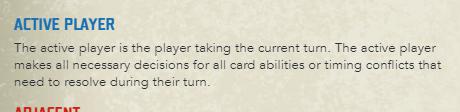
Timing conflicts would be things like destroyed effects happening simultaneously, so the active player decides order of revolution in those instances.

On 7/1/2019 at 10:16 AM, EntropyGuardian said:

I mean, FFG is telling you that when multiple Destroyed effects trigger at the same time they are resolved one by one.

Here it is again:

If both players have no Aember and you attack a Grenade Snib into a Dust Imp what have you been doing up until now? The correct answer is the active player chooses the order of Destroyed trigger resolution, so you'd choose the Dust Imp to give 2 Aember first, then Snib to take it away. If you chose the other way, they'd lose nothing, then gain 2. This matters -- you can't just say it triggers and resolves at the same instant. There are numerous effects which cause a different board state if they resolve in different orders.

Regardless, you've gotten official clarification from the people who wrote the rule book so there isn't much else to say on the topic other than making sure people play the game correctly.

That actively goes against a previous ruling that FFG made regarding creatures destroyed simultaneously:

Quote

" If an effect destroys multiple creatures, all of those creatures are destroyed simultaneously. If any of the destroyed creatures have an effect that triggers off another creature being destroyed, those effects will not trigger as the creature with the ability is being destroyed at the same time and cannot trigger. So in the case of the examples you gave, number 2 is the correct way this would play out.

Brad Andres

Card Game Developer

Fantasy Flight Games"

If the active player gets to choose the order of simultaneous things, then they would be able to choose the order so that a creature with a passive ability that "triggers when a creature is destroyed" would be able to be destroyed last (or first) to get the effect they want, but FFG has already said this doesn't happen. FFG needs to clarify their rules and change one of these rulings so that they are consistent. It doesn't help that the rule book doesn't define what a "timing conflict" is.

In your example with Dust Imp and Snib being destroyed at the same time, you use your left hand to do Dust Imp's effect and give 2 aember, at the same time you use your right hand to destroy 2 aember for Snib. If your opponent doesn't already have aember, then your right hand destroys nothing (because the aember is still in your left hand on the way to entering play). That's what simultaneous means. I see no conflict from Dust Imp and Snib being destroyed simultaneously.

Edited by Takeshi7
explaining that creatures that have abilities that trigger "after another creature is destroyed" is a passive ability.

What about Duma the Martyr and Ammonia Clouds?

I know from the above that the destroyed effect triggers and heals all the other creatures on Duma's side, but my opponent is holding that any creatures who had power 3 or less, still die as their health was exceeded by damage at a point during the resolution.

Is that right or does it only check after Duma resolves?

On 7/4/2019 at 5:37 PM, Mattordoom said:

What about Duma the Martyr and Ammonia Clouds?

I know from the above that the destroyed effect triggers and heals all the other creatures on Duma's side, but my opponent is holding that any creatures who had power 3 or less, still die as their health was exceeded by damage at a point during the resolution.

Is that right or does it only check after Duma resolves?

Where is the problem? Ammonia clouds deals 3 damage to all creatures, which will destroy Duma. This will make Duma's Destroyed ability trigger, which will in turn remove all damage from the other creatures, so they won't die. Interestingly enough, the damage might even trigger the abilities of dust imp and/or Grenade snib, before Duma saves them. Am I right?

The active player will choose the order in which all of this happens. So if I choose to resolve Duma's ability first, dust imp/Grenade snib will no longer die so their abilites won't trigger any more. Is that correct?

I'm confused 😕

Edited by Ancient Silverback
On 7/2/2019 at 1:37 PM, Takeshi7 said:

That actively goes against a previous ruling that FFG made regarding creatures destroyed simultaneously:

If the active player gets to choose the order of simultaneous things, then they would be able to choose the order so that a creature with a passive ability that "triggers when a creature is destroyed" would be able to be destroyed last (or first) to get the effect they want, but FFG has already said this doesn't happen. FFG needs to clarify their rules and change one of these rulings so that they are consistent. It doesn't help that the rule book doesn't define what a "timing conflict" is.

In your example with Dust Imp and Snib being destroyed at the same time, you use your left hand to do Dust Imp's effect and give 2 aember, at the same time you use your right hand to destroy 2 aember for Snib. If your opponent doesn't already have aember, then your right hand destroys nothing (because the aember is still in your left hand on the way to entering play). That's what simultaneous means. I see no conflict from Dust Imp and Snib being destroyed simultaneously.

While you can work out simultaneous timings for some simultaneous effects, the game wasn't built with simultaneous effects in mind. Having the active player order effects that occur at the same time is much simpler. If there were simultaneous effects, you would not need the rulebook to mention that the active player resolves timing conflicts, as there wouldn't be any.

The difference between the passive ability and "destroyed:" abilities is that they DON'T happen at the same time. "Destroyed:" abilities happen BEFORE a card is destroyed. Passive abilities that resolve "when a creature is destroyed" or "each time a creature is destroyed" happen DURING the destruction.

There is no conflict between the rulings. All of the destroyed: abilities will trigger first - during which there may be a window for something like archimedes to grant extra abilities. And then tolas and all of the remaining cards that were targeted for destruction are discarded simultaneously, which DOESN'T give tolas a window in which he is in play to see those cards be destroyed.

There are three timing windows: before, during, and after. The active player orders effects that resolve during the same timing window. This is supported by all rulings and the rulebook to this point. FFG just needs to actually include this information into a timing chart so it is clear to everyone.

On 7/7/2019 at 6:16 AM, Ancient Silverback said:

Where is the problem? Ammonia clouds deals 3 damage to all creatures, which will destroy Duma. This will make Duma's Destroyed ability trigger, which will in turn remove all damage from the other creatures, so they won't die. Interestingly enough, the damage might even trigger the abilities of dust imp and/or Grenade snib, before Duma saves them. Am I right?

The active player will choose the order in which all of this happens. So if I choose to resolve Duma's ability first, dust imp/Grenade snib will no longer die so their abilites won't trigger any more. Is that correct?

I'm confused 😕

It would be more of an issue if you have a 4-6 power creature with like 2-3 damage on it. If Duma can die and heal them, then they'll survive the ammonia clouds.