Not Checking the Skills on your sheet

By Archlyte, in Star Wars: Edge of the Empire RPG

Got to give credit to Order66 guys for this one but man I feel it is such a great point. One of their good player guidelines from Episode 82 is to just attempt things (other than combat checks) and not reference your skill list. The idea here is that rather than metagaming these things the player just tries to narrate their attempt and if it's good the GM can throw some Boosts their way.

One of the things I like about this game is that unlike something like D&D it's not built on telling you what you can't do. The skills can be used flexibly so that the game does not fall into the same old patterns and players and GM can exercise a lot of creativity.

I feel like it's somewhat natural to be conservative in your plans based on what you feel your chances are but I have also seen some players take this to extremes and not attempt anything unless they feel they are guaranteed success.

It takes a bit of daring to play this way but I think it's fun to be more adventurous. What do you think?
I see this as the next step up in RPGs in General.

Be it Shadowrun, Dark Heresy, Star Wars or anything else; I always encourage my players to do actions based on what they want to do, rather than doing what they are good at.
And therefore acting more inline with the character than metagaming the sheet.
From my own experience as a player: These are the moments that are most memorable either because of epic success even without being proficient in a task or because of the epic failure.

One very memorable Example that comes to mind for me, from my Star Wars group from a Oneshot using the Crates of Krayts Adventure:

After beating back an attack on their employer a Rodian Merc (carrying a hunting blaster), the group then went on to commence with loading the cargo they had recieved prior to the attack onto their ship.
But not the Trandoshan Marauder, oh no, he decided that that Rodian Merc wasnt deserving of that Hunting Blaster and began threatening her to give it over.
Only after I asked for the Coercion check, did the player notice that he neither had any ranks in Coercion nor was his Willpower particularly good. A check against 1 purple and 2 red followed resulting in 2 despairs and failure.
The Rodian then just snapped back "Kill him" to her goons and a fierce fight ensued (in which I totally expected to lose the Trandoshan because he played to his Trandoshan Battle Honor and refused to back down).

The whole scene was saved when the rest of the crew, having loaded the cargo onto the ship in the meantime, decided to launch the ship and hover over the fight, threatening the opposing mercs (without success at first).
A botched attack with triumph from the on board quad cannon later, they ended the fight having killed no one and only injuring the Rodian, bailing out their Trandoshan and getting the Hunting Blaster in the process. (And gaining a recurring Nemesis in form of the Rodian Merc as well).

This whole scene was really enabled by doing what the character would do, without regarding the skills and abilities. Everything that followed was a Story pretty much told by the Dice, for which I effing love this System.

24 minutes ago, Fl1nt said:

This whole scene was really enabled by doing what the character would do, without regarding the skills and abilities. Everything that followed was a Story pretty much told by the Dice, for which I effing love this System.

Han Solo tries to use his Negotiation and Coercion skills all the times with no (apparent) ranks in either but a solid 4 in both Will and Presence and constantly rolls a bunch of Despairs.

[Note: I am not referring to any know write-up of Han Solo. Just more of an impression of his skills based on random scenes in movies]

This can be good and bad.

Good in that players don't tie themselves to only trying specific avenues of resolving a problem, simply because those specific avenues happen to be what they're good at.

It can be bad when you've got players that barrel on into a situation that another character would be better suited for. Prime example from my fairly recent gaming history was an TFA-era game where the Soldier/Combat Medic who absolute crap for social skills (Presence 2, no ranks) keep trying to headline any and all social encounters, and routinely failing, all while another PC who was geared towards being a social character (Presence 3, ranks in Charm, Leadership, and Negotiation) kept getting sidelined and thus was never able to do what they were good at. Got so bad the rest of the group had to give him an in-game dressing down to keep his mouth shut and let the person who didn't have a personality courser than low-grit sanding paper do the talking. Things tended to go a whole lot smoother once the party face was allowed to actually do the thing she was spec'd to do.

A part of that is on the GM to keep one player from hogging all the action in scenes they're not suited for, but it's also on the player to realize that they're not good at something and it's time to let a character who is good at that something to have the chance to take center stage.

It's also worth noting that players generally want chances to have their characters use the skills they are good at, sometimes in novel ways, which should be encouraged within reason. So the GM shouldn't just give a hard "No, you can't use that skill!" in those cases where the character is put into a situation where they're bollocks at the traditionally expected skills. Perhaps using that different skill (in which the character happens to be pretty good) results in an increased difficulty to reflect it's an unusual approach.

soundsgood.jpg

what a player should do is be aware of what their skills are. But not focus so much on the level. but just the i am good at x. and suck at y.. but bob over their is good at y so ill let him take the lead on this

13 hours ago, Donovan Morningfire said:

This can be good and bad.

Good in that players don't tie themselves to only trying specific avenues of resolving a problem, simply because those specific avenues happen to be what they're good at.

It can be bad when you've got players that barrel on into a situation that another character would be better suited for. Prime example from my fairly recent gaming history was an TFA-era game where the Soldier/Combat Medic who absolute crap for social skills (Presence 2, no ranks) keep trying to headline any and all social encounters, and routinely failing, all while another PC who was geared towards being a social character (Presence 3, ranks in Charm, Leadership, and Negotiation) kept getting sidelined and thus was never able to do what they were good at. Got so bad the rest of the group had to give him an in-game dressing down to keep his mouth shut and let the person who didn't have a personality courser than low-grit sanding paper do the talking. Things tended to go a whole lot smoother once the party face was allowed to actually do the thing she was spec'd to do.

A part of that is on the GM to keep one player from hogging all the action in scenes they're not suited for, but it's also on the player to realize that they're not good at something and it's time to let a character who is good at that something to have the chance to take center stage.

It's also worth noting that players generally want chances to have their characters use the skills they are good at, sometimes in novel ways, which should be encouraged within reason. So the GM shouldn't just give a hard "No, you can't use that skill!" in those cases where the character is put into a situation where they're bollocks at the traditionally expected skills. Perhaps using that different skill (in which the character happens to be pretty good) results in an increased difficulty to reflect it's an unusual approach.

I'd say that such problems need to be solved in-character, then its okay to "ensure that the person most suited does the job". When this however happens across the table out of character, its bad and metagaming and limits good roleplay.
Apart from that, yes a GM should at all times be mindful of passing on the spotlight if the players begin hogging it. (I'm blessed with my playergroup, they are mostly rpg noobs but have always had a good sensibility for passing spotlight and giving someone that hasnt had some, opportunities to shine).

Edited by Fl1nt

Players acting in the moment is what makes things interesting and entertaining. Players acting as their character is paramount. Those are both high level RP things.

Characters are breaking into an Imperial facility at night. As they are moving down a dark corridor, an Imperial patrol rounds the corner, what do you do? Hide. Hide. Hide. Hide. Lets see those rolls. Success, you find a dark corner and stay concealed. Success, you duck into a doorway and they walk right past you. Success, you use your ascension cable and hoist yourself to the ceiling. Failure, the giant walking carpet tried hiding behind a potted plant. Worse yet, he tipped it over and broke the pot. Worse yet, the stormtroopers were standing next to an alarm button and the entire base is alerted now.

Same scenario, what do you do? Hide. Hide. Hide. Charge down the hallway and attack. The distraction by the wookiee makes your stealth checks moot at this point. The Imps weren't expecting such a thing to happen during a sleepy nighttime patrol, if you are spending strain for an extra move action I will allow you to engage them with two action and attack prior to any initiative checks. Attack roll is a massive success, the two stormtroopers are gutted and bleeding out before anyone realizes what happened. The three of you, hiding in the shadows, were cringing from the wookiee's chaotic move, but are now recoiling in horror from the blood stained trooper armor littering the hallway. As you hold your breath for a moment, you realize the incident was fairly silent and probably didn't alert anyone else.

If given time to think about their reactions, you get something that wouldn't occur. Put yourself in the situation. What would happen? You'd likely freeze in place, or try to quickly (and poorly) hide. That's the reaction I'm looking for with players. That instant, here's the first idea that comes to mind, kind of thing. If allowed time to weigh the pros and cons of a situation, then they come up with elaborate schemes. "I pull out my Imperial officers hat, handcuff the wookiee and act like these two 'agents' just brought him in for interrogation." No one in their right mind would actually have time to form that thought, nor pull it off, nor telepathically communicate it to the other three party members. What would really happen is the stormtroopers would see a guy trying to explain all this to a wookiee and two others while being loud enough to hear what the plans were.

What really sucks the fun out of a room is people telling others how to play. Take the wookiee charge scenario. After the player with the wookiee declares the charge, the other players may meta game and say "NO! Hide you moron." then the wookiee players says "Ok, um, I guess I just hide." Even if he fails at this point, you don't recreate the fun of the first scenario because a player lost his autonomy over their character. They will be resentful for losing that authority and for failing the roll.

Remember, OT Han acted on instinct and shot first. Lucas re-mastered Han meta-gamed and was instructed by his group to continue trying to make charm attempts instead of making a scene a the cantina that could possibly draw the attention of the stormtroopers outside. Which Han do you want to be?

On 5/9/2019 at 9:03 PM, Rimsen said:

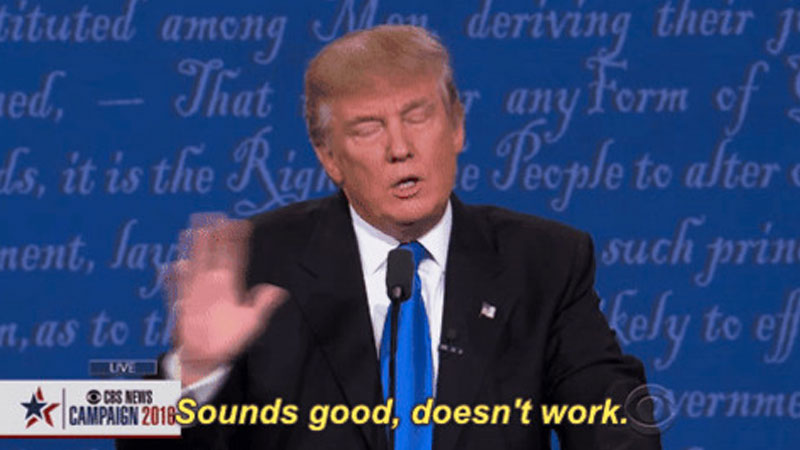
soundsgood.jpg

Could you explain that a bit please Rimsen? I value your opinion on these things.

On 5/10/2019 at 12:25 AM, Fl1nt said:

I'd say that such problems need to be solved in-character, then its okay to "ensure that the person most suited does the job". When this however happens across the table out of character, its bad and metagaming and limits good roleplay.
Apart from that, yes a GM should at all times be mindful of passing on the spotlight if the players begin hogging it. (I'm blessed with my playergroup, they are mostly rpg noobs but have always had a good sensibility for passing spotlight and giving someone that hasnt had some, opportunities to shine).

Yeah I agree that RPing it out can have some good scene potential. It can be tricky because what I don't want and always tell my players is that listening to incessant b1tching between the characters gets old fast. It outright sucks when it becomes an RP gripe session over failed tactics etc.

But when someone says something simple like "why don't you let me do the talking next time flyboy" it works great.

On 5/10/2019 at 8:10 AM, kmanweiss said:


What really sucks the fun out of a room is people telling others how to play. Take the wookiee charge scenario. After the player with the wookiee declares the charge, the other players may meta game and say "NO! Hide you moron." then the wookiee players says "Ok, um, I guess I just hide." Even if he fails at this point, you don't recreate the fun of the first scenario because a player lost his autonomy over their character. They will be resentful for losing that authority and for failing the roll.

Remember, OT Han acted on instinct and shot first. Lucas re-mastered Han meta-gamed and was instructed by his group to continue trying to make charm attempts instead of making a scene a the cantina that could possibly draw the attention of the stormtroopers outside. Which Han do you want to be?

Man this is so true. I cannot stand when players do this. The thing where they devote so much time an attention trying to avoid any possible problem or complication. There is another motivation I sometimes see which is the player who just cannot stand to take the L under any circumstance. The near constant success of the character is needed or they get upset. Having them use a sub-optimal skill for something will drive them crazy cause they are trying to win the game.

On ‎5‎/‎9‎/‎2019 at 9:17 PM, Donovan Morningfire said:

This can be good and bad.

Good in that players don't tie themselves to only trying specific avenues of resolving a problem, simply because those specific avenues happen to be what they're good at.

It can be bad when you've got players that barrel on into a situation that another character would be better suited for. Prime example from my fairly recent gaming history was an TFA-era game where the Soldier/Combat Medic who absolute crap for social skills (Presence 2, no ranks) keep trying to headline any and all social encounters, and routinely failing, all while another PC who was geared towards being a social character (Presence 3, ranks in Charm, Leadership, and Negotiation) kept getting sidelined and thus was never able to do what they were good at. Got so bad the rest of the group had to give him an in-game dressing down to keep his mouth shut and let the person who didn't have a personality courser than low-grit sanding paper do the talking. Things tended to go a whole lot smoother once the party face was allowed to actually do the thing she was spec'd to do.

A part of that is on the GM to keep one player from hogging all the action in scenes they're not suited for, but it's also on the player to realize that they're not good at something and it's time to let a character who is good at that something to have the chance to take center stage.

It's also worth noting that players generally want chances to have their characters use the skills they are good at, sometimes in novel ways, which should be encouraged within reason. So the GM shouldn't just give a hard "No, you can't use that skill!" in those cases where the character is put into a situation where they're bollocks at the traditionally expected skills. Perhaps using that different skill (in which the character happens to be pretty good) results in an increased difficulty to reflect it's an unusual approach.

I think it also falls down to common player courtesy to share the limelight. In that particular case it seemed like a player really wanted to be involved in scenes that was outside his speciality because he envisioned himself as a protagonist force. I admit it's something I am struggling with myself if it's been a slow session and I finally get the opportunity to act in that I get a bit excitable and can end up bullrushing someone who might have been more suitable for the scene. I've been mindful to try and avoid doing that, after all not every session is equal and sometimes I've just got to step back and let other characters around the table get the developmental time, but generally over the course of an adventure most characters should have at least one opportunity to enact some aspect of their being. Even war situations can have a social face be involved with talking people over, calming citizens to ensure they act safely negotiating with criminals caught in the course fire to pick a side or something. As much as I'm making sound like a checklist, fundamentally it makes sense for a character to find ways to use their skills in those situations.

Or if a characters limited speciality isn't coming up? Diversify! A lot of people in my party have one to three major specialities, and some skills that they can "have a crack at", if a character is awful at things outside their speciality, they should give a little thought towards expanding their limited skill set. I've gotten really irritate in the past over characters are lack luster in an area they claim speciality in, like a underworld broker with 2 G and had no skill in it, so if it's a core part of your concept, level it up and add the extras later. Nothing is more jarring to me then have a character step forward like a professional negotiator, only to have invested more in the extras then they have in a core speciality, to the extent that it will jar me out of character, look them in the eye and be like "What are you playing at?".

Also my experience is that some men generally will consider it socially acceptable to talk over women around the table, like, they genuinely will either consciously or unconsciously attempt to chip in on their talk time. Ever since I learnt that fact I've tried to observe it and for some people that is definitely true for many social circles I've been in, so I find it a interesting fact to be aware of especially in newer groups or unfamiliar social circles. It probably doesn't apply to your gaming table, just reading that kind of brought up that memory. Sexism is real and needs to be dealt with subtly as not to make a big deal out of it, though how your group dealt with the disruption sounded like a pretty soft and good way to tilt it in the right direction.


About checking skill lists? I would probably be broadly aware of specialties. Every member of a team, be it smugglers, commandos or force emergent should have a clear and concise identity that they can default towards. The Captain, the Pilot, the engineer, the social uppercruster, the hired heavy e.c.t Establish a team dynamic early on and everything else should fall in place. If someone is stepping on another character's toes all the time, intervene in/out of character and resolve it quickly, at least until you all get a bit more comfortable. Once you do, you can diversify, have your off talkers, the shady guy who knows how to find dodgy venders and all that. Just make sure everyone knows everyone else's archtype and you are golden for the early sessions, least that's my feeling.

Also along the lines of this, in last night's session I had a situation where the character was trying to be charming to an egotistical rival of the group. The character is not very charming but the player was playing it off well enough by quickly sensing that the NPC was full of himself and laying in some subtle (but effective) flattery. The character was not great at this stat-wise but the idea and execution where great so I gave some boost.

Giving the character a better chance at achieving the check if the idea is a good one, or if it fits the situation particularly well would seem appropriate. What do you think about this?

8 hours ago, Archlyte said:

Man this is so true. I cannot stand when players do this. The thing where they devote so much time an attention trying to avoid any possible problem or complication. There is another motivation I sometimes see which is the player who just cannot stand to take the L under any circumstance. The near constant success of the character is needed or they get upset. Having them use a sub-optimal skill for something will drive them crazy cause they are trying to win the game.

I have a player who is exactly like this. Won't even try a roll unless there's a heap-full of dice in his favor. That is, optional non-combat rolls. Spent a lot of XP getting Specs with Dodge (x3) so he could avoid getting hit. I think a lot of it comes from d20 systems where failure only comes on a "1" of 1d20 after you've gotten all the modifiers you can. The same comes with using DP's. Won't use them so the GM doesn't have DS ones to use.

The thing with this system is that PP vs GG is about 45% success rate. Totally average skill gives you a decent chance. IMO, it is definitely worth it to try and make some rolls. It surely sucks to be in a game where they won't use DP's or try to make rolls. Its like I almost have to assure them that "nothing bad will happen if you fail".

11 minutes ago, DurosSpacer said:

I have a player who is exactly like this. Won't even try a roll unless there's a heap-full of dice in his favor. That is, optional non-combat rolls. Spent a lot of XP getting Specs with Dodge (x3) so he could avoid getting hit. I think a lot of it comes from d20 systems where failure only comes on a "1" of 1d20 after you've gotten all the modifiers you can. The same comes with using DP's. Won't use them so the GM doesn't have DS ones to use.

The thing with this system is that PP vs GG is about 45% success rate. Totally average skill gives you a decent chance. IMO, it is definitely worth it to try and make some rolls. It surely sucks to be in a game where they won't use DP's or try to make rolls. Its like I almost have to assure them that "nothing bad will happen if you fail".

I agree and thanks for the factoid on PP vs GG as that is nice to know. In recent years this has been a leading cause of people exiting my play group. Either trust the process and be vulnerable to adversity, or it means we are not a good match to play together. The temptation to psychoanalyze that player is something I find nearly unbearable.

I think the Fate system has a good slogan for this because it has the idea that Failure is Interesting. I think this is true because while success is great and is its own reward, failure is often what drives the story in surprising new ways. Especially in this game where adding a Challenge die means that you just injected the possibility of something terrible happening even if you succeed.

In the O66 podcast they call hoarding DPs Destiny Point Douchebaggery, and I agree. It's super ineffective as a way to protect your character, as the Gm can do any number of terrible things without spending a DP. Jay Little has said that sometimes a GM can throw in a Red just because the situation calls for it. The GM can abuse you six ways from Sunday without ever going near the RAW tools for doing it, so players either trust the GM or their paranoia and try hard act will start degrading the game. I don't want to do slice of life with uber powerful but super timid characters.

I think your approach is very good and shows a lot of patience. Assuring them that nothing bad will happen worries me, though, as I don't want to make a promise like that when bad things can and should happen. I don't want to be misleading and give them the illusion that they are safe when they are not safe.

15 hours ago, Archlyte said:

Could you explain that a bit please Rimsen? I value your opinion on these things.

Well, Mr. President sums it up for me pretty much. :D

i feel like there will always be players, who are looking the game from a mechanical stand point. We can try to encourage them, but sometimes I ask myself if whether I should, or just accept it, and prepare the session taking this into account. Ofc experiences may vary :)

Edited by Rimsen
Typo
20 hours ago, Rimsen said:

Well, Mr. President sums it up for me pretty much. :D

i feel like there will always be players, who are looking the game from a mechanical stand point. We can try to encourage them, but sometimes I ask myself if whether I should, or just accept it, and prepare the session taking this into account. Ofc experiences may vary :)

Yeah for me that is the struggle. I don't want anyone playing a game they don't want to play, but I think there is a zone between hard core wargaming the role-play and the player who is willing to play out the adversity for the sake of a good story. I enjoy the mechanical part of the game, but I don't enjoy the pure worship of progression and the often odious connection between prurient spec-tree/skill mongering autoeroticism and the necessary basic mechanical part of the game.

I have also learned that leaning too much in the direction of being permissive is a sure way to ruin the game for myself in the short or long term. It is a rent check that always comes due. So I kind of have no choice but to meter the passions of the ultra-competitive or risk averse in order to try and ascertain if they are going to be able to enjoy a game that is more about story than it is about stacking and theorycrafting builds. The good news for those guys is that most games will happily accommodate them if they find my game too restricting, so finding a new game is gonna be easy for the mechanophiles and it's no harm no foul. I always sincerely wish them the best.