3 hours ago, X Wing Nut said:Ok watching that I see a lot of the problems your talking about....
I cant remember the last time I saw a player measure so many times. I would call the judge over for slow play if I had a opponent going back and forth like that
Well, games like the one I linked are the norm, not the exception, in high-level competitive Armada. Certainly every Regionals, Nationals, and Worlds I've been a part of, and while I only peeked at a couple of the other games streamed from today's Worlds they appeared to have similar squadron-precision and time invested into squadrons. The current final game just spent almost 9 Minutes resolving a single ship's Squadron Command. Which is precisely why I created this topic to explore this issue in the first place. This is something that is at the core of Armada's mechanics, and not some fringe issue caused by just a few individual's personal playstyle tempo.
But I want to be very clear about this next part. I do not think either of the players in that video were doing anything wrong, and I play my squadrons in much the same way--because to be any less optimizing is to not play your best game, and it will really cause yourself a lot of disadvantages--as impactful as squads are on determining the outcome of most games, every die roll counts. So to miss die rolls or to have to endure incoming die rolls you could have avoided is to play poorly. The rules of Armada, namely the carte-blanche premeasuring, explicitly allow and expect players to play in such a fashion, as this is precisely (pun intended) the sort of game Armada exists as at the moment. There was certainly nothing here that constituted anything malicious or would qualify as slow play that warrants a judge or repercussions (in fact, if this was slow play... then in my experience the vast majority of high level Armada players are slow players, myself included).
Removing the carte-blanche "sure measure everything!" rules from the game would still reward players who played well, but would prevent players from being able to spend dozens of minutes over the course of the game checking and rechecking hundreds of distances for that "as perfect as can be" spot. Now, players will still be trying to get their squads into those "perfect as can be spots" but they'll have to do so with a bit of visual estimation, rather than the way they do now, which often feels more laborious than a friggin' mortar teaming spotting and dialing in a shell-strike on a target that's seven miles away uphill during a tornado.
It's an interesting and easily measurable empirical question: What % of time during a high-level Armada game is spent on dealing with squadrons? (moving squadrons, attacking with squadrons, flaking and tracking damage on squadrons, placing squadrons after an overlap, etc.). It would be incredibly boring data to collect from filmed games, but it'd be possible. My purely gut-level intuition is that, on average, in games involving 130ish points of squadrons on each side you could probably expect about 75% of the time playing the game to be dealing with squadron-stuff. I'm certainly not gonna collect data on it, since I'd rather piss glass while watching paint dry, but I'd love to see data on it. If my ballpark guess is even close to right, that's 3/4 of the game's time and effort spent on things that are making up 1/3 of the stuff on the table. And I think, at the fundamental level of the issue, this is why so many players (especially early in Armada's run, many of who have probably left the game by this point) groan as much they do about squadrons.

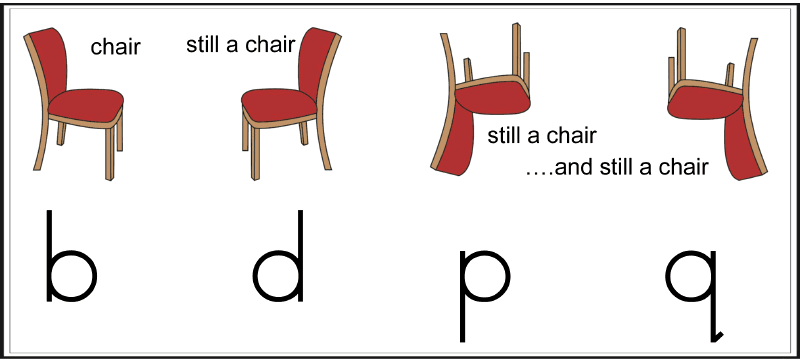 Whats interesting about dyslexia is it can often be caused by kids figuring out that a chair is always a chair very early in their development and thus struggling with the alphabet.
