Rules question: Specific numbers on cards

By kiramode, in KeyForge

Second in a series of questions aimed at getting an official ruling to prevent people from gaming the system. Or at the very least, getting everyone on the same page.

Does the "do as much as you can" rule apply to specific number targets?

core-071.jpg

Nocturnal Maneuver

The words "up to" show up on a lot of cards. And then there are cards that omit that language. Players in my community are under the impression that the "do as much as you can rule" effectively adds the "up to" wording in front of every number. IE, they believe they can play 3 Fates if there are only 2 creatures on the board.

Lost in the Woods

core-307.jpg

Moreover, players believe that Lost in the Woods can be triggered if you have 0-1 creatures and they have 2+. Or that you could trigger Lost in the Woods to do a 1 for 1 trade. As for Old Bruno, his text is being treated as capture up to 3 if they have 1-2 amber.

Would like an official ruling on whether cards that have exact numbers in their textbox must adhere to those numbers or if "up to" can effectively be added in front of all the numbers.

2 minutes ago, kiramode said:

Second in a series of questions aimed at getting an official ruling to prevent people from gaming the system. Or at the very least, getting everyone on the same page.

Does the "do as much as you can" rule apply to specific number targets?

core-071.jpg

Nocturnal Maneuver

The words "up to" show up on a lot of cards. And then there are cards that omit that language. Players in my community are under the impression that the "do as much as you can rule" effectively adds the "up to" wording in front of every number. IE, they believe they can play 3 Fates if there are only 2 creatures on the board.

Lost in the Woods

core-307.jpg

Moreover, players believe that Lost in the Woods can be triggered if you have 0-1 creatures and they have 2+. Or that you could trigger Lost in the Woods to do a 1 for 1 trade. As for Old Bruno, his text is being treated as capture up to 3 if they have 1-2 amber.

Would like an official ruling on whether cards that have exact numbers in their textbox must adhere to those numbers or if "up to" can effectively be added in front of all the numbers.
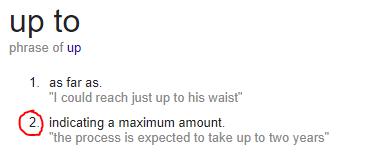
Up to implies you can stop at 1, even if there are 3.

Lacking that forces you to destroy 1-3 depending on availability.

I agree with Derrault. Cards with "up to" in front of the number allow you to do less than the total if you would choose to do so; whereas, cards that lack "up to" mean you must do the exact number if possible.

Lack of “up to” means you do as many as you can up to the number listed.

If Lost in the Woods said “Choose 2 friendly creatures to destroy and if you do, destroy to enemy creatures” then you have to choose 2 creatures. As written, if you have no creatures you can still destroy 2 enemy creatures.

image.png.2af19b8641580919772659bc15c6d877.png

I would have assumed it meant the literal number and not up to. For instance, if the intent was to mean “up to” for “Lost in the Woods,” that means that if you had 0 creatures and the opponent had 2, you could remove theirs from play without doing the same to yourself, which would seemingly unbalance the card.

However, the rules clearly state (p5, Card Types, Action Cards) that when playing Actions you resolve “as much of the ability as possible.” So it would appear to imply “up to.”

Of course, maybe the intent is that if it is “not possible” to remove two, you would not do it at all?

Edited by DMSense

The difference is that, for Lost In The Woods, if you have two creatures and they have one, you MUST take your two. If the card said Up To Two then you could choose to take none of yours and their one.

21 hours ago, DMSense said:

Of course, maybe the intent is that if it is “not possible” to remove two, you would not do it at all?

No. The "do as much as you can" rule is not a way to prevent effects from happening. It is a way to allow as much of an effect to happen as possible. In other words, "do as much as you can" is not a pre-requisite for resolving the rest of the effect.

So "Up to..." means you have a choice in the matter.

Lacking "up to..." means do as much as you can, but the effect won't be prevented if you can't.

So, "Destroy the 3 most powerful creatures"...If 1,2, or 3 creatures are in play, they are all destroyed.

For "Lost in the Woods", if you had no creatures in play and your opponent had two, your opponent's creatures get shuffled into their deck. The card's effect is NOT a prerequisite for resolving the effect.

Edited by RobertK

Easiest way to remember and understand

WITHOUT UPTO - You are FORCED to do as MUCH as possible, but you're NOT required to do the entire effect for it to have any effect

WITH UPTO - You may do as much or as little as you would like

52 minutes ago, Talamare said:

Easiest way to remember and understand

WITHOUT UP TO - You are FORCED to do as MUCH as possible, but you're NOT required to do the entire effect for it to have any effect

WITH UP TO - You may do as much or as little as you would like

This ^ , I wholeheartedly agree. The only difference is if it will cause me to remove as many as possible. I only want to do one and it says up to, sure. I only want to remove 1 and it lacks up to...too bad, I have to remove 3 even if 2 of them are mine.

Edited by dpuck1998
On 11/24/2018 at 9:22 PM, kiramode said:

The words "up to" show up on a lot of cards. And then there are cards that omit that language. Players in my community are under the impression that the "do as much as you can rule" effectively adds the "up to" wording in front of every number. IE, they believe they can play 3 Fates if there are only 2 creatures on the board.

Unlike many other FFG card games, there's no check when playing a card in Keyforge that some number of "legal targets" exists. So 3 Fates doesn't check to make sure there are 3 cards on the board before it can be played. Once played, it does as much as destroying the 3 most powerful creatures as it can (in the case of only 2 creatures on the board, destroying both of them). Lost in the Woods does its best to shuffle 2 creatures from each player back into decks, resulting in potentially lopsided effects if one player has fewer than 2 creatures.

Cards that state "up to" in the effect give you a choice on how many elements to select. Nocturnal Maneuver allows you to select any number less than or equal to 3 and exhaust that many creatures. So even if there are 3 creatures on the board (say 2 for you, 1 for your opponent), you don't have to exhaust all 3 of them. You could select just your opponent's creature to exhaust.

Edited by dbmeboy
On 11/24/2018 at 9:30 PM, Mud Turkey 13 said:

I agree with Derrault. Cards with "up to" in front of the number allow you to do less than the total if you would choose to do so; whereas, cards that lack "up to" mean you must do the exact number if possible.

You must do the exact number if possible, but if not possible you do the most possible.

On 11/25/2018 at 4:00 PM, DMSense said:

I would have assumed it meant the literal number and not up to. For instance, if the intent was to mean “up to” for “Lost in the Woods,” that means that if you had 0 creatures and the opponent had 2, you could remove theirs from play without doing the same to yourself, which would seemingly unbalance the card.

However, the rules clearly state (p5, Card Types, Action Cards) that when playing Actions you resolve “as much of the ability as possible.” So it would appear to imply “up to.”

Of course, maybe the intent is that if it is “not possible” to remove two, you would not do it at all?

Be careful when thinking in terms of card balance. It's a game where you draw random cards out of a deck that was composed of random cards. It's a bit swingy on purpose to lessen the cases where a deck is randomly put together with cards that fizzle a lot.