Snap and Flight Assist Check

By Argirios, in X-Wing Rules Questions

A timing question.
Snap Wexley can boost action after a 2+ maneuver.
Flight Assist Astromech can free boost or barrel roll if no one is in arc after a maneuver.

They both trigger after the maneuver and can be done in either order.

When do you determine the "no enemy at range 1-3"? Is it after the maneuver or when you check the card some point after the maneuver considering that boost isn't a maneuver?
If the boost from Snap meant you now have someone in arc can you still barrel roll?
Also if you had someone in arc after the maneuver but boosted and now no one is in arc can you barrel roll?

Since both abilities trigger at the same time, you choose the order to resolve them. In essence, you choose Snap or Astromech, then resolve it, then resolve the other ability. However, you have to be careful, because using Snap's ability may make it that so cannot use the Astromech's ability because you could boost into arc. The measurement for the Astromech only matters when you are resolving it. Not before.

So you could... boost with Snap, then Roll with the Astromech (if not in arc)... or Roll with the Astromech (if not in arc), then boost with Snap.

Of course all are optional but you have to choose the order if you want to do both.

20 minutes ago, shaunmerritt said:

Since both abilities trigger at the same time, you choose the order to resolve them. In essence, you choose Snap or Astromech, then resolve it, then resolve the other ability. However, you have to be careful, because using Snap's ability may make it that so cannot use the Astromech's ability because you could boost into arc. The measurement for the Astromech only matters when you are resolving it. Not before.

So you could... boost with Snap, then Roll with the Astromech (if not in arc)... or Roll with the Astromech (if not in arc), then boost with Snap.

Of course all are optional but you have to choose the order if you want to do both.

DIssenting opinion: they both trigger at the same time, and oyu measure for FAA when it triggers.


Then you resolve them in whatever order you choose.

This means you can get the FAA roll if you have arc after the snap boost, but conversely means you can't get it if you lose arc due to the snap boost.

It's ambiguous which way it should go.

My current opinion on this is with spaced. Since the trigger is after the maneuver you check FAA at that time BEFORE completing Snaps free boost and you may then activate both abilities in either order. Assuming the arc and speed requirements are met, both triggers activate as soon as the maneuver is complete. As the controlling player you may then activate them in the order of your choosing. So Boost then roll or vice versa.

This would be similar to the IG/Gunner ruling which is explicitly verified in the FAQ. If you put Gunner and IG-D on Bossk with IG-B also in play then on a miss Bossk can fire his Cannon and Primary both. Even if the cannon hits the Gunner still goes off because it's trigger was already satisfied back at the initial miss. The only real difference is in this case you have to do the cannon first because Gunner says you may not attack again. IG only says "once per round" for the Cannob shot.

G ood example @sharrrp , IG+Gunner Bossk is the only (that I can think of) officially ruled on simultaneous trigger where using one interrupts using the other.

Isn't the trigger for Flight Assist simply "After you execute a maneuver"? If so, all the measurements are part of the resolution and not the trigger? So you measure when you resolve the ability, not when it is triggered?

Kinda maybe?

After you execute a maneuver, if you did not overlap a ship or obstacle and there are no enemy ships inside your firing arc at Range 1-3, you may perform a free boost or barrel roll action.

Bold is the trigger. Underline is the conditions that let it happen. Italic is the resolution.

The question at hand is when you check the conditions for the trigger - the only FAQ position we have that's similar is IG88D crew and Gunner on a YV666 - and that works such that you check the conditions for both cards when they trigger, then resolve them in the order you choose. So, you miss with an attack, both cards trigger - and tyou've not used Gunner yet, so you're not stopped from using IGGY B then Gunner.

But it's not a 1:1 comparison, the situations aren't perfectly analogous.

So, this interaction could stand to be FAQed, because both arguments for how it should work have legitimacy, and neither is 100% clearly correct by RAW. I'm a little disappointed it didn't get clarified in the most recent FAQ.

Edited by thespaceinvader

There was a previous thread here, I don't think it conclusively answered things:

https://community.fantasyflightgames.com/topic/263398-snap-wesley-and-flight-assist-astromech-timing/

Anyhow, I think it comes down to a question on how we interpret After X, If Y, Do Z.

1. Do we test "If Y" at the trigger? That is: (After X, If Y), Do Z.

2. Do we test "If Y" when attempting to resolve the ability? That is: After X, (If Y, Do Z).

3. I guess there's also a potential interpretation to After X, If Y, Do Z: check the "If Y" whenever you want. I don't think this would be game-breaking, and it'd still be true to rules-as-written. It's a little more complicated, however.

//

I don't think Gunner/IG-88-D fails under either interpretation rubric, and the more I think about it, I don't think it's an illustrative example. Under #1, both clearly have triggered from the missed attack, and there is a stack of "Do Z" to be resolved. Under #2, after having used IG-88-D, you'd still be able to trigger Gunner, since the check "the attack did not hit" hasn't changed. The original, triggering attack hit either way. Unlike Flight Assist Astromech, which is a current game state check, Gunner is a "did Y happen?" check. It asks a question of an unalterable past, rather than a "is Y true now?" query of an uncertain present.

Oh god, that might be the best sentence I've ever written on these forums.

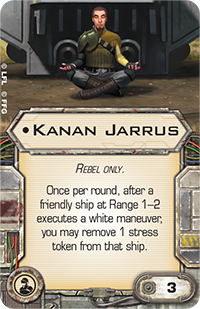
Here's something I think about a bunch: a HoR Millennium Falcon with Kanan crew is stressed at the start of the turn, then dials and executes a white 3-bank. I've previously believed that Kanan could remove the stress, then allow the HoR title to trigger, flip the ship, and receive a stress. However, under a #1 rubric, you wouldn't be able to trigger the HoR title, since you'd need to check conditions (not touching a ship, are not stressed) before activating abilities with an "after execute" trigger. As such, this would lead towards a #2 rubric, with FAA checking the range/arc only when it is about to resolve, not when it triggers.

swx57-millennium-falcon.png kannan-jarrus-crew.png

Edited by theBitterFig

So basically this probably isn't going to be answered conclusively soon :(

16 hours ago, theBitterFig said:

There was a previous thread here, I don't think it conclusively answered things:

https://community.fantasyflightgames.com/topic/263398-snap-wesley-and-flight-assist-astromech-timing/

Anyhow, I think it comes down to a question on how we interpret After X, If Y, Do Z.

1. Do we test "If Y" at the trigger? That is: (After X, If Y), Do Z.

2. Do we test "If Y" when attempting to resolve the ability? That is: After X, (If Y, Do Z).

3. I guess there's also a potential interpretation to After X, If Y, Do Z: check the "If Y" whenever you want. I don't think this would be game-breaking, and it'd still be true to rules-as-written. It's a little more complicated, however.

//

I don't think Gunner/IG-88-D fails under either interpretation rubric, and the more I think about it, I don't think it's an illustrative example. Under #1, both clearly have triggered from the missed attack, and there is a stack of "Do Z" to be resolved. Under #2, after having used IG-88-D, you'd still be able to trigger Gunner, since the check "the attack did not hit" hasn't changed. The original, triggering attack hit either way. Unlike Flight Assist Astromech, which is a current game state check, Gunner is a "did Y happen?" check. It asks a question of an unalterable past, rather than a "is Y true now?" query of an uncertain present.

Oh god, that might be the best sentence I've ever written on these forums.

Here's something I think about a bunch: a HoR Millennium Falcon with Kanan crew is stressed at the start of the turn, then dials and executes a white 3-bank. I've previously believed that Kanan could remove the stress, then allow the HoR title to trigger, flip the ship, and receive a stress. However, under a #1 rubric, you wouldn't be able to trigger the HoR title, since you'd need to check conditions (not touching a ship, are not stressed) before activating abilities with an "after execute" trigger. As such, this would lead towards a #2 rubric, with FAA checking the range/arc only when it is about to resolve, not when it triggers.

swx57-millennium-falcon.png kannan-jarrus-crew.png

Personaly I would go with option 2. It just feels more clean to me, you separate the trigger (the time something happens) from every thing else (checking conditions/performing an operation (to not use the word action)).

But who knows what FFGs intent is...

I think HoR Millennium Falcon with Kanan is good example, but since there is not a measurement involved, its hard to make a direct comparison. My counter argument would be Snap Wexley vs Snap Shot. If Snap did their move and is in arc of an opponent, but then boosted out of arc, you don't get to still perform the attack just because he was in arc at the time of the trigger. Measuring range is what separates these abilities from the rest.

I believe that you get the opportunity to resolve both since they met their trigger, but you only measure once you are actually resolving the ability. FFQ def needs to clear this up, but I can arguments for both sides. I would not really fault a TO for ruling on either side.

42 minutes ago, shaunmerritt said:

I think HoR Millennium Falcon with Kanan is good example, but since there is not a measurement involved, its hard to make a direct comparison. My counter argument would be Snap Wexley vs Snap Shot. If Snap did their move and is in arc of an opponent, but then boosted out of arc, you don't get to still perform the attack just because he was in arc at the time of the trigger. Measuring range is what separates these abilities from the rest.

I believe that you get the opportunity to resolve both since they met their trigger, but you only measure once you are actually resolving the ability. FFQ def needs to clear this up, but I can arguments for both sides. I would not really fault a TO for ruling on either side.

I'm pretty sure Snap v. Snap would be an initiative thing, though. If Snap Shot has initiative over Snap Wexley, they'd trigger their abilities which depend on a ship executing a maneuver first and be able to shoot Greg Grunberg. Wexley could only boost out of range if they have initiative. Wouldn't it be like Valen Rudor vs Tactician? If Valen is range 2 and has initiative, he could boost or barrel roll out of range 2 or out of arc. If Tactician has initiative, she'd put stress on Valen before he'd have a chance to use his action. Likewise, if Tactician had initiative, but Valen was at Range 3, Valen could boost/BR into range 2 after Tactician has failed to apply stress.

Anyhow, I guess both of those are still checking the condition at time of resolution, rather than time of trigger.

Yeah, the more I think about it, Rubric #2 seems like the right one. That's where I started, I got lead off of it for a while, but I think I'm back there.

Edited by theBitterFig

I've come around to agree with bitterfig and shaunmerritt. They trigger at the same time but you may be able to check additional conditions at time of resolution rather than trigger. Kanan + HotR Falcon being a good example in favor

I'm leaning back that way myself tbh.

18 hours ago, theBitterFig said:

Anyhow, I guess both of those are still checking the condition at time of resolution, rather than time of trigger.

Exactly.. the trigger just gives you the change to use that ability. It does not mean its set in stone until you decide to use it. You still have to meet the conditions of the ability to resolve it.