Introducing...an actual game design topic

By MasterShake2, in X-Wing

Rock, Paper, Scissors in game design and X-Wing

-

Rock, Paper, Scissors is one of those games that you will see referenced a lot in game design discussions, but the more I read them, the more it becomes clear that a lot of people are taking away the wrong lessons. Let's examine both the game and some relevant lessons for design.

-

For Starters, we need to break down Rock, Paper, Scissors itself in terms of what the relevant aspects to it are and how they can be applied...or misapplied as appropriate.

-

1: Short Games

Rock, Paper, Scissors is deisgned with a very short play time. This is incredibly important to understand how designers can misstep in applying its principles to other games. An average game is probably 5-10 seconds. This is blisteringly short for almost any other game. For X-Wing, you won't even have your ships set up in that time frame, much less moved onto turn 0 asteroid placement. Even for electronic games, in Overwatch you haven't even finished picking teams in this amount of time. The problem is that the entire rest of Rock, Paper, Scissors literally doesn't work without this short play time. Imagine if the process of selecting your element took 30 minutes to an hour, but it didn't meaningfully changed the outcome.

-

2: Deigned to be played in sets

Rock, Paper, Scissors is always played in sets at the competitive level, but even at the casual level, the game is almost always played as a "best 2 of 3" , "best 3 of 5" etc. This adds an extra element to the game other than just blind luck because a major factor in influencing your decision will be what elements your opponent has previously utilized. This is why the game is virtually always played in sets even when there is very little at steak like who gets to ride shotgun and pick the radio stations.

-

3: Completely Imbalanced

The game is the exact opposite of balanced on an individual level. Paper never beats Scissors. You can do whatever you want, use whatever cunning strategy comes to mind, but Paper never wins in the Scissors matchup. Conversely, Scissors never loses to paper no matter how bad or new to the game you are. It's just pick and win. Quite literally, the only reason this is treated an even semi-balanced is because of the above two factors i.e. games are short and a single lost game doesn't mean an overall loss.

-

4: All game elements are available to both players at all times

You don't go to a Rock, Paper, Scissors tournament with only Rock available...although admittedly this approach would make for some **** short tournaments. At the start of each game, either player can pick from any game element available and use that. This is also a key ingredient to the game because as soon as you only have limited access to the game elements, the obvious imbalance of the individual elements becomes absolutely crippling. All your opponent would have to do in this case would be to figure out what you don't have and you'd be in a situation where victory would be impossible.

-

-

You're probably already seeing some limitations to the Rock, Paper, Scissors model in broader games, but this does prompt the question of "Why does the X>Y>Z>X model show up so much in gaming?". That's a great question...shut up, you were totally thinking that and not "when the **** is this going to be over?". Rock, Paper, Scissors is, at is most basic level, 3 archetypes that have a very specific and carefully crafted relationship with one another. Using this model is really helpful in game design for simplifying down incredibly complex systems. To put it simply, if your game didn't employ archetypes, then every individual element would be its own thing which greatly increases design burden especially because, at that point, it's much harder to contextualize its relationship to other elements. For example, if you boiled X-Wing down to it's various archetypes, you could easily categorize and upgrade as being more useful for Jousters or Arc Dodgers or Turrets, which in turn helps you apply a more appropriate value and also understand what that upgrade should and shouldn't do in order to keep the relationship between those elements in tact.

-

It's pretty clear that, in the initial version of X-Wing, there really weren't archetypes. Wave 1 was almost entirely jousting ships and it took a while for the other archetypes to both emerge and get entrenched in the core of the game. However, once they did, an immediate problem became apparent; jousters sucked. Once the game hit the critical mass and the major archetypes had enough different ships and upgrades to be fully fleshed out, it became apparent that the odd man out in this relationship was the jouster. The only redeeming characteristic of this class was that it generally didn't pay extra points for great dials, reposition actions (Boost or Barrel Roll) or turrets, but this was little solace when they would go whole game barely getting to shoot. What's interesting to examine here is that you can clearly see a point where FFG started to think of their own game in terms of archetypes as jousters have steadily gotten a much better toolset over the expansions.

-

The first major push that I can map to make Jousters great again...sorry, couldn't resist...was the ARC-170/TIE SF. These ships are both basically jousters. Their dials are good, but not great, their access to resposition actions is pretty limited and, while they do have a secondary firing arc, it is notably weaker than the primary on both ships. Two of these pilots, Norra and Quickdraw, are still reasonably common to run into even at the competitive level which shows that FFG was at least on the right track with these ships and the other ARC and SF pilots are not in any way unplayable.

-

What's more interesting, for me at least, is the upgrades we've seen across other archetypes that encourage jousting. Harpoon Missiles are pretty maligned in X-Wing and not without at least some cause, but they have brought jousting back. What's fascinating about the Harpoon is that it actually encourages ships that would avoid the joust like the plague to joust. Miranda is at her weakest on the joust, it's where she can eat the most damage and it's also where eating her shields to buff her weapons can be the most costly, but Harpoons give a reason to do it anyways. It's an interesting discussion as to whether Harpoons should have been Missiles or Torpedoes. As Torpedoes, they would have buffed a lot of weaker ships (B-Wings, X-Wings, Y-Wings, Star Vipers) and would have limited multiple Harpoons as you would have needed two Torpedo slots instead of just a Missile and Torpedo for Extra Munitions which is less common, but all of those ships are notably more expensive than missile carriers, so it would've limited the impact of harpoons by making their inclusion more costly. It's also noteworthy that more arc dodging ships have Harpoons than Torpedoes, so making them a missile encourages the arc dodgers to dodge arcs less and greed for that missile shot. It's easy to cry power creep on Harpoons because they're so much better than the equally costed Concussion Missile, but I don't think that's true. Concussion Missiles saw virtually no play with only the most sporadic of appearances. If an element is so far below the power curve that it almost never sees play, making a version of it that will see play isn't power creep.

-

Hands down, one of the weirdest buffs to jousting, and stick with me on this because it may seem crazy, is the Trajectory Simulator. Think about it for a minute; until the Trajectory Simulator, when would you even catch a bomb laden ship even trying to joust? But that's just what the Trajectory Simulator does, encourage the bomber archetype, one of the least likely archetypes next to turrets, into a joust. This is a pretty impressive accomplishment when you break it down.

-

There's definitely a lot more I could say about the topic and the evolution of the various archetypes, but the Jouster is one of the more interesting because it was at the bottom of the barrel for so long and also includes a lot of iconic Star Wars ships. The Flight Assist Astromech is both one of the most interesting and potentially problematic upgrades I've seen in a long time, but it's practically an entire other article to discuss that card at length.
23gjnw.jpg via Imgflip Meme Generator

-

The two biggest problems with the Rock, Paper, Scissors model is when designers go full Rock, Paper, Scissors or one of the archetypes becomes too weak.

-
23gjuz.jpg via Imgflip Meme Generator

Going full Rock, Paper, Scissors creates a very unfun game experience where one archetype can never win against it's natural predator. It's not simply at a disadvantage, it will never win short of some egregious misplay or absolutely brilliant play. The makes for some very uninteresting games that were essentially decided at list creation/deck construction/character creation etc. and requires very little player input. You'll occaisionally see an upset, but frequently the game is such a foregone conclusion that it's not interesting to either player or the casual spectator. This means that there's a lot of impetus on the design team to keep the natural predator, prey relationships between archetypes present, but not completely dominant which a hard balancing act that many design teams fail at.

-

The second biggest problem is when one of the archetypes becomes too weak in the relationship. There could be a variety of reasons for this ranging from that archetype not getting enough attention, to it's primary prey getting unintentionally buffed, to it's primary predator becoming omni-present. Whenever this happens, the house of cards collapses. Rock, Paper, Scissors without Paper is just an all Rock meta...do you smell something cooking? Ideally, this will only be temporarily as even at it weakest that archetype will still be a natural predator and the prevalence of preferred prey will allow it seep back into the meta, but sometimes this just doesn't happen and the game gets dominated by one archetype (I definitely recall an agressively unfun period in M:TG's history where control had no natural predators, so every game was just a "Mother, may I" fest).

-

Anyways, hopefully you took something away from this rambling and if, not at least reading is good for the cognitive abilities :)

1 hour ago, MasterShake2 said:

1: Short Games

Rock, Paper, Scissors is deisgned with a very short play time. This is incredibly important to understand how designers can misstep in applying its principles to other games. An average game is probably 5-10 seconds. This is blisteringly short for almost any other game. For X-Wing, you won't even have your ships set up in that time frame, much less moved onto turn 0 asteroid placement. Even for electronic games, in Overwatch you haven't even finished picking teams in this amount of time. The problem is that the entire rest of Rock, Paper, Scissors literally doesn't work without this short play time. Imagine if the process of selecting your element took 30 minutes to an hour, but it didn't meaningfully changed the outcome.

-

2: Deigned to be played in sets

Rock, Paper, Scissors is always played in sets at the competitive level, but even at the casual level, the game is almost always played as a "best 2 of 3" , "best 3 of 5" etc. This adds an extra element to the game other than just blind luck because a major factor in influencing your decision will be what elements your opponent has previously utilized. This is why the game is virtually always played in sets even when there is very little at steak like who gets to ride shotgun and pick the radio stations.

-

3: Completely Imbalanced

The game is the exact opposite of balanced on an individual level. Paper never beats Scissors. You can do whatever you want, use whatever cunning strategy comes to mind, but Paper never wins in the Scissors matchup. Conversely, Scissors never loses to paper no matter how bad or new to the game you are. It's just pick and win. Quite literally, the only reason this is treated an even semi-balanced is because of the above two factors i.e. games are short and a single lost game doesn't mean an overall loss.

-

4: All game elements are available to both players at all times

You don't go to a Rock, Paper, Scissors tournament with only Rock available...although admittedly this approach would make for some **** short tournaments. At the start of each game, either player can pick from any game element available and use that. This is also a key ingredient to the game because as soon as you only have limited access to the game elements, the obvious imbalance of the individual elements becomes absolutely crippling. All your opponent would have to do in this case would be to figure out what you don't have and you'd be in a situation where victory would be impossible.

Very good insights. I've never seen it broken down like this before.

Nice post!

I'd like to add that what further killed jousters in X-Wing is the fact that if we take Jousters / Arc-Dodgers / Turrets as a sort of Rock/Paper/Scissors scenario is that Turrets have morphed from Scissors to Scissors AND Paper. Miranda, Dash and any Engine Upgraded large turret can arc dodge on par with the best of arc dodgers, sometimes even better (PTL Dash in his hayday being almost impossible to catch with a lower-PS jouster).

I liked your article. Rational, reasoned. Nice work.

Quote

Going full Rock, Paper, Scissors creates a very unfun game experience where one archetype can never win against it's natural predator. It's not simply at a disadvantage, it will never win short of some egregious misplay or absolutely brilliant play. The makes for some very uninteresting games that were essentially decided at list creation/deck construction/character creation etc. and requires very little player input. You'll occaisionally see an upset, but frequently the game is such a foregone conclusion that it's not interesting to either player or the casual spectator. This means that there's a lot of impetus on the design team to keep the natural predator, prey relationships between archetypes present, but not completely dominant which a hard balancing act that many design teams fail at.

You made excellent comments about the nature of the Harpoon's effect on X-Wing through some indirect factors (missile vs. torpedo).

I think this is more of a question: How do these (following) factors impact the theory-craft of game design?

1. Harpoon's cost relative to other similar ordinance (torpedo/missile family).

2. Target Lock SPEND requirement (Harpoon is a rare missile to not require TL forfeiture to fire). The sub-category here is the statistical awesomeness of 4 dice with Target Lock, and the ease with which TLs can be aquired since Range 3+ target lock capability in game.

3. Target Lock splash damage. The sub-category is the complimentary (and sometimes self-harming) nature of this game impact, particularly in the alpha strike meta;

4. Is it not demonstrable (mathematically) that Harpoon implements a full Rock/Paper/Scissors within the "Attack Dice:Cost: Hit Likelihood: Ease of Use" formaula where Harpoon relegates TIE Swarms, or TIE Interceptors (for example's sake, and not to be exclusive) into really bad ideas. Harpoon is "stupid not to bring".

5. Harpoon alone changes the way all list-building in the game must be considered. The release of Harpoon is, at least at this present moment, an epochal event.

3 minutes ago, heliodorus04 said:

4. Is it not demonstrable (mathematically) that Harpoon implements a full Rock/Paper/Scissors within the "Attack Dice:Cost: Hit Likelihood: Ease of Use" formaula where Harpoon relegates TIE Swarms, or TIE Interceptors (for example's sake, and not to be exclusive) into really bad ideas. Harpoon is "stupid not to bring".

This is interesting because TIE Swarms and Interceptors were already pretty rare with the rise of bombs and Miranda. If you never see TIE Swarms, adding another factor that kills them isn't exactly meta-shaking. I think a question for anyone to ponder on Harpoons is "Is this the lesser evil?". It's clearly a good card and we're seeing it in a lot of places, but we're also seeing a much more open meta in return as Harpoons are actually inviting an approach to the game that allows ships to survive that couldn't have in a strictly Arc Dodging/Turret meta. Harpoons might be the most significant upgrade released in the history of X-Wing, but in a good way. We'll see, but I think FFG actually knew what they were doing with this card (or got stupidly lucky).

Well, fist we got arc-dodgers that were more efficient than jousters like Soontir. Then, we got arc-dodging turrets like Fat Han. No wonder jousters disappeared.

Eventually we got efficient, arc-dodging, turrets like Dengar. Now we have efficient, arc-dodgers, Bomb-Dropping, turrets.

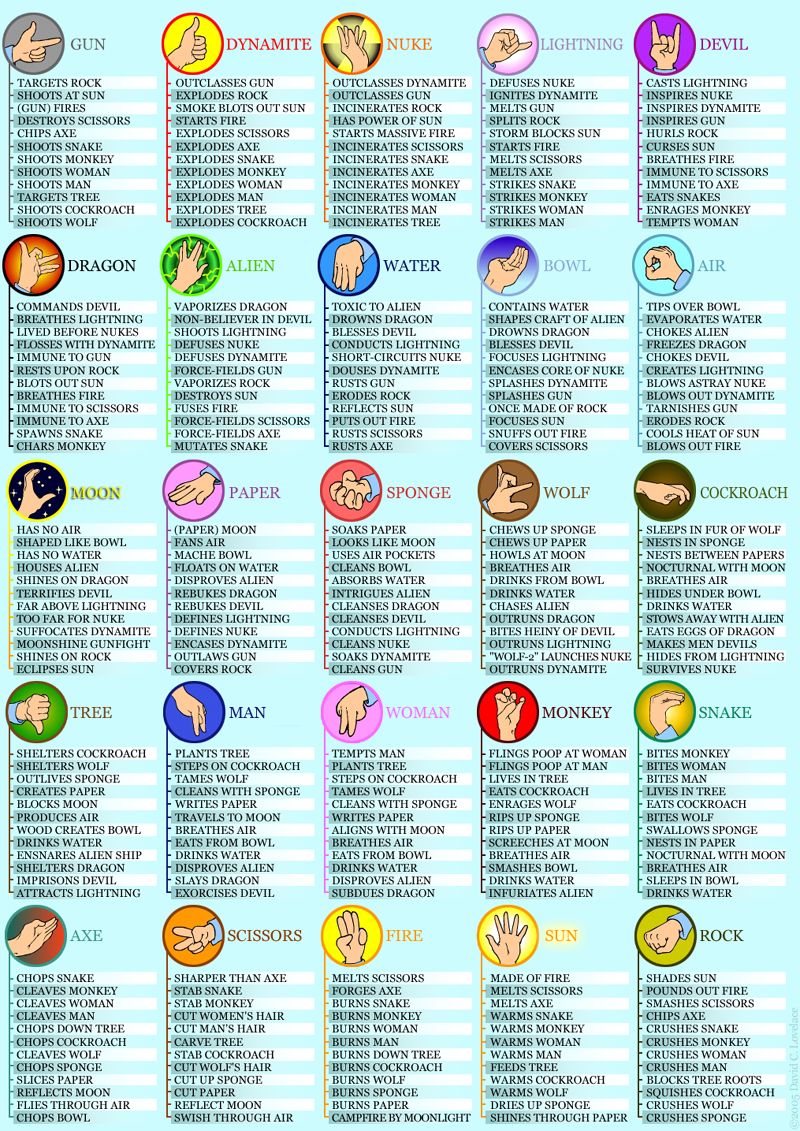
It's like adding dynamite as a fourth option to RPS.

22 minutes ago, MasterShake2 said:

This is interesting because TIE Swarms and Interceptors were already pretty rare with the rise of bombs and Miranda. If you never see TIE Swarms, adding another factor that kills them isn't exactly meta-shaking. I think a question for anyone to ponder on Harpoons is "Is this the lesser evil?". It's clearly a good card and we're seeing it in a lot of places, but we're also seeing a much more open meta in return as Harpoons are actually inviting an approach to the game that allows ships to survive that couldn't have in a strictly Arc Dodging/Turret meta. Harpoons might be the most significant upgrade released in the history of X-Wing, but in a good way. We'll see, but I think FFG actually knew what they were doing with this card (or got stupidly lucky).

What ships are surviving that wouldn't have? I'm not seeing that. I'm seeing the opposite. Maybe the Alpha Shuttle itself? But that's a factor of it being a dirt cheap Harpoon platform with 7 hit points (see below). The Nu is pretty devastating, and you can get 4 of them in a generic list. Hard to arc dodge all of them...

A Harpoon has a 73+ probability of scoring 3 hits on its native Target Lock (and above 75 probability for 4 hits if a Focus is available) . This is its innate problem (all other attack types are inferior per cost point). This is prior to splash damage, combination effects (such as TLT or Long Range Scanners), ease of access, effective range (huge!). It creates the dilemma of "Do I have enough Hull to survive an alpha strike (or do I have a high enough PS to arc dodge lower pilots' harpoons). Harpoons should be in every list (in fact, they must be).

In trying to maintain my question's relationship to the original "Game Theory" post, how is this not a reduction of the Rock/Paper/Scissors design less skill dependent, less matchup dependent?

This Harpoon thing just works, all the time. They're great. Everybody should have at least 2 in a list! In X--Wing's abstraction of Rock/Paper/Scissors, revealing your attack item first (i.e., firing first with Harpoons) is now more important than whether your opponent picked Rock/Paper/Scissor (or Harpoon). Piloting matters, but less so than in the past; the harpoon survivability of your list arises as a factor competing with the importance of pilot skill. It's much easier to set up that Range2-Range3 firing area and count on 3 hits from the firer (even on 4 evade dice, you can only count on 1 evade, leaving 2 damage and a harpoon condition card).

I don't think it's reasonable to point out the list-expanding capabilities created by Harpoon without discussing the reduction in armaments you're going to encounter; Harpoon is now ubiquitous, hits hard and accurate, leaves a splash damage generation factory (that TLTs love), and is cheap enough to throw on suicide ships. It's all around bad news. Requiring expenditure of the TL when firing seems like an obvious leverage point that could not have been missed (i.e., obvious power creep decision).

The evolution of the game has had its ups and downs; what I dislike is when a card becomes so obviously advantageous that it becomes everywhere. Harpoon is everywhere. It's not fun for me (emphasis added). I don't dislike the thing itself. But game impact is overwhelming and reduces flavor for me .

If you talk to or listen to players like Nand Torfs, Duncan Howard, Paul Heaver, etc you start to understand that a good players definition of a poor matchup and an average players definition are two very very different things. For me at least I have always been genuinely surprised by what they consider to be a counter and how wrong I tend to be about it .

Edited by Boom Owl

"The difference between a good matchup and a great one: a good matchup appears evenly balanced by everyone. A great one appears to be unblanaced in equal parts but in favor of opposite sides."

If the only opinions that matter are the tournament players, then the community is more incestuously compromised by group-think than my current impression...

I can't convince new players to start buying into THIS game. The cost isn't worth the payoff. That such a majority of X-Wing players think harpoons (or TLTs, or simply the ubiquitous Miranda DOni) are fun is another matter altogether... I've tried to make my gameplay fit the meta, but it just isn't fun to always have to buy the same 10 basic lists and join in abusing the most leveraged stress points of the game. I realize this means I should sell my toys and leave, eh? I've always wanted a much more cinematic game than the rules set enables.

Documented balancing mistakes include Deadeye/Jumpmaster (as well as Jumpmaster and its torpedoes, illicit, and mech), Biggs revamp, Tactician, among others. I recall the 'truly top players' saying that those original states were okay at the time, too...

Edited by heliodorus04
3 hours ago, heliodorus04 said:

"The difference between a good matchup and a great one: a good matchup appears evenly balanced by everyone. A great one appears to be unblanaced in equal parts but in favor of opposite sides."

If the only opinions that matter are the tournament players, then the community is more incestuously compromised by group-think than my current impression...

I can't convince new players to start buying into THIS game. The cost isn't worth the payoff. That such a majority of X-Wing players think harpoons (or TLTs, or simply the ubiquitous Miranda DOni) are fun is another matter altogether... I've tried to make my gameplay fit the meta, but it just isn't fun to always have to buy the same 10 basic lists and join in abusing the most leveraged stress points of the game. I realize this means I should sell my toys and leave, eh? I've always wanted a much more cinematic game than the rules set enables.

Documented balancing mistakes include Deadeye/Jumpmaster (as well as Jumpmaster and its torpedoes, illicit, and mech), Biggs revamp, Tactician, among others. I recall the 'truly top players' saying that those original states were okay at the time, too...

Ouch. I’m sorry your having such a bad time. Fly casual more often. Build lists, just to build list. Get away from the tournaments if it is making this in-fun.

We can do more than 3 ;)

rps25_outcomes.jpg

Now here is a game within a game, a game development exercise using the chart above. :)

Now while this may be balanced, try to make it so that you divide it into 5 factions each with 5 units. Now after you pick your group of 5 out of those 5 you can only pick 3. There is the difficulty in it. While the latter part of the selection is a choice entirely up to the player the first part of the selection is up developer. The Developer may accidentally place one ore more units in a single faction that none of the other 4 factions can counter.

Edited by Marinealver

Can we please stop with faction balancing? You are always limited to a selection from a chosen faction, never the whole during a game. That means balancing by faction is really not useful. Which means the unit of balancing is the ship and the squad, nothing else.

@MasterShake2 : great post, very interesting to read

Good insights!

The interesting thing about the way X-Wing handles rock, paper, scissors-like choices in the game is that it is possible to play a strong counter "wrong" and force a ship to adopt a position that more closely resembles an archetype that is weak at this point in time (i.e. forcing arc dodgers in a straight up joust).

On ‎1‎/‎27‎/‎2018 at 11:04 AM, MasterShake2 said:

What's more interesting, for me at least, is the upgrades we've seen across other archetypes that encourage jousting. Harpoon Missiles are pretty maligned in X-Wing and not without at least some cause, but they have brought jousting back. What's fascinating about the Harpoon is that it actually encourages ships that would avoid the joust like the plague to joust. Miranda is at her weakest on the joust, it's where she can eat the most damage and it's also where eating her shields to buff her weapons can be the most costly, but Harpoons give a reason to do it anyways. It's an interesting discussion as to whether Harpoons should have been Missiles or Torpedoes. As Torpedoes, they would have buffed a lot of weaker ships (B-Wings, X-Wings, Y-Wings, Star Vipers) and would have limited multiple Harpoons as you would have needed two Torpedo slots instead of just a Missile and Torpedo for Extra Munitions which is less common, but all of those ships are notably more expensive than missile carriers, so it would've limited the impact of harpoons by making their inclusion more costly. It's also noteworthy that more arc dodging ships have Harpoons than Torpedoes, so making them a missile encourages the arc dodgers to dodge arcs less and greed for that missile shot. It's easy to cry power creep on Harpoons because they're so much better than the equally costed Concussion Missile, but I don't think that's true. Concussion Missiles saw virtually no play with only the most sporadic of appearances. If an element is so far below the power curve that it almost never sees play, making a version of it that will see play isn't power creep.

-

Hands down, one of the weirdest buffs to jousting, and stick with me on this because it may seem crazy, is the Trajectory Simulator. Think about it for a minute; until the Trajectory Simulator, when would you even catch a bomb laden ship even trying to joust? But that's just what the Trajectory Simulator does, encourage the bomber archetype, one of the least likely archetypes next to turrets, into a joust. This is a pretty impressive accomplishment when you break it down.

-

There's definitely a lot more I could say about the topic and the evolution of the various archetypes, but the Jouster is one of the more interesting because it was at the bottom of the barrel for so long and also includes a lot of iconic Star Wars ships. The Flight Assist Astromech is both one of the most interesting and potentially problematic upgrades I've seen in a long time, but it's practically an entire other article to discuss that card at length.

23gjnw.jpg via Imgflip Meme Generator

So a Few Things:

*Very interesting

* To the first few things above. So it's safe to say that jousting itself may have been buffed as a strategy, even though the chassis of ships that really needed the buff never really got it? Is jousting really buffed now that Miranda can do it as a viable strategy even though classic jousters like x wings still suck at it? I guess... But it's not the type of jousting buff I was hoping for. I really think they should have made it a torpedo and not a missile.

* Can you write the FFA discussion sooner as opposed to later? Very curious to read about this. kthnx.

On ‎1‎/‎28‎/‎2018 at 9:30 AM, MasterShake2 said:

This is interesting because TIE Swarms and Interceptors were already pretty rare with the rise of bombs and Miranda. If you never see TIE Swarms, adding another factor that kills them isn't exactly meta-shaking. I think a question for anyone to ponder on Harpoons is "Is this the lesser evil?". It's clearly a good card and we're seeing it in a lot of places, but we're also seeing a much more open meta in return as Harpoons are actually inviting an approach to the game that allows ships to survive that couldn't have in a strictly Arc Dodging/Turret meta. Harpoons might be the most significant upgrade released in the history of X-Wing, but in a good way. We'll see, but I think FFG actually knew what they were doing with this card (or got stupidly lucky).

I guess we'll have to see. Maybe if FFG follows up in the coming months with some type of generic swarm buff, specifically for TIE fighters, than I would agree with you.

Otherwise,.... I would probably go with stupidly lucky >.>