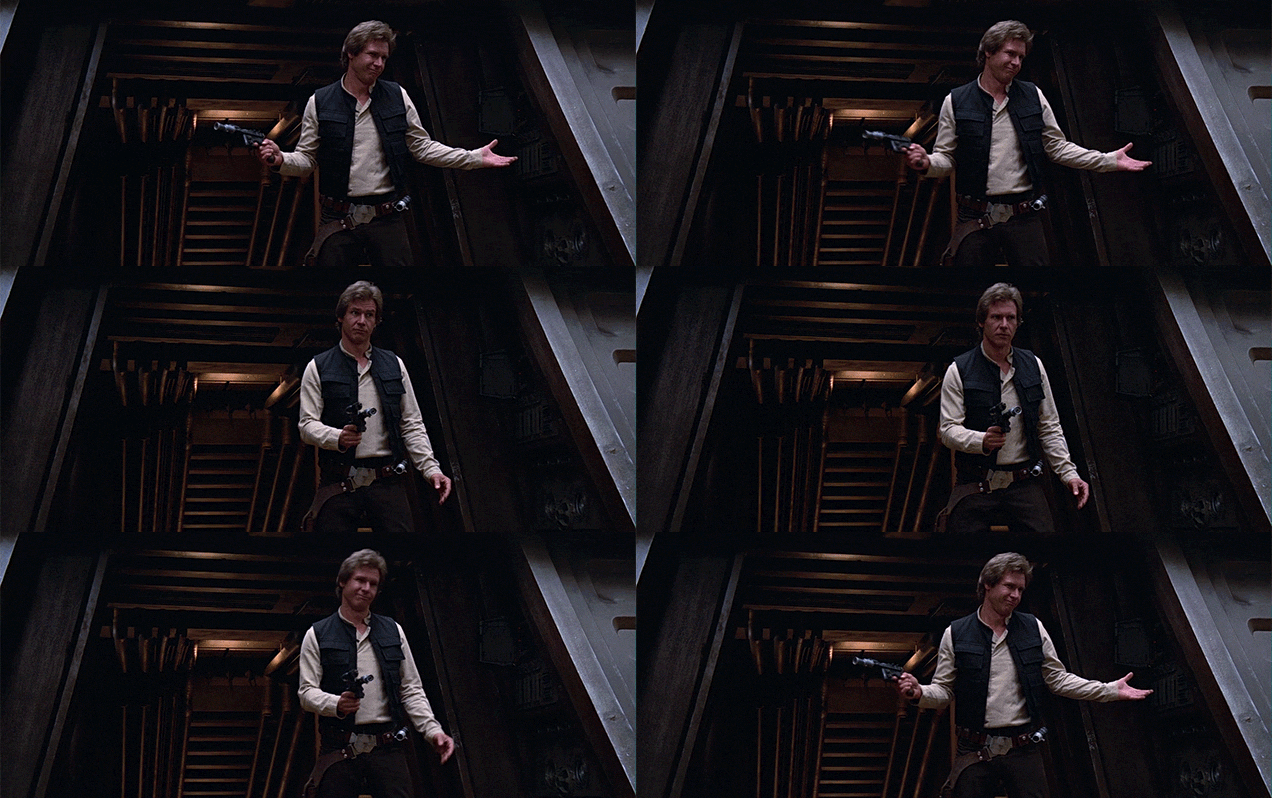
https://community.fantasyflightgames.com/topic/268072-introducingthe-scrub/
In response to this heaping pile of hot off the presses wisdom that is extremely current and releventm I present a counterpoint:
So far you have learned only obvious and mundane things. I know that taking the first step can be the hardest part of the journey, so I wanted to coddle you a little just to get you going. The coddling stops here. You must now understand the cold, hard truth of competition. This is the difficult part to accept. This is the part that will upset you. You will have many defense mechanisms that will tell you that I am wrong, but I assure you with certainty that on this point I am delivering divine truth directly to you.
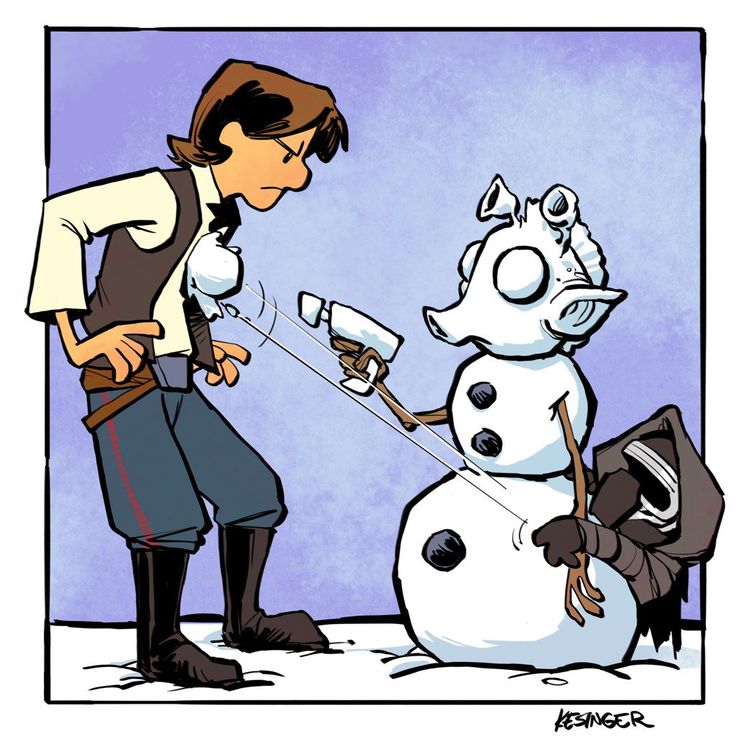
Introducing...the Fly Casual Nice Guy
The derogatory term “Fly Casual Nice Guy” means several different things. One definition is someone (especially a game player) who is not good at something (especially a game). By this definition, we all start out as Fly Casual Nice Guys, and there is certainly no shame in that. I mean the term differently, though. A Fly Casual Nice Guy is a player who is handicapped by self-imposed rules that the game knows nothing about. A Fly Casual Nice Guy does not play to win.
Now, everyone begins as a poor player—it takes time to learn a game to get to a point where you know what you’re doing. There is the mistaken notion, though, that by merely continuing to play or “learn” the game, one can become an Insufferable Screeching WAAC-Off. In reality, the “Fly Casual Nice Guy” has many more mental obstacles to overcome than anything actually going on during the game. The Fly Casual Nice Guy has lost the game even before it starts. He’s lost the game even before deciding which game to play. His problem? He does not play to win.
The Fly Casual Nice Guy would take great issue with this statement for he usually believes that he is playing to win, but he is bound up by an intricate construct of fictitious rules that prevents him from ever truly competing. These made-up rules vary from game to game, of course, but their character remains constant. Let’s take a fighting game off of which I’ve made my gaming career: X-Wing Miniatures.
In X-Wing Miniatures, the Fly Casual Nice Guy labels a wide variety of tactics and situations “cheap.” This “cheapness” is truly the mantra of the Fly Casual Nice Guy. Performing a turret on someone is often called cheap. A turret is a special kind of move that grabs an opponent and damages him, even when the opponent is defending against all other kinds of attacks. The entire purpose of the turret is to be able to damage an opponent who sits and arc-dodges and doesn’t attack. As far as the game is concerned, turreting is an integral part of the design—it’s meant to be there—yet the Fly Casual Nice Guy has constructed his own set of principles in his mind that state he should be totally impervious to all attacks while arc-dodgeing. The Fly Casual Nice Guy thinks of arc-dodgeing as a kind of magic shield that will protect him indefinitely. Why? Exploring the reasoning is futile since the notion is ridiculous from the start.
You will not see a classic Fly Casual Nice Guy turret his opponent five times in a row. But why not? What if doing so is strategically the sequence of moves that optimizes his chances of winning? Here we’ve encountered our first clash: the Fly Casual Nice Guy is only willing to play to win within his own made-up mental set of rules. These rules can be staggeringly arbitrary. If you beat a Fly Casual Nice Guy by turreting projectile attacks at him, keeping your distance and preventing him from getting near you—that’s cheap. If you turret him repeatedly, that’s cheap, too. We’ve covered that one. If you arc-dodge for fifty seconds doing no moves, that’s cheap. Nearly anything you do that ends up making you win is a prime candidate for being called cheap. X-Wing Miniatures was just one example; I could have picked any competitive game at all.
Doing one move or sequence over and over and over is a tactic close to my heart that often elicits the call of the Fly Casual Nice Guy. This goes right to the heart of the matter: why can the Fly Casual Nice Guy not defeat something so obvious and telegraphed as a single move done over and over? Is he such a poor player that he can’t counter that move? And if the move is, for whatever reason, extremely difficult to counter, then wouldn’t I be a fool for not using that move? The first step in becoming a insufferable Screeching WAAC-Off is the realization that playing to win means doing whatever most increases your chances of winning. That is true by definition of playing to win. The game knows no rules of “honor” or of “cheapness.” The game only knows winning and losing.
A common call of the Fly Casual Nice Guy is to cry that the kind of play in which one tries to win at all costs is “boring” or “not fun.” Who knows what objective the Fly Casual Nice Guy has, but we know his objective is not truly to win. Yours is. Your objective is good and right and true, and let no one tell you otherwise. You have the power to dispatch those who would tell you otherwise, anyway. Simply beat them.
Let’s consider two groups of players: a group of Tryhard Wannabes and a group of Fly Casual Nice Guys. The Fly Casual Nice Guys will play “for fun” and not explore the extremities of the game. They won’t find the most effective tactics and abuse them mercilessly. The Tryhard Wannabes will. The Tryhard Wannabes will find incredibly overpowering tactics and patterns. As they play the game more, they’ll be forced to find counters to those tactics. The vast majority of tactics that at first appear unbeatable end up having counters, though they are often quite subtle and difficult to discover. Knowing the counter tactic prevents the other player from using his tactic, but he can then use a counter to your counter. You are now afraid to use your counter and the opponent can go back to sneaking in the original overpowering tactic. This concept will be covered in much more detail later.
The Tryhard Wannabes are reaching higher and higher levels of play. They found the “cheap stuff” and abused it. They know how to stop the cheap stuff. They know how to stop the other guy from stopping it so they can keep doing it. And as is quite common in competitive games, many new tactics will later be discovered that make the original cheap tactic look wholesome and fair. Often in fighting games, one character will have something so good it’s unfair. Fine, let him have that. As time goes on, it will be discovered that other characters have even more powerful and unfair tactics. Each player will attempt to steer the game in the direction of his own advantages, much how grandmaster chess players attempt to steer opponents into situations in which their opponents are weak.
Let’s return to the group of Fly Casual Nice Guys. They don’t know the first thing about all the depth I’ve been talking about. Their argument is basically that ignorantly mashing buttons with little regard to actual strategy is more “fun.” Superficially, their argument does at least look valid, since often their games will be more “wet and wild” than games between the experts, which are usually more controlled and refined. But any close examination will reveal that the experts are having a great deal of this “fun” on a higher level than the Fly Casual Nice Guy can even imagine. Turreting together some circus act of a win isn’t nearly as satisfying as reading your opponent’s mind to such a degree that you can counter his every move, even his every counter.
Can you imagine what will happen when the two groups of players meet? The experts will absolutely destroy the Fly Casual Nice Guys with any number of tactics they’ve either never seen or never been truly forced to counter. This is because the Fly Casual Nice Guys have not been playing the same game. The experts were playing the actual game while the Fly Casual Nice Guys were playing their own homemade variant with restricting, unwritten rules.
The Fly Casual Nice Guy has still more crutches. He talks a great deal about “skill” and how he has skill whereas other players—very much including the ones who beat him flat out—do not have skill. The confusion here is what “skill” actually is. In X-Wing Miniatures, Fly Casual Nice Guys often cling to jousters as a measure of skill. A jouster is a sequence of moves that is unarc-dodgeable if the first move hits. Jousters can be very elaborate and very difficult to pull off. But single moves can also take “skill,” according to the Fly Casual Nice Guy. The “S-Loop” or “T-Roll” in X-Wing Miniatures is performed by holding the joystick toward the opponent, then down, then diagonally down and toward as the player presses a punch button. This movement must be completed within a fraction of a second, and though there is leeway, it must be executed fairly accurately. Ask any Fly Casual Nice Guy and they will tell you that a S-Loop is a “skill move.”
I once played a Fly Casual Nice Guy who was actually quite good. That is, he knew the rules of the game well, he knew the character matchups well, and he knew what to do in most situations. But his web of mental rules kept him from truly playing to win. He cried cheap as I beat him with “no skill moves” while he performed many difficult S-Loops. He cried cheap when I turreted him five times in a row asking, “Is that all you know how to do? Turret?” I gave him the best advice he could ever hear. I told him, “Play to win, not to do ‘difficult moves.’” This was a big moment in that Fly Casual Nice Guy’s life. He could either ignore his losses and continue living in his mental prison or analyze why he lost, shed his rules, and reach the next level of play.
I’ve never been to a tournament where there was a prize for the winner and another prize for the player who did many difficult moves. I’ve also never seen a prize for a player who played “in an innovative way.” (Though chess tournaments do sometimes have prizes for “brilliancies,” moves that are strokes of genius.) Many Fly Casual Nice Guys have strong ties to “innovation.” They say, “That guy didn’t do anything new, so he is no good.” Or “person X invented that technique and person Y just stole it.” Well, person Y might be one hundred times better than person X, but that doesn’t seem to matter to the Fly Casual Nice Guy. When person Y wins the tournament and person X is a forgotten footnote, what will the Fly Casual Nice Guy say? That person Y has “no skill” of course.
You can gain some standing in a gaming community by playing in an innovative way, but that should not be the ultimate goal. Innovation is merely one of many tools that may or may not help you reach victory. The goal is to play as excellently as possible. The goal is to win.