The Tower of the Ancients - A Cautionary Tale...

By talismanisland, in Talisman Home Brews

I was just looking through one of my many "project" folders and thought I would share a tale with you about why you should think long and hard about an expansion before you set out to make it.

Back in June last year I visited Toys 'R' Us and saw a cool looking game based on the new Indian Jones film. The game was called Akator Temple Race Game and had a lovely plastic "tower" which represents a stairway of sorts and you turn the top of the tower and press it down and a couple of the steps randomly "collapse" causing players to fall.
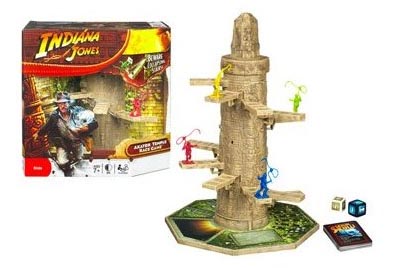
tota_idea.jpg

"Brilliant" I thought. "That will make a cool tower for Talisman". So, I bought the game, even though it was about £20 and went home.

I got home, unboxed the game and found that the tower was the exact size of the Inner Region from the Talisman main board and the steps were just wide enough to take a Talisman miniature, so I began to formulate a plan.

I made an image file the size of the Inner Region, took examples of the art where it overlaps from the Middle Region (Black Knight's head, Port of Power etc) and set to. The board took shape and the idea was simple... Enter the Portal (probably using a Talisman), head through the randomly placed jungle (cards would be placed already) and then onto the Tower.
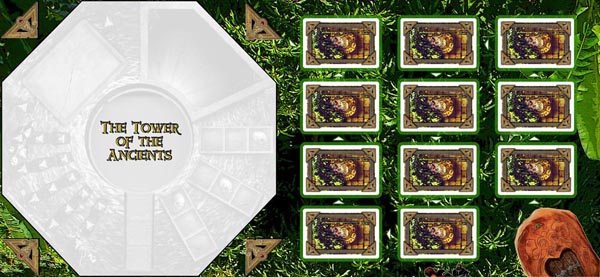
tota_small.jpg

The Tower was my favourite part, as I could just imagine players going up the stairs, only to fall to and injure themselves by their own hand! It was genius... or so I thought.

Then I got to thinking about the mechanics. What is a South American Indian temple doing at the middle of the Talisman board? What makes this expansion different? What makes the encounter cards any different from standard cards or even the Inner Region spaces? Would a player be really annoyed if they got to the last step of the Tower and then fell and was out of the game?

I realise that one of my favourite cards from old Talisman, the Horrible Black Void, would do a similar thing, but this could happen to everyone who played the game. Not so much fun...

It then struck me that I did not have a clear idea of what to do with the expansion, or whether it would actually be a particulary good idea. All I really knew was that it had a really cool tower...

So, I scrapped the idea, gave the game to my girlfriend's son and then filed the images in a folder on my Desktop, so that it would haunt me to this day...

Oh well, at least I got a nice card back out of the game's box art. Now all I need is an expansion for it to go with...
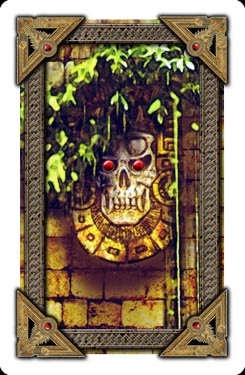
tota_cardback.jpg

The moral of this story, if it really has one, is that just because something sounds like a good idea, doesn't mean it will be in practice. I have been guilty in the past of making some cards based on a cool idea or a great film I have just seen, but you have to think about whether it will go with the game. The Princess Bride is an epic film, but it has nothing in common with Talisman. Most importantly, anything you make has to have a point.

This series of events hasn't stopped me from buying something that I think might make an awesome addition to the game, but it has made me think twice before I set to work on an idea...
Perhaps it will cheer you up a bit to look at it this way. The tower inspired you to come up with a lot of interesting ideas, some of which will no doubt resurface in other projects. Moreover, you might not have thought of some of those ideas otherwise. Why? Because the actions people take are shaped heavily by context. Whereas computer programs solve problems by "planning" or methodically examining every possible combination until the right one is found, people solve problems more by experimentation, generalization, and serendipity. The context inspires an action, and the action creates a new context: try something, see what happens, then try something else based on the result. Without that context (initially the presence of the tower, but then everything that happened afterward as well), you don't necessarily get the same results.

Case in point: if this project was sitting on an old backup disk that you hadn't looked at in years instead of in a folder on your desktop, you would not have written this post.

I think you are taking the right lesson away from this. Namely, don't commit too early. By this I mean don't move too quickly from ideas to production quality work. If you had just sketched your board on a sheet of paper, and written your cards up on index cards (or nowadays, a different card type in SE), you would probably have realized that the themes didn't quite match earlier on, before you had done so much work. And you might have been more likely to try a different direction instead of abandoning the idea completely. For example, depending on how sensitive the mechanism is, you might have been able to cover over the existing design with a very thin layer of spackling compound, then scratched on a more European design in its place. I've made an entire castle (including a tower) this way using a base of styrofoam, foam core, cardboard tubes, and thick card, and it works quite well. (To finish, dry brush some paint on, then add a layer of white glue thinned with water so the spackling isn't so fragile, then spray with a spray varnish as otherwise the glue layer will become sticky again if it gets wet.) Or abandon the collapsing stairs bit and put a static tower in the middle. (Towers on board game boards are always neat, whether they have moving parts or not!)

Hmmm... I had hoped to show you the bright side, but looking this pose over I suppose you might just end up smacking yourself and saying "Uh! Spackling! I shoulda kept that tower after all!"

Cheers,
Chris

I agree with Thelric in part, it is not all a loss. And to be honest, I never equated the tower to the HBV at all... even after you said so. I hate the card! A falling adventure wouldn't have to die automatically but rather be injured based on the height of the fall. A certain number of lives would be lost, possibly Followers would be killed or lost, or equipment might be broken. If the adventurer still had lives after a fall, it could try again or run for healing, though others might have gotten past and are closing on the endgame. The approach was sounding very "adventurous" and appealing.

The downside of course would be others being able to replicate the tower itself for their own game. 3D components for a flat board game are troublesome. Another way to go is create a spiral patterned board overlay. Anyone falling is sent backward along the path a certain number of spaces and loses a certain amount of Lives, requiring a save roll for each follower (the roll being harder for the amount of fall).

I don't know the game you were basing this on or how it is played, but perhaps there is a notion that is less literally taken from it that might still bear consideration.

Thanks for the encouragement guys, but I think the whole idea for the expansion came from that tower.

The point of my post was really that people need to think about expansions and not jump into them because they sound "cool".

I still have the files though and even the overlay may come in handy at some point. I've always fancied a jungle theme, even back in 2nd Edition days after I thought about Talisman Island. It would have been a kind of "Lost Valley" expansion of sorts. In fact, I still have the files I made for that, as I tend not to delete much - just in case!

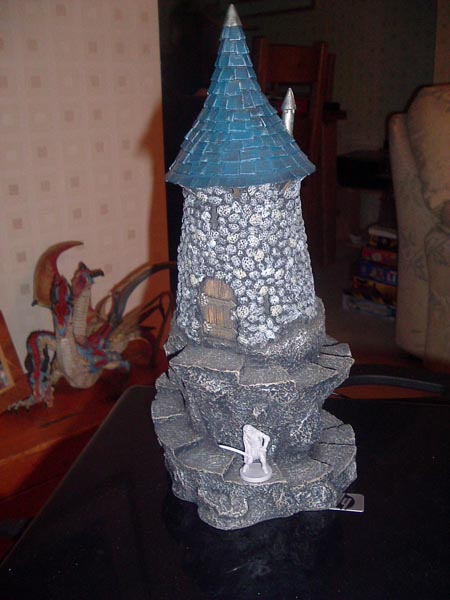
I even caved in and bought a great looking "Wizard's Tower" made by Pegasus Hobbies (or something). As my next idea. It looks nice on my desk at any rate...

wizards_tower_small.jpg

The problem that I have is that I have too many ideas or projects in my head at once and very few get finished. Mainly because they just aren't worth it, but sometimes because I just can't see a way around certain things. This was probably just Project #2538556 in that list...

Oh well, onwards and upwards with Project #3678474!

The tower is slick! And you're right... Perhaps the pieces of your last idea didn't assemble the way you wanted. (Been there, done that, over and over. Lots of false starts and even false finishes.) But that is part of artistic creation, and I guess I will offer you a counterpoint.

In writing fiction, be it vignettes, short stories, etc., or even on to a novel in scope and size, there are lots of false starts in the planning, sometimes even in the work phase, though they are fewer... even failures in the finished product. It will always happen; it can be minimized but it can never be avoided (those who say it can spend their whole lives in the planning phase and never reach the finish on anything). Failures in any phase teach us more than just if and when to move to another phase. You already showed yourself that when you analyzed what was wrong. That's the real lesson in it.

Barb and I have files upon files of stuff from such going back over 20 years - be they crumbs of planning or fully finished projects. She has three finished novels in the closet that will never see the light of day; I have one. Most of those real or virtual scrap pages won't ever come to anything, but a few pieces have and will. For those who don't give up in whatever endeavor, something will always be pulled out of the closet eventually.