The Shistavanen wasn't in the movie though right?!
'Thinking Like Thrawn'
You, Desslok, Donovan, Absol, Kyla, Dante, Kael (those just off the top of my head) would all write articles I'd enjoy reading. I many not always agree with all you guys but that's kind of the point; to make you think and provoke some thoughts.
Naw, me and Deadlines are mortal enemies. I'd make a terrible writer - when it's at someone elses' behalf (and occasionally when it's on my own head too).
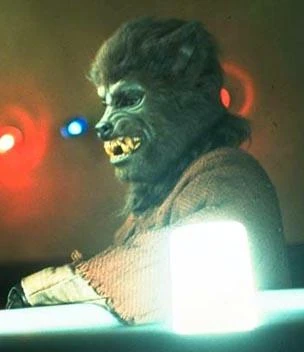
The Shistavanen wasn't in the movie though right?!
He sure was. Although he was replaced with some less interesting CGI critter in the Special Edition.
And here he is in all his pre-SE glory:
Of course!!! Jeez, I feel stupid now!
Well either way I was pleasantly surprised with the choices and listening to order66 last week I understood why they were chosen but also what Disney's role is and how they are cooperating with ffg and have their writers work out some details for them. It sounded highly collaberative and not at all like a foot on the neck type situation.
Of course!!! Jeez, I feel stupid now!
Well either way I was pleasantly surprised with the choices and listening to order66 last week I understood why they were chosen but also what Disney's role is and how they are cooperating with ffg and have their writers work out some details for them. It sounded highly collaberative and not at all like a foot on the neck type situation.
No worries. His replacement was a sore spot with a player in my old group (and, by extension, with the rest of us), because he played a Shistavanen outlaw. Fun character. He had a personal goal of getting as high as he could on the Empire's "most wanted" lost. To that end, at some point during each adventure, he'd spray paint or carve "Mak Bokra was here!" somewhere.
Whoa, there are a LOT of people here who want in on Maelora and I's spawnbrood.
But I'm a modern guy and am willing to establish a Cerean-like polygamy commune and we can all have big headed tadpole babies or something

Conehead Jedi got GAME!
Goddam, I'm such a hussy 
Goddam, I'm such a hussy
I'm pretty sure that's why we love you . Possibly literally  !
!
You can go ahead and be "Thinking like Thrawn" I'll be "Living Like Larry"
But in all seriousness it was a good article, this is what I try to do with my players any way at certain points in campaigns since Lose-Lose situations tend to build more character, It just needs to build up to that point.
Once I get the site up and running (should be within the next week...have the domain, just clearing the hurdle of purging my old SW Galaxies player city domain from my web space so it points to the right place), I'd have someplace for that newsletter to live. If any of you were interested, that is.
Sign me up!
The best way to think like Thrawn? Get Tim Zhan to write out your game.
CHEATER!!!

Hey, if a resource is available to a GM, I say he should take it! (:
Hey, if a resource is available to a GM, I say he should take it! (:
(Language alert!)
I admit I'm new here, but there seems to be a lot of saltiness about this article.
I found some gems in it to help me, but I won't use everything the author suggests. Who uses 100% of published rpg material, anyway?
While constructive criticism helps guide FFG, baby-making invitations and comic book panel fall into the same off-topic, impractical noise some posters have bemoaned.
Will having Luke Skywalker on the cover of Endless Vigil cost FFG sales? Is anyone going to boycott the book because of the cover art? Has anyone contacted customer support about their disappointment in canonical art derivations from previous sourcebooks?
Gandhi suggested we be the change we want to see in the world. Has anyone written to FFG about their concerns? Has anyone taken up an open invitation to write from Rancor Publishing? Are there any good blog sites that address these concerns and direction Disney seems to have on FFG material?
One of my players wanted to play a character who thinks like Grand Admiral Thrawn... if Thrawn were a criminal mastermind (master of intrigue actually) so I helped the player pull it off, I fed him information about what was happening behind the scenes so that she (male player female chatacter) could reveal it to the other PCS in game, I game him direct statements "this NPC is someone you shouldn't trust, you're kind of expecting a double cross and should take precautions", gave the character contacts who they could get information from. The character manipulated a member of the opposing faction at Czerka into convincing the board of directors into electing one of the PCS as CEO (The CEO PC was being written out in a way that he could come back if/when the newly married player finds time to game again).
My villains are mainly derived from the PCS suggestions (a player asked that his side story obligation revolve around Emil Mola, star wars keyser soze, so I gave him what he asked for), the main villains are your allies who are self interested and Allied with you against a common enemy (Black Sun) because it's convenient/beneficial for them too, but the PCs know they would be written off in heartbeat if they ever became a liability to their allies. But in the meantime the pay and benefits are good. And pretty much everyone is not telling them the whole story. So it's a little like what Bryan Young was saying about thinking like Thrawn except the villains consider the PCS to be useful but expendable tools rather than "prey".
All in all I thought that this was one of Bryan Young's better articles and even somewhat useful... only problem was he was setting it up as an adversarial relationship between the Uber mastermind and the PCs... I think it works a lot better when the PCS are "pawns" of the Uber mastermind because it helps them but they have to be on guard against a possible double cross (or double cross them first, but in that case they need to be sure they take him out in their first strike), it also helps to be more or less able to predict potential double crosses and have contingencies in place, some of which are revealed to the PCS so they know that the NPC has taken steps to protect themselves against a double cross from the PCS
One of my players wanted to play a character who thinks like Grand Admiral Thrawn... if Thrawn were a criminal mastermind (master of intrigue actually) so I helped the player pull it off, I fed him information about what was happening behind the scenes so that she (male player female chatacter) could reveal it to the other PCS in game, I game him direct statements "this NPC is someone you shouldn't trust, you're kind of expecting a double cross and should take precautions", gave the character contacts who they could get information from. The character manipulated a member of the opposing faction at Czerka into convincing the board of directors into electing one of the PCS as CEO (The CEO PC was being written out in a way that he could come back if/when the newly married player finds time to game again).
One of our PCs was created to be exactly that. She's the leader of one of the game factions, and her stories play very differently. It's all 'big picture' stuff rather than shooting stormtroopers, shaping the course of the Galactic Civil War and dealing with rivals in her own faction, all of whom would love to see her dead. She also knows the secrets of all the other faction PCs, but has thus far used that sparingly. I've mostly gone with a Dragon Age Inquisition style 'war table' but having a 'works behind the scenes' PC has been a change of pace for me.
All in all I thought that this was one of Bryan Young's better articles and even somewhat useful... only problem was he was setting it up as an adversarial relationship between the Uber mastermind and the PCs... I think it works a lot better when the PCS are "pawns" of the Uber mastermind because it helps them but they have to be on guard against a possible double cross (or double cross them first, but in that case they need to be sure they take him out in their first strike), it also helps to be more or less able to predict potential double crosses and have contingencies in place, some of which are revealed to the PCS so they know that the NPC has taken steps to protect themselves against a double cross from the PCS
The concept of the article is fine... The actually article was poor because - as you say - he just makes Thrawn sound like he's omniscient and undefeatable, when he actually wasn't in the books. An RPG is a very different thing to writing a story, and he just sounds disinterested in the PCs beyond them being dupes for his own GMPC antagonist.
We have two EoE groups and one of the works for an ambitious NPC who is trying to take over one of the factions. That NPC manipulates many PCs, always does it with a smile and a treat, and most of the PCs don't even realise she's technically a villain. Even those who do, figure they have a good deal and are content to serve. Having a clever 'mastermind' is fine, that's squarely in the Pulp tradition to have a Moriarty or Lex Luthor or Mekon. But you won't find that in Young's article.
Edited by MaeloraI hadn't read the article till I saw the post by Maelora. I agree with her on the concept. Personally I find it very intriguing.
Thrawn or a Thrawn like character is a challenge for both the Players and GM. The PC's having to be very creative to the point of "How would I thwart myself" and the GM coming up with creative ways to not feel like "Poof more storm troopers just cause".
For my personal taste the Thrawn character is the Big Bad for a Campaign. Someone the PC's don't get to confront directly till they seriously dismantle or outmaneuver the layers of Protection. Someone who's removal from the board causes ripples across the great galactic game of power.
What bothers me with the Hard Sell to incorporate the other lines and the GM being Thrawn during the session.
Going with the Hard Sell first - It felt so much like we have to put an AD for our other SW Products in and not a natural suggestion to include different elements. The example he presents is there just to bring in other products while the scenario could be translated very well for an RPG he doesn't step into the smaller scale of things. It is like he assumes that the PC's are in command and not the ones fighting to save the ships.
Lose-Lose situations are fine, but they need to have a point besides frustrating the Players. They can be some of the strongest ways to move a story forward and bring dept, but at the same time they can just become another invisible wall in a dungeon.
GM being Thrawn during the session is something that I find will cause players to leave. At that point your actively thwarting the decisions the Players are making. It feels to much like the start of a "Worst GM/DM ever stories". Not saying that getting into the mindset when preparing for the session and writing for the possible contingencies. It treads to close to the infallible Villain the PC's can never win against.
I know I reiterated what a lot of others have said. Just wanted to put my thoughts out there.
I once used Thrawn as a villain in a semester-long RPG campaign back when I was in college, under the WEG system. Campaign took place during the GCW.
Most of the players had little idea who the guy was (most of them were Star Wars fans but not versed in the EU), only that he was very adept at countering their planned strategies.
I admit it was a bit of a balancing act, but the thing that saved my usage of Thrawn from being a Mary Sue was that I allowed the PCs to catch the man off-guard, especially when they improvised or took steps to drop misinformation on what their planned objectives were. One particularly memorable occasion had the PCs drop subtle hints that the Rebels were going to stage a massive prison liberation raid, and sure enough Thrawn assigned a significant battle group to intercept this Rebel action. Only to have a single YT-1300 junker piloted by a third-rate piloting droid set to play a pre-recorded message of "Sorry, but we're busy elsewhere!" Meanwhile, the Rebels were busy successfully looting several Imperial storage compounds of munitions and medical supplies/food stuffs that were not fully guarded.
I suspect some GMs would have Thrawn magically anticipate the PCs' subterfuge plan, but given as how the main idea guy had established himself as a master of the Indy Ploy and pretty talented at Xanatos Speed Chess, I honestly figured there was no way that Thrawn could see something like that coming, and in a cut scene was actually privately amused at the ingenuity and effort the PCs had put into a false-flag operation. Granted, it made him all the more determined to hunt them down, but they at least got a chuckle out of the guy.
I guess what I'd like to see are opinions from people I respect and could learn from (you know who you are!) as I did when I came here 2-3 years ago.
I am afraid I don't qualify, but I'd like to add my point of view to the mix anyway.
What I would like to focus on is the problem the article brings up - which is: "how to challenge your players in a cunning and intelligent way" by bringing genius-level villains into the mix. As many have already pointed out, the article - tongue in cheek or not - doesn't really offer that many suggestions how to do that. The article focusses on Thrawn, but it doesn't really have to be him. Any villain who is supposed to be a hell of a lot smarter than the players fits this bill.
First let us take a look at the suggestions the article makes:
- make alarmingly easy missions, despite expectations. This is supposed to make the players "know something larger is going on" and at the same time: "They’ll get sloppy".
I'd like to point out that in my experience it will only ever achieve one of the two. Of course suspiciously easy missions are a great hint that the enemy's strategy is not what intel suggested it was. And this creates tension. Of course it only serves the purpose of putting the players on edge. High command might get sloppy and if you really stretch it, the players might begin to think "is that really it?" BUT it only is meaningful if later on the players get to see the bigger picture and realize that it all served a purpose. This really should have been in the article imho, without context it is not a really useful suggestion.
- "Think about how your players would prepare for a given situation and then surprise them with something for which they’re wholly unprepared." I think this is the one most of the peaple here took the most offense in. I also tend to think that this approach is less than ideal and easily leads to frustration and thus is in fact detrimental to the overall goal of having fun together. But I will get into that later.
- "Put your players on the defensive. Have your Imperials start attacking Rebel bases and strongholds." Putting the players on the defensive sounds fun but in fact is no advice at all. You will always challenge your players, sometimes with surprise challenges, but the essential part of the game is that players react to the challenges they face and the more proactively involve theirselves, the better. And Imps should really ALWAYS attack Rebel bases and strongholds. It is what they do. Every time.
- "Lose-lose situations". Problematic, becaus e the article does not elaborate on how to present those types of challenges to players. As said before:
Lose-Lose situations are fine, but they need to have a point besides frustrating the Players. They can be some of the strongest ways to move a story forward and bring dept, but at the same time they can just become another invisible wall in a dungeon.
-"Preying on characters weaknesses". Honestly, I do not know a game master who would not think of using such weaknesses in the way described, but it hardly seems like something you need to be a genius to plan. It is of course something valid to do, but it doesn't help your genius villain description at all. Only if he could "holmes" (that's a verb) a weakness in a conversation with a character just by looking at him, it might help the case. But you will have to present the clues to the players because spotting the clues will be what is so impressive.
- "The long game" and "Take the standard behaviors of your players and use them against them, bit by bit." Yes, but only if a) the player's tactics have patterns and b) if the villain is really focussing on them. And to pull of the genius, it will be necessary to really show the players how their own tactics were used against them.
All in all the article makes some valid points but fails to really communicate an idea how to implement them into actual gameplay. The focus stays on the "mindset" of Thrawn and largely ignores the pressing issue of how to present a character like Thrawn to actual breathing and feeling players. I would like to ponder on this question in my next post
To approach the problem "how to challenge your players in a cunning and intelligent way" by pure genius, I would like to seperate it into two questions. First: "how might a cunning and intelligent challenge for the players work?" and second: "How do you convincingly present a genius-level villain to the players?".
"how might a cunning and intelligent challenge for the players work?"
The answer to the first question is a really tricky one. The main problem being that very likely you aren't a genius and your players aren't either and this is a game. As games go they are supposed to be fun and the fun in part comes from mastering the challenges set by the GM. A puzzle you can't solve is no fun at all, so forcing your players to figure out plans that can't be figured out is an exercise in frustration.
So more precisely your problem with a cunning and intelligent challenge to your players is that if it really is a challenge they need to overcome you have to make it tricky but solvable. The best way to make smart challenges that seem smart is therefore twofold:
1. make obvious use of the "this is to easy" trope and let NPCs fall for it. The players will think: "oh, smart enemy" and "ha, we are smart, too!" which is exactely what you want most of the time.
2. know what your players think. If you know your players well enough, you can figure out certain clues that will alert one or more players to a fatal trap in the right moment, thus beeing able to escape an otherwise deadly entrapment. An easy example would be to have a character run into a certain enemy character with a striking feature and male sure he remembers it. Later build up an engeagement and at the last moment the player discovers the informant is exactely this guy he knows to be bad. They have just enough time to prepare a hurried escape, thus thwarting an otherwise perfect enemy plan - by pure chance it would seem.
Short takeaway: if you challenge your players, make sure they can pass the challenge, even if it may be costly. Challenges that can't be overcome are background story elements at best or utterly frustrating at worst.
"How do you convincingly present a genius-level villain to the players?"
This one is equally challenging for the GM as it poses the significant paradox how to challenge players with a seemingly superhuman intellect an let them actually prevail. The first real problem is how to make the villain look like a genius in the first place. Chances are you aren't a genius, so what do you do? Well good news is that most writers who wrote about such characters weren't geniuses either. Bad news is that more often than not the supposed genius ends up looking pretty ordniary on closer inspection. As an old Sherlock Holmes aficionado I can promise you that he is VERY lucky he is right with most of his miracle deductions. And if you try to look smart, your players will try to figure it out and believe me, they will find every flaw in your genius plan.
So to make your villain look smart, there are some ideas I've come up with:
1. Have a grand strategy that will act as backdrop. Your players aren't supposed to interfere here, except maybe at the last moment when they stumble upon something and by mere chance have an opportunity to stop it. The strategy will make itself be felt through hints, but it will only become apparent when the last move is made.
2. Make friedly NPCs overconfident and let the players be the doubters.
3. Don't let them interact to often directly with your smart villain. Chances are they figure out it is just you and not a genius.
4. Let the players' actions play into the villains grand scheme.
- Destroy the death star? I alway wanted that A** Tarkin out of the way. What do you think I gave you those plans for?
- How nice of you to raid that starship factory on that planet. They didn't want an imperial outpost - until now. I gladly signed the treaty.
5. Use cutscenes to characterize the villain and show how he operates without risking players interfering with your genius plan.
, and in a cut scene was actually privately amused at the ingenuity and effort the PCs had put into a false-flag operation. Granted, it made him all the more determined to hunt them down, but they at least got a chuckle out of the guy.
If you do it right, they might even begin to like the guy.
This is by no means a comprehensive list but for me those little points worked most of the time. For Thrawn or Moriarty, both of which I did have players engage in campaigns and other smart villains. I would love to elaborate more on this but it is a wall of text as it is already and I'm kind of busy with other things too, so that is that.
While constructive criticism helps guide FFG, baby-making invitations and comic book panel fall into the same off-topic, impractical noise some posters have bemoaned.
Well, that told me.
I am suitably chastened.
Hopefully, GreyMatter will be too.
(PS. I'm 47 - can I use 'down with the kidz' language like 'salty'? That's usually something I associate with a stir-fry...)
How do YOU use the canon characters? How are YOUR games set up? How do the PCs change things? What are YOUR best villains, and how did you run them in your campaigns or make them memorable? In the absence of anything else, and 'articles' like this one, I feel the forums could be more than they currently are. Maybe.
Running a game in an existing intellectual property is a challenge but it's a challenge I love because:
- I love to do the research
- I love to work with a limited palette, which I'll define as official canon
Disney torpedoed the Expanded Universe but the unofficial EU is still out there on Wookiepedia and in boxes of creased books; ready to be strip mined, re-mixed and re-presented. I enjoy discovering a piece of obscure Star Wars lore and trying to build a threat or a plot point around it. If Dave Filoni can pull Rebels story ideas from old WEG adventure modules, why should I feel bad about doing it? There are no original stories, just original ways to present the material.
Some gamers buck against canon because they find it limiting. I strongly disagree with this opinion. As a professional creative in my day job, establishing a structure and developing inside that structure is how fun, creative solutions come about. A player whose motivation for playing a role-playing game is to kill Anakin or the Emperor is, to me, less interested in creative problem solving and more interested in a MTN Dew-fueled Celebrity Death Match between fictional characters. Arguing whether Batman or Captain America would win in a fight is a good way to waste five minutes but it's a flimsy structure to build a game around. Even if the GM can wrangle a good story about the PCs taking control of the Empire, then what? They're just re-visiting the same story I saw on the movie screen.
I'll also argue that people play Star Wars because they want to play Star Wars. There are other RPGs out there that present a similar tone; Original Traveller Universe and Burning Empires being the most obvious. But they're not Star Wars. Star Wars has the visually iconic TIE fighters (and Ewoks!) but it also has the canon characters that affected the major cinematic events of that universe. A Star Wars game where Darth Vader - film's most visually iconic villain - doesn't exist isn't a game I'd want to run or play.
Preface done. So how do I use canon characters? I do one of three things:
- I use a character that was introduced in The Clone Wars and wasn't killed off during the series. In my last campaign, I used Bariss Offee as an Inquisitor. If she isn't brought back in Season 3 of Rebels, I might do it again as evil female Jedi are intriguing to me.
- I use them as the deliverer of the plot hook (Mon Mothma has a mission for you!) and I remove them from the stage.
- I mention them as a background detail (The new Baron Administrator, Lando Calrissian, has been working to stop corruption in the Wing Guard.) and no more than that.
The PCs affect and change the situations that they're presented and I try to keep those situations personal to the characters. When the GM sets the stakes, he's presenting the flexible boundaries of the story.
Honestly, I don't know if I have a villain that I'm overly proud of. While films will shift the focus from the heroes to the antagonists, in a traditional role-playing game the camera stays on the heroes. I will say that I'm proud of a bit of clever storytelling I came up with during a campaign. I had introduced, without much thought, a Dark Side assassin-type (basically a Ventress knock-off) early in an Edge game as a benefactor. When the players betrayed her, I had her return as an antagonist. It wasn't until after the betrayal that I realized that one of my players had a Philanderer Obligation. During the climactic fight scene, the assassin revealed that she had been the philanderer's lover at some point in the past and his betrayal of her trust had led her to the dark side.
In the absence of anything else, and 'articles' like this one, I feel the forums could be more than they currently are. Maybe.
I agree. With the surfeit of excellent game mastering blogs, it kind of stinks that these well-written advertising pieces provide such poor or old-fashioned advice. RPG forums like this one usually break down into rules questions or advice on dealing with problem players. That said, I enjoyed the interactions in the Don't Prep Plots thread I started. I've been thinking about some larger scale topics that would be fun to discuss. If anyone has any suggestions I'm open. I've been noodling around with Introducing Archaeology into Star Wars/Threats From the Ancient Past as a gaming discussion. I might post something in the coming days.
(PS. I'm 47 - can I use 'down with the kidz' language like 'salty'? That's usually something I associate with a stir-fry...)
That's wiggidy wack, yo.
Edited by Concise LocketWhile constructive criticism helps guide FFG, baby-making invitations and comic book panel fall into the same off-topic, impractical noise some posters have bemoaned.
Eh, it's just the natural flow of conversation. It comes and goes - human nature.
Will having Luke Skywalker on the cover of Endless Vigil cost FFG sales? Is anyone going to boycott the book because of the cover art? Has anyone contacted customer support about their disappointment in canonical art derivations from previous sourcebooks?
They could put a Hutt version of Lemon Party (for god's sake Haley, don't google that) on the cover and I'd still buy the thing. It's still sad to see all this creative awesome art being sidlined in favor of "yippie. more han."
Speaking of cover art, I'm pretty sure the picture of Boba Fett on No Disintigrations is the same artist who did Luke Skywalker on the cover of Endless Vigil. Said artwork of Luke is also being used in an Imperial Assault expansion and for Star Wars: Destiny. I'm not sure about the Boba picture, as I haven't followed anything to do with Star Wars: Destiny aside from what I see on the home page, but maybe FFG commissioned a bunch of new art for that, then realized it would be cheaper to just use art of established characters a few times. You know, the usual corporate corner-cutting shenanigans.
How much Asmodee has to do with that is for the conspiracy theorists and cynics to decide.