"Help me Obi-Wan, I've been accused of GM Meta-Gaming"

By Khyrith, in Game Masters

Aye, as said with signature talents much more then standard talents, the player MUST be able to describe a scene using that talent. If a player here just said "he can't hit me" then that isn't really good enough. Signature abilities are one of the most powerful tools that a player can use to control a narrative thus it's only fair that the price is paid. On one technicality backing off might have worked in a one v one situation, but the intent of the talent is really one of engagement. Hence I consider it fine that a outclassed pilot might flee, seek assistance e.ct

Edit: But yeah, that my stance on signature abilities, either the players give a scene that is compelling or the ability doesn't trigger and I probably wouldn't allow for another attempt that round; though I wouldn't take their action away from them and an actual "no" on signature abilities is really rare.

Edited by Lordbiscuit

Never take an NPC to a fight where there only options are move and shoot.

Always have a few options in mind before the shooting starts, especially when describing a ship as experimental.

Scan your opponent, download a computer virus, position yourself into the ship's blind spot and act suspicious, get on the comlink and insult their mothers... the ship may not have been able to attack for 5 rounds but it should have been doing something to contribute to the experience.

Aye, as said with signature talents much more then standard talents, the player MUST be able to describe a scene using that talent.

Just to put things straight: Brilliant Evasion is, in fact, only a regular talent. But, in principle I agree; even those once per session talents should be described every time.

Aye, as said with signature talents much more then standard talents, the player MUST be able to describe a scene using that talent.

Just to put things straight: Brilliant Evasion is, in fact, only a regular talent. But, in principle I agree; even those once per session talents should be described every time.

Ohhh right, I haven't really read a great deal of piloting talents (or very many; I have a problem in that my characters rarely move on!) so must have slipped my mind.

That first part jives with what the OP said: the NPC pilot knew he was outclassed at the moment, and withdrew to gather his wits/observe his opponent better/however you want to describe it.

Although that reasonably only ought to happen once the NPC pilot actually knows this - the talent itself doesn't throw up a giant status effect symbol, so unless/until the pilot actually takes a few shots, they won't be any the wiser.

The standard TIE fighter is one of the fastest, most maneuverable starfighters in the galaxy. The Interceptor even moreso, and I presume these prototypes have something going on that makes a test pilot giggle like a child on Christmas morning. Now, imagine you're out with your friends, and Mazda has given you a set of concept Miatas, with engines more powerful than a car that small has any right to have. It corners like it's on rails, it accelerates like Thor himself just smacked it in the rear with his hammer. Also it has laser guns.

Suddenly some schmuck in a Winnebago busts through the gates into the experimental test track, with his redneck buddies hanging out the side firing shotguns at you. Eager to see what this thing can really do, you say, "Alright, boys, let's light these turkeys up!" You start driving crazy circles around this thing, blasting at it with your hood lasers, when suddenly the Winnebago flips a 180 degree turn, somehow gets back up to speed almost instantly, rams into a pile of tires, launching himself into the air, flipping over you while the rednecks fire gleefully at the ground through the sunroof, lands like some kind of graceful hippopotamus behind you, and carries on driving as if nothing happened.

Now, perhaps you don't realize you're mechanically unable to attack, but I'm pretty sure you're gonna realize something crazy just happened, and maybe you should take a step back and observe this situation for a minute from a distance.

In addition to the "Like" button, there should be a LOL button...

....

I'd agree with you in general, I just don't see that as being the case here (though I could be mistaken).

I think perhaps what 2P51 is referencing is this little bit (please correct me if I'm off), from the original post:

I had him remain outside of the next five rounds of combat - narratively he was observing the freighter to better judge his chances - before flying back into gun range after the fifth round...

"outside of combat" is what I'm picking up here. It's not a call I would have made, because it feels kinda like LEGO Star Wars, when you're fighting Darth Vader, and suddenly he just crazy-back-flips onto a ledge that you can't possibly reach. If the GM says, "he's now outside of the combat," then the GM has spoken (for good or ill) and many a player will just accept that he made a call.

I wasn't at the table. So I don't know everything that was said. But the "flying back into gun range after the fifth round" most definitely smacks of metagaming in a bad way. I'm sure the GM wasn't trying to screw over his players. There are times where I (as GM) have completely forgotten about a piece of the rules, to my players' detriment. But I would probably be upset if my GM had done something like the OP situation in response to my Brilliant Evasion...just like, "Okay, he's gone now."

Again, I wasn't there. There could have been a lot more stuff going on narratively that caused the situation make more sense.

So, I want to tackle this from three aspects; first, the mechanics, second, the rationality, and third, the fairness aspect.

Some background on where this comes from; My father flew in the Air Force, my grandfathers flew in the Army Air Corp, and the Luftwaffe, and my great grandfather flew for Germany in WW1, so I have some experience with the mind of pilots. Moreover, I have run RPGs for about for 33 years now, and have encountered a few tough scrapes in scenarios, so I have developed a working knowledge of what it takes to get a game together and keep it together, as well as plenty of experience on rules adjudication.

The First aspect; Mechanics. This is the easiest of all the aspects to determine fairness. I'm using the OP's post here, as I don't have access to the events of the game directly. As described, the moments prior to the players use of "Brilliant Evasion" has no accounting on the fairness challenge, so I shall avoid speaking on it. The use of "Brilliant Evasion" was performed prior to the NPC's action, and succeeded, resulting in the effect of the target being unable to attack the user's ship for 5 turns. As dictated mechanically, the NPC did not attack the User when his action came up, instead using a maneuver to extend range, and activating the experimental TIE's systems to extend this range further. As I don't have the rules for the experimental system, I cannot say if this is an appropriate use or not, but I am comfortable in saying that within the described situation, it was correct, as the refutation of fairness from the player was centered around the philosophical actions of the NPC's choices and not the mechanical use of the experimental system. The PCs then had the next action, and opted to attack the other two NPC pilots instead of the retreating one, being greater threats. This also, mechanically, is permissible.

In then end, there is nothing Mechanically wrong with what occurred.

The second aspect; the Rationality of the NPC leaving the other pilots. Many have spoken to the adage that you never leave your wingman. While reinforced by the movie Top Gun, this isn't actually a reality. The real world use of wingmen has more to do with making it difficult to achieve a lock with a missile than it has to with anything else, and is the product of modern air engagements. In order to acquire a systems lock on an enemy aircraft, the telemetry has to be established to the given target, a second "interfering" target, or one that changes profile (from both ships merging in the telemetry camera) obfuscates the fighter and foils targeting. Obviously, Star Wars follows more of a WWI and WWII concept of dogfighting, and not the long-range missile engagements so common in today's world. In this regard, the second and third virtues of the "wingman" are still valid; the wingman acts as a spotter and alternative point of view to the leader during the engagement. By increasing the perspective of the battlefield, a wingman can accurately assess threats missed by the leader. These threats they can then advise of, and potentially eliminate, without risk to the leader. A wingman is there to provide morale, leadership (organizational management), and additional intelligence to a flight, strengthening the psychological bonds of the pilots, and increasing their chances for survival.

A significant additional factor in this equation is the mindset of a fighter pilot. A very important quote to the mindset of a pilot comes from E Hamilton Lee:

"Don’t be a show-off. Never be too proud to turn back. There are old pilots and bold pilots, but no old, bold pilots."

Another important quote comes to us from Chuck Yeager, one of the greatest fighter pilots and test pilots in US history;

"If you want to grow old as a pilot, you've got to know when to push it, and when to back off."

Both of these quotes highlights the need for awareness of a fighter pilot. If the NPC, encountering a pilot and craft that was exceeding his expectations of its capability, it is entirely logical for him to allow his two compatriots to continue to press the attack whilst he moves to re-engage the target from a more advantageous angle.

When we think about the Imperial mindset, this is further reinforced. Imperial Officers are pitted against each other in brutal challenges for advantage, position and rank. They are instilled with the knowledge that only the very best and most cutthroat of officers will advance. They are reminded continuously that they are competing with each other and compassion is a disadvantage. This totalitarian and dictatorial ideology limits the likelihood that a prototype pilot (who would by nature be a senior officer) would willingly sacrifice himself and his craft for another pilot. This mentality is reinforced by evidence taken from the movies when Darth Vader's own wingman attempts to "bug out" when Han Solo attacks the flight group in the trench of the Death Star; his actions inadvertently sending Darth Vader spiraling out into space. If an Imperial pilot would do this to the Dark Lord of the Sith and the Emperor's personal Emissary on the Death Star (not to mention his own wingleader), then it is easily acceptable that the NPC in this situation would take the action he did. Moreover, this action would not limit his ability to advise his flight group; continuing his role as wingman while attempting to intercept the target from a stronger position.

In then end, there is nothing Rationally wrong with what occurred.

Finally, we speak of the fairness aspect. Is it unfair for the GM to pull the ship away from the fight? That's tricky, as it can only be answered by the GM. The mechanics of the situation were satisfied, and from a logistics standpoint. I would prefer to take the opportunity to only mess with 2 NPCs rolls for 5 rounds that factor in 3 NPCs. It would speed the combat by reducing die rolls and allow more time to be spent on the player's actions. Was this a motivating factor in the GM's decision? Only the OP can say, but at the end of the day, the GM is responsible for the operation of the game, and so provided the GM was making the decision in order to continue to quickly and smoothly operate the game and move the story along, then it was 100% fair. If the GM made the decision to rob the story of richness, or cheat the players of enjoyment, then it was 100% unfair. Only the OP can truly answer that question.

Sadly, you can't make every player happy all the time, and in regards to this specific instance, the Player holds responsibility for the problem as well. The Player is responsible for not properly narrating the Brilliant Evasion roll, clearly describing their action and the intended benefits thereof, which led to a reasonable narration by the GM to explain the results of the roll causing them dissatisfaction.

Star Wars is a game in which the GM and Players cooperate to tell a rich and detailed story, and it requires the Players to actively engage in the narration just as much as the GM. I, as GM, often narrate the characters actions: "As the Sith Lord barrages Obi-Wan with a flurry of strikes, she spots that Obi-Wan isn't guarding low and uses it to catch his lightsaber when he tries to parry, fling it across the room!"

I expect my players to narrate my characters just as I do theirs, in this case; "I send the freighter into a tight spin, using the TIE fighters higher turn rates and speed against then to allow me to force them into the lead TIE fighters firing lanes even as he continues to try and clear his firing lines." Such a description shows that I am keeping the TIE engaged, but using the others to achieve the effect. Such a narration would have prevented the actions the GM chose, and prevented this issue from arising.

Folks -

WOW, just checking back on this post. THANKS for all the replies. A couple of clarifications:

(1) The player claimed that it is meta-gaming for the TIE pilot to KNOW that he just lost an opposed check

(2) The player claimed that the NPC should have kept trying for 5 rounds (or until destroyed), because of (1). He doesn't interpret "stop... attacking" from the talent as explicitly as I did.

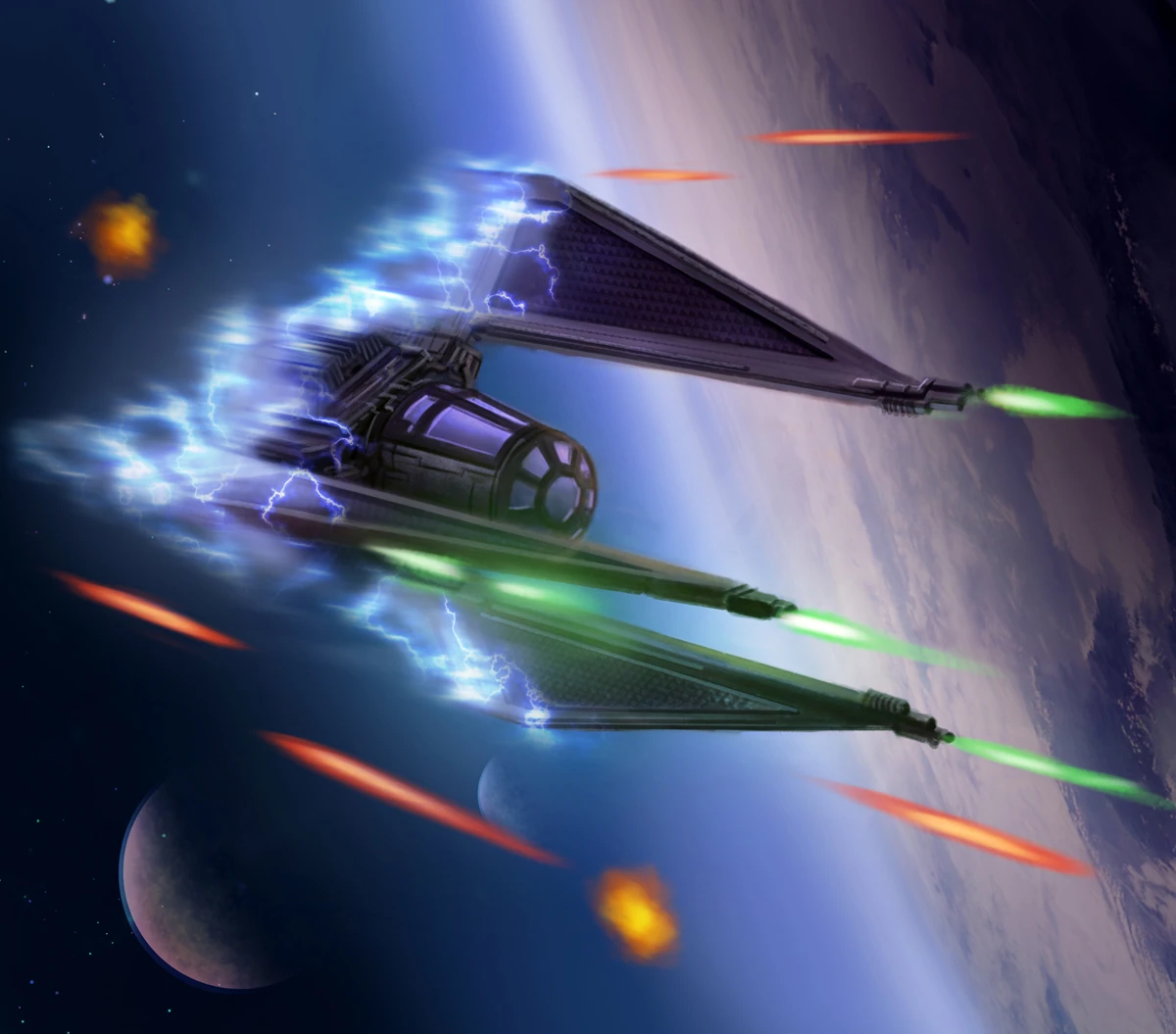
(3) I was trying to avoid naming "DMH" in full to avoid spoilers (GREAT adventure BTW), but I will add that the TIEs are recently "orphaned" TIE Phantom prototypes (hence the test pilots)

In essence (this is a group that goes back 30+ years of off-and-on D&D... and the player is a decades long MMO player also): the player wanted the Talent to act like a "mez" effect that would have forced the NPC to keep doing what it was doing, without harming the YT, until the party got around to finishing him off.

It prob didn't help in my counter-argument that his logic suggested that NPCs would be unaware of any opposed checks and would not adjust their behavior... so, therefore all merchants would ignore the party's successful Negotiation checks :-)

In retrospect, I prob should have:

(1) Had the player narrate what activating that Talent *looks* like in the game... would have helped explain my "he knows he's been beat" narrative (its hard to get d20 systems out of player DNA)

(2) Had all the players look at the dice roll to understand how player ability+skill and NPC ability+skill played out... which dice would have been left on the table if this wasn't Roll 20 / VTT?

(3) Had the affected TIE do something ELSE for an action besides "Attack"... in our year of playing, we haven't done much space combat (evident by ZERO ranks in Gunnery taken by any PC)

What do you all think of the "Interpreting the Dice Pool is Metagaming" claim?? I've tried to tell the player that interpreting the dice pool is the ESSENCE of this system, but it's an uphill discussion. And I feel it would be condescending to ask him to read the 290s ish pages from the Core Rulebook or listen to the Order 66 podcast to learn.

Thx again for all the input and exchange - this was my first post on this blog after watching / using it for over a year now

They were flying phantoms? You should have just engaged the cloaking device instead of flying away.

It wasn't meta gaming.

The effect of the ability could have been force the NPC to retreat, returning after 5 rounds would be the ability taking effect and not the NPC knowing that the timer had run out.

Reading the dice pool is essential, the roll would decide whether the pilot was smart and went defensive or was dumb and continued to attack with no hope of success.

I'm with the Player on this call and heres why:

You metagamed how long the NPC stayed out of range and nerfed the Player's Talent by doing so. The Talent is intended to keep the Player from being hit not to keep the Opponent from being targeted. By moving the TIE out of range you essentially added that effect and although the Player still got a benefit he wasn't able to fully capitalize on his success. Now had the Player rolled some Threats or a Despair then you could have had the TIE move out of range and explain it as a success but with the downside of not being able to shoot at them.

Yeah, the idea that the NPC "wouldn't know about the opposed check" is an odd assumption on the player's part. While it's certain that the NPC wouldn't be aware of the dice (unless you're playing in a campaign with a broken fourth wall), it is crazy to say that the dice don't have a real impact on the gaming world. The NPC won't realize that there was a "Success and 4 Advantage on a roll," but the dice must impact the game world.

Sounds like there might be a mental disconnect in there somewhere. And that can happen when hopping game systems. Best to try and approach the game from a fresh outlook—try and "unlearn what you have learned." I have suggested this many a time, and I do believe it is the best way to enjoy a game. Forget about other games and their rulesets, and just play some Star Wars.

They were flying phantoms? You should have just engaged the cloaking device instead of flying away.

It wasn't meta gaming.

The effect of the ability could have been force the NPC to retreat, returning after 5 rounds would be the ability taking effect and not the NPC knowing that the timer had run out.

Reading the dice pool is essential, the roll would decide whether the pilot was smart and went defensive or was dumb and continued to attack with no hope of success.

The TIE pilot's second maneuver (after using fly at Speed 5 to get out of at least CLOSE range of the freighter) was to activate the cloaking device and "disappear" to watch the freighter for a better chance to attack - which I defined as when the freighter stopped pitching and rolling from the narrative effect of the Talent. That made it even more frustrating to the player... which is understandable.

I defined the "... stop... attacking" from the Talent as "stop taking the ATTACK ACTION against the players' ship". The player reads it (effectively) as "makes the PC ship impervious to the enemy fighter, without the enemy knowing it."

They were flying phantoms? You should have just engaged the cloaking device instead of flying away.

It wasn't meta gaming.

The effect of the ability could have been force the NPC to retreat, returning after 5 rounds would be the ability taking effect and not the NPC knowing that the timer had run out.

Reading the dice pool is essential, the roll would decide whether the pilot was smart and went defensive or was dumb and continued to attack with no hope of success.

The TIE pilot's second maneuver (after using fly at Speed 5 to get out of at least CLOSE range of the freighter) was to activate the cloaking device and "disappear" to watch the freighter for a better chance to attack - which I defined as when the freighter stopped pitching and rolling from the narrative effect of the Talent. That made it even more frustrating to the player... which is understandable.

I defined the "... stop... attacking" from the Talent as "stop taking the ATTACK ACTION against the players' ship". The player reads it (effectively) as "makes the PC ship impervious to the enemy fighter, without the enemy knowing it."

THIS. It says you "cannot make any attacks against the character's vehicle". Not cannot hit or cannot damage. For whatever narrative reason, he ceases his attacks, and must do something else. If there were other targets I would have him switch targets. In this case, your explanation made perfect sense. I could see that he might try to give boost dice to his wingmen, or he might try to draw fire, but your choice was just as valid.

It sounds to me like the player was expecting something vastly different from his top-shelf talent than what actually happened. I'd say it's time to have an honest conversation, and lead with that. If a player feels stymied or shut down, the game suffers. But if he feels like you're on his side, and you want his PC to be awesome, then there will be a lot of goodwill to bank on for the future.

Ask the players how they would have their PCs handle it if an enemy used that talent against them.

Edited by HappyDaze

Yeah, the idea that the NPC "wouldn't know about the opposed check" is an odd assumption on the player's part.

Just about everyone has something they're really good at. Let's just say I was really good at basketball. If I played someone who was better than me, I think I'd know it. It's preposterous to suggest that I'd be dumbfounded without some sort of additional factor - Disoriented? By someone who is better than I am? If that were the case I'd be walking around dazed a lot, there's nary a thing I think I'm good at that someone else doesn't do better. That's just amongst the 7 billion of we humans on but one planet.

(2) The player claimed that the NPC should have kept trying for 5 rounds (or until destroyed), because of (1). He doesn't interpret "stop... attacking" from the talent as explicitly as I did.

That talent would be named "At Arm's Length".

james_arms_length.jpg

Edited by Grimmerling

Folks -

WOW, just checking back on this post. THANKS for all the replies. A couple of clarifications:

(1) The player claimed that it is meta-gaming for the TIE pilot to KNOW that he just lost an opposed check

(2) The player claimed that the NPC should have kept trying for 5 rounds (or until destroyed), because of (1). He doesn't interpret "stop... attacking" from the talent as explicitly as I did.

(3) I was trying to avoid naming "DMH" in full to avoid spoilers (GREAT adventure BTW), but I will add that the TIEs are recently "orphaned" TIE Phantom prototypes (hence the test pilots)

In essence (this is a group that goes back 30+ years of off-and-on D&D... and the player is a decades long MMO player also): the player wanted the Talent to act like a "mez" effect that would have forced the NPC to keep doing what it was doing, without harming the YT, until the party got around to finishing him off.

It prob didn't help in my counter-argument that his logic suggested that NPCs would be unaware of any opposed checks and would not adjust their behavior... so, therefore all merchants would ignore the party's successful Negotiation checks :-)

In retrospect, I prob should have:

(1) Had the player narrate what activating that Talent *looks* like in the game... would have helped explain my "he knows he's been beat" narrative (its hard to get d20 systems out of player DNA)

(2) Had all the players look at the dice roll to understand how player ability+skill and NPC ability+skill played out... which dice would have been left on the table if this wasn't Roll 20 / VTT?

(3) Had the affected TIE do something ELSE for an action besides "Attack"... in our year of playing, we haven't done much space combat (evident by ZERO ranks in Gunnery taken by any PC)

What do you all think of the "Interpreting the Dice Pool is Metagaming" claim?? I've tried to tell the player that interpreting the dice pool is the ESSENCE of this system, but it's an uphill discussion. And I feel it would be condescending to ask him to read the 290s ish pages from the Core Rulebook or listen to the Order 66 podcast to learn.

Thx again for all the input and exchange - this was my first post on this blog after watching / using it for over a year now

The best way to play this game is to forget that D20/MMO idea out of his head but rather see it from a movie perspective. The Jason Borne movies might actually be one of the best examples as many of their climaxes involve a redicously long chase. Usually the villain is only really in attacking range of the hero only a couple of times throughout that chase but is otherwise constantly hounding the PC. Thats the kind of movement that I would expect evasive flying to excell at; the target just simply isn't able to get a good eye on the target.

Ask the players how they would have their PCs handle it if an enemy used that talent against them.

I think HappyDaze hit the nail on the head here. This is the benchmark for how "fair" the use of any talent or ability is: how would the players like it happening to them? I'm guessing that most players would never stick around and be shot at for 5 rounds when there was a way for them to escape.

Yup, that’s the winning combo. No need to continue this thread.

Thanks, everyone!

Interesting that the O66 hosts pretty much agreed with everything we said here and on reddit.

Are you guys crazy to fly phantoms that way?

The phantom is an nearly invincible pawn mobile if you give it to a competent pilot and not a lousy cannon fodder rival.

First it has a pilot AND a co-pilot/gunner.

Second falling into cloak is an action, but decloaking is a maneuver.

Shooting from a freighter at a cloaked sil zero ship is almost guaranteed to be a formidable check, usually upgraded at least twice too. Master pilots close in cloaked, do a few GtA, especially when the enemy is doing brilliant evasive maneuvers, decloak, fire, recloak, evasive maneuvers. Use the crew-member for damage control to deal with the strain, stim patch the pilot maybe and in the worst case … initiate the decloak maneuver, shoot himself first and let the pilot do his turn afterwards, in case the initiative slots fit for that. That is if your group agrees if cloaking/decloaking are pilot or pilot/copilot actions/maneuvers. Good luck with your daunting and formidable checks on that fight. :)

Poor phantoms, mishandled by such a bad test pilots. Make them nemesis! Even TIE/IN are mostly flown by aces. For grunts we have TIE/LN! Poor, poor phantom.

Anyway, imho the correct action would have been to cloak up the whole flight until the brilliant evasion maneuvers stop. Any pilot can see when his target is paying special attention on evading and when he does not got a decent attack position and cloaking up and using GtA is the ideal counter against a freighter, brilliant evasion, evasive maneuvers or whatever else the enemy pilot is doing, Cloak and GtA will help against it. Completely without meta-gaming.

Whisper_TIE_Phantom-XWMG.jpg

Poor, poor Phantoms.

Edited by SEApocalypse

It sounds like the player missed another key component of his Signature Ability. What did he do narratively? Sometimes you can shoot a blaster and just say, "Okay, I hit for 7 damage and, uh, I just pass a boost die." It's a little boring, but not every roll has to be something super creative. But this is a once-per-session super skill! I don't wanna hear, "Anndd... okay, I made it. They can't shoot at me for five rounds." Tell me what you did. Did you fly into an asteroid field because they'd be crazy to follow you? Did you try spinning? That's a good trick. Did you drop down into a planet's thermosphere, or fire off an anti-missile flare straight into the pursuer to screw up his sensors?

Also, why do you need to fight it out? What, are you going to check the bodies for 1d8 gold pieces each? Five rounds should be plenty of time for the pilot to say, "Hey, Dave. While I'm juking between these asteroids at breakneck speeds, and the space cops are back there trying to vaporize us into... vapor... would you mind hopping on the navicomputer and finding us a way to a safe port? If there's a Starbucks on the way, that would be cool, but whatever."

Sine I live quite near a starbucks, I would say that you probably would have a while to wait. :D As for the OP, I would reinforce extra narration for Signature Abilities as they are mostly one to two a session max.