Relative Positioning in a Duel

By MuttonchopMac, in Star Wars: Force and Destiny RPG

So I was running a duel between between two knight-level characters and an inquisitor, set in a tower similar to the Jedi Tower (<-- image) from the Knights of the Old Republic comics. It went fine, but the narrative felt a little weak for such a dramatic moment (maybe I was feeling uninspired).
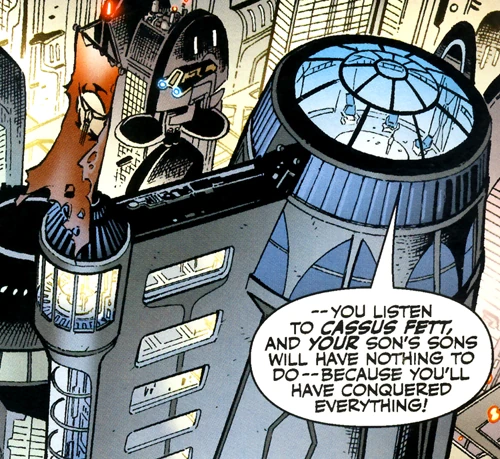
There's the whole walkway extending out of the main dome, but the fight only progressed out onto the walkway when the one Jedi without Parry (a Seer) had to scramble away and try to escape from the inquisitor's heavy hits, leaving the Ataru Striker with Dodge, two ranks of Parry, Saber Swarm, and the Agility increase upgrade for Enhance to fight. The Seer was relegated to trying to use Bind, which honestly didn't go well with opposed Discipline checks... Anyways, I was really hoping that the walkway would be a cool set piece as the duel progressed, but honestly, moving around in a duel doesn't seem to happen very often, which kind of disappoints me.

So I came up with a theory. Range bands can be relative positioning in a duel. That is, without characters changing range bands, the duel is progressing and changing and going places to keep things interesting. Whoever wins Initiative in the round gets to narrate the area for that scene, so long as it doesn't totally screw one side over, and fits within the GM's generally established location for the duel. Advantage / Triumph on Initiative could allow the following scene to be more favorable to your side.

For example, in the Phantom Menace duel, the GM sets the scene: "As the Queen and her soldiers leave the area, the dark warrior draws a double-bladed red lightsaber and charges across the open hangar, fury blazing in his yellow eyes."

The good guys have the Initiative, so Obi-Wan's player (liking Ataru and having heard of large chasms in GM Lucas's prior duels) narrates: "The hangar is wide open, except for some battle droid debris, giving plenty of space to move around." The duel begins, but Qui-Gon and Obi-Wan are easily flanking Maul.

The Sith manages to get the Initiative, and the GM narrates the next round scene: "Your foe backs through a set of large doors into a generator room of tiered catwalks without railings and huge chasms. One wrong step could be lethal." (Obi-Wan's player rolls his eyes) Now Maul can have an easier time keeping the Jedi off of him to focus on just one at a time.

So by this system, the combatants could stay engaged for the whole duel, but the players stay engaged because the duel is narratively ranging all over the place, and the Initiative roll feels important because you're steering the course of the whole battle... Thoughts?

I like the focus on narrative description. You might try listening to the Order 66 podcast episode called "Hello, name is *I forget the name they use*" It's all about narrative dueling, and how to make it more cool.

Someone else more savvy with the episode numbers and stuff, please clarify for me if you could, but seriously, check that out.

They suggest turning the duel into a Skill challenge, so that you can use other skills in the fight, instead of just the attack rolls. So you could, for example, have a social character, carrying on a narrative with his enemy, while the "saber" bits are just descriptive. Think of how Luke and Vader kept debating during Return of the Jedi.

But yeah, if this is like, the big uber fight of the campaign, meant to be the climax of the "movie" that is your game. Hell yeah, do what you want. Toss the book out the window and run with whatever makes it more cool/fun for you and the players. If it's simply narrative description, and the scene changes aren't providing actual dice modifiers, then sure, change it all you want. That's my call anyway.

Fun wins out over rules every day.

Yea, there are a few threads that are really just variations on this relatively common complaint.

Right now narration is the key but I suspect there will be some kind of alternate duelling rules in one of the coming supplements. For now I would suggest always describing your NPC BBG as doing the big moves and such and set the pace for your players to do the same. The more cinematic and climactic you make it the more they will.

"Inigo Montoya" was the characters name in the title of Episode 63 of the Order 66 podcast, worth a listen, there is probably a heap of rambling at the start. I'll post the time that the main topic starts a bit later.

Yea, there are a few threads that are really just variations on this relatively common complaint.

Right now narration is the key but I suspect there will be some kind of alternate duelling rules in one of the coming supplements. For now I would suggest always describing your NPC BBG as doing the big moves and such and set the pace for your players to do the same. The more cinematic and climactic you make it the more they will.

I'm thinking either Warrior (it's the other general combat career after Guardian) or Mystic (since it's got Makashi Duelist, which is focused on one-on-one dueling) as for the career splat that might cover dueling.

Or we might see it addressed in a sidebar in a future adventure, much like we got our first taste of mass combat in the Onslaught on Arda I adventure before getting the fleshed-out version in Lead by Example.

"Inigo Montoya" was the characters name in the title of Episode 63 of the Order 66 podcast, worth a listen, there is probably a heap of rambling at the start. I'll post the time that the main topic starts a bit later.

Ah, for some reason I thought they'd changed it to something Star Warsy. Like the show titled "more machine now than trandoshan"

It starts here at 18min55sec

Order 66 Podcast: 63 - Hello, My Name is Inigo Montoya

https://overcast.fm/+Ku1iPyvo/18:55

I'd also like to suggest that you as the GM can have a lot of impact on where the battle can lead. I don't have the book with me right now, but Inquisitors do have a special ability that lets them move people around. I think that this can be used by the GM to help bring interesting set pieces into play. What if the Inquisitor could force the PC back onto a bridge? What if he attacks and moves back, daring the PC to press forward and attack? What if he just uses Move to fling the PC so that they're hanging on for dear life on the bridge and have to spend an action to pull themselves up while the bad guy comes around to them?

One way of changing the environment is using advantages triumphs, threats and despairs in an interesting manner during these conflicts to make people want to change environment.

For example, you are on a walk way and clearly one force user is looking to try and keep some distance. The inquisitor attacks the Atauri PC and rolls a triumph. With this he chose to hack away at the walkway as they duel, causing a partial collapse that takes the PC completely by suprise and will render the area difficult tarrian after this duel (having to physically climb up a walkaway) the inquisitor took this action to dart past the PC as the platform starts to fall and lands neatly next to the seer, his red blade glinting menciningly as he looks to eliminate the lesser of the two threats first. The seer then has the chose of either standing his ground or running, and even if he tries to stand and fight, use advantages to push the Sage back. It's also fair to use advantages and the like to remove particlar characters from a scene, Maul used this to knock Obi off a ledge and he ended up being unable to unite with his master.

Alternatively introduce environmental hazards. Obi-Ani's fight was clock full of them, from rain of molten rocks to climbing up a structure while fighting to jump checks. All those could be the results of advantages threats or despairs, and neither of which have to have an immediate effect, it just means that among the task of beating eachother they also have to move around a chaotic environment and at times just focus on their individual survival.

I think part of the issue with duels is that a lot of GMs are used to combats being... well, being combats, and falling into a certain type of mold.

Duels pretty much break that, and even systems where dueling is a recurring thing (prime example is 7th Seas) it can be difficult to break out of that mold and have a strictly one-on-one or PC-vs-NPC duel.

Taking a note from the original films, they seem to go out of their way to ensure that the two principal duelists are separated from the rest of the party so that the hero involved in the duel can't look to them for back up. Which is a break from the notion that RPGs are a "team sport" and that everyone participates and contributes to the success of the heroes. A duel places the success or failure upon the shoulders of a single player, something that the rest of the group may have difficulty with depending upon the mindset of the rest of the players. After all, why bother locking blades with an Inquisitor if the Heavy can just bust out the rotary blaster cannon and drill the Inqy full of holes?

I had one PC that got involved in a duel with an Inquisitor, and the GM had to take deliberate steps to ensure the rest of the party wasn't available to help out, which kind of soured things as half the party got taken out without so much as a chance to see the uber-baddie, and then could do nothing but spectate as my PC got his arse kicked in that one-on-one fight (and wound up pulling a Luke in order to escape), which in retrospect I think was a contributing factor to the campaign ending after the following session.

You would pretty much need the group's buy-in in regards to a duel, and make sure the rest of the party have things they can do that will contribute just as much (if not more so) to the success of the adventure. As much flak as the movie gets, I think that Phantom Menace actually did a pretty decent job of setting up a duel between the 'saber-wielders while also letting the other PCs (Anakin, Amidala, and Jar Jar) make contributions that were actually far more meaningful to the objective of capturing the Viceroy and neutering the occupation forces; Obi-Wan and Qui-Gon essentially ran interference by keeping the bad guy's heaviest hitter occupied for most of that.

I think part of the issue with duels is that a lot of GMs are used to combats being... well, being combats, and falling into a certain type of mold.

Duels pretty much break that, and even systems where dueling is a recurring thing (prime example is 7th Seas) it can be difficult to break out of that mold and have a strictly one-on-one or PC-vs-NPC duel.

Taking a note from the original films, they seem to go out of their way to ensure that the two principal duelists are separated from the rest of the party so that the hero involved in the duel can't look to them for back up. Which is a break from the notion that RPGs are a "team sport" and that everyone participates and contributes to the success of the heroes. A duel places the success or failure upon the shoulders of a single player, something that the rest of the group may have difficulty with depending upon the mindset of the rest of the players. After all, why bother locking blades with an Inquisitor if the Heavy can just bust out the rotary blaster cannon and drill the Inqy full of holes?

I had one PC that got involved in a duel with an Inquisitor, and the GM had to take deliberate steps to ensure the rest of the party wasn't available to help out, which kind of soured things as half the party got taken out without so much as a chance to see the uber-baddie, and then could do nothing but spectate as my PC got his arse kicked in that one-on-one fight (and wound up pulling a Luke in order to escape), which in retrospect I think was a contributing factor to the campaign ending after the following session.

You would pretty much need the group's buy-in in regards to a duel, and make sure the rest of the party have things they can do that will contribute just as much (if not more so) to the success of the adventure. As much flak as the movie gets, I think that Phantom Menace actually did a pretty decent job of setting up a duel between the 'saber-wielders while also letting the other PCs (Anakin, Amidala, and Jar Jar) make contributions that were actually far more meaningful to the objective of capturing the Viceroy and neutering the occupation forces; Obi-Wan and Qui-Gon essentially ran interference by keeping the bad guy's heaviest hitter occupied for most of that.

That I can agree with. Usually it would be rare to section a member off to have a duel, but more likely a smaller group of a spilt party might run into one such warrior.

These days I find the base system more then satisfactory for duelling, I would assume anyone looking to specialise in lightsaber combat would invest in one of the trees; and if not? Well then they really shouldn't be duelling in the first place, should they? Characters should invest in what is important for them and having a lightsaber shouldn't be a free pass; heck, I much prefer a good blaster or staff to all that as far as flavour is concerned.

I like the suggestions on the Order 66 Podcast, and it keeps Parry relevant. And with the way melee combat checks work difficulty-wise, it will often be a better bet to swing a lightsaber at the Inquisitor rather than try reasoning with him and opposing his Deception or Charm. Two main things come to mind for implementing this...

Questions will arise on a talent-by-talent basis.

If I invested in Lethal Blows or some other critical boosting talent, shouldn't I be able to use at least Triumph on a Lightsaber check to inflict a critical without actual damage? If I use Saber Swarm and gain Linked, can I convert the two advantage of a second or even third hit into say, +1 net success? If I use Falling Avalanche from the Shien Expert tree, do I get +Brawn net successes, or maybe just +1? Maybe a good rule of thumb is that any damage boost talent, when triggered during a duel, gives +1 net success.

Multiple combatants on a given side will change things.

For multiple heroes taking on an Inquisitor, I would increase the Inquisitor's required number of successes, but clarify with the players that if he wins, he bests ALL of the player participants. Maybe the players would have an option of negating all successes on a check made by the Inquisitor, or reduce his total net successes, by having one of their own go down. So when the Inquisitor is close to winning, someone can bite it (probably maimed, but not dead - so maybe just a high bonus on a single critical hit roll) to keep the battle going. This would reflect Qui-Gon's death at the hands of Darth Maul, as well as Obi-Wan getting hacked up by Dooku, just before Anakin runs in for round #2. The good guys are still borderline defeated, but they're not finished just yet. This death and dismemberment rule also gives player agency and choice. It's not that the GM chose to attack the Seer again and again and finish off the weakest combatant, it's that the Seer volunteered to take the hit so the rest of the party could (hopefully) win. Maybe such a sacrifice even nets the players an extra destiny point, possibly in exchange for Conflict? Revenge, anyone?

I think part of the issue with duels is that a lot of GMs are used to combats being... well, being combats, and falling into a certain type of mold.

Duels pretty much break that, and even systems where dueling is a recurring thing (prime example is 7th Seas) it can be difficult to break out of that mold and have a strictly one-on-one or PC-vs-NPC duel.

The best one-on-one duel I've ever taken part in in any RPG was in RuneQuest, of all games, mostly because my character relied on trickery, disabling hits, and moving all over the place. And it was only one-on-one because it was a ritual fight and required to be so. Of course, that system breaks down for more than a few combatants, so one would hope two combatants can be handled well.

The way I deal with epic battles is to make sure all the party is engaged in the battle or with some other critical task. I sometimes is throw in an extra "wave" of Rivals or Minions to keep the party from ganging up on the BBG and active, or I have the BBG do something unscripted, but believable, to gain some playtime for the battle (if it's a Force User they use move to collapse part of the structure or something). I also, and don't bite my head off, fudge the BBG's Wounds a bit to create time for the tension to build. I don't cheat him to win but I've found that my Players get really excited and feel like they've accomplished something in the BBG battles the closer they get to losing, especially if one of the party goes down so I try and keep the BBG around until just the right moment. Just to clarify, I don't punish good role play or tactics, and once the PC's have exceeded the BBG's normal Wound Threshold they will win the battle, I just manipulate the scene a bit so it feels like they've accomplished something heroic. Not all groups are like this and if you fudge a bit it must be subtle or it could backfire so be warned.

Edited by FuriousGreg

Splitting the party is a great way to give certain characters who want a duel the chance to shine, especially if you end up with a Guardian with the Fated Duel Signature Ability, possibly the power that Qui-Gon activated to cut himself and Darth Maul off from Obi Wan?

Don't forget the Heroes Ending segment in Keeping the Peace too, its such a cool way for a group to pay homage to a PC who has run their course, and what better way to go out than taking a BBEG's time while the rest of the party escape to safety.