I'm going to try painting for the first time

By Emperor Dane, in Star Wars: Armada

I've been playing Armada pretty much since it came out, and I am absolutely obsessed with this game. (haven't tried a tournament yet, although I know I need to) But after seeing everyone's beautiful painted squadrons, I got jealous of how good they look compared to my gray and white plastic ones. I finally decided to give it a shot, but I've never painted anything other than a wall. This will be my first foray into hobby painting.

So I bought an army painter starter set (hopefully these are decent) and some brushes, and a few cans of their colored primers. but I'd love to hear any tips or tricks anyone has to offer. I've watched some videos on youtube, but most of them are about warhammer or "person" type minis I'm sure most of the techniques apply here as well, but I'd love to hear from anyone who's done it before.

the one thing(at least the first thing) I'm unsure of, is what do do when I'm priming the fighters. they're so small I'm worried they will blow around while I'm spraying them. what do I do to prime them? do I glue them to a toothpick, or use the fighter stands, or just throw them on some cardboard? I have quite a few (1 core set plus 3 each of the fighter packs) so I'd like to do them in largish groups if possible.

What I've learned about priming squadrons is this: if you're spraying and knocking them over, you're too close (it's ok if it just pushes them around a little bit on the cardboard). In addition to the problem of blotching, streaking and pooling that could come from knocking them over, you're probably laying it on too thick. These fighters don't have deeply etched details, so any over-spray of primer is going to gunk them up. Better to give them a light dusting. They don't need a thick coat of primer anyway, once you get them into their "trees", you can do most of your brush work while they are on the tree, and you'll never need to handle them either for painting or playing.

I actually never do it outside, precisely because of that reason. I prime in the garage on a big cardboard box while wife is sleeping so the smell will be gone by morning (hopefully). I only ever get in a little trouble :-)

Silly putty, foam block, and disposable BBQ skewers- it helps a lot. Stick pointy end in foam block, putty the other end and jam fighter on to it. It will save you a lot of headaches!

Dane - do you know how you want to paint them yet, or is this the opening volley of "I don't even know what to do, but I really want to do this well, plz halp!"?

Glad to help either way, just want to know where your head is at.

I appreciate the tips, I'll definitely check out that other thread. Looks like a ton of good info there.

DUR, that's a great idea.

Reinholt, you hit the nail on the head with "I don't even know what to do, but I really want to do this well, plz halp!"?

From what I've gathered, I should clear mold lines, prime/base coat, add details (such as xwing stripes), wash, varnish.

I would suggest for your first hack at painting, the easiest way to do this would be to clear off the mold lines, primer the models (and then let them sit for a few hours to dry thoroughly), and then for your first paintjob, I recommend merely as base coat in the right color (always water down your paint!), washing the model with some pre-made wash such as the nuln oil from GW I have sitting on my desk right now (again let it dry after), and then drybrushing the model with a lighter version of your base coat. After that, touch up a detail or two, done.

For instance, let's say you want to do a tie fighter:

Primer it.

Base it medium gray.

Wash it black.

Drybrush it light gray.

Touch up the cockpit glass (black) and engine in the back (a dot of blue).

Done.

Does that all make sense?

Edit: I am suggesting colors for ease of understanding, but obviously, use your own judgment and what looks good to you, your models are yours.

Edited by Reinholt

That does make sense, and sounds simple enough. In the case of a tie fighter, should I be doing the black (or dark grey) on the panels before or after the wash? Or does it matter?

Reinholt has it right, IMO. I suggest painting one model to completion before doing an assembly line, just so you are sure you are happy with the results. If you aren't, they are easy to strip with rubbing alcohol and Qtips or soaking in Simple Green and brushing it with an old toothbrush. A lot of finding something you like is educated trial and error.

I would do the panels before the wash.

I'll go a bit futher than Reinholt here... Who has given the awesome basic look over :)

Simple - Quick - But "Well Done"

1) Clean and Clear mold lines (where possible)... Its a fairly hard plastic we're dealing with, in small forms - so take a knife edge and scrape along those edges you can do something about... The Side Fuselage of X-Wings, for example... Across the inner-panel of TIE fighters, and such...

2) Prime.

Priming is preparing the surface for paint to adhere to... It is not drenching or swallowing the plastic in enough paint to colour the whole surface... A very light dusting from the 15-20cm range is probably what you need... Quick sweeps. Press the button outside of the aim of your models, sweep it over them, and release it, again, outside of the models... This stop the blobby "dribbles" from the initial down and up pressure change from adding texture to your models.

3) Basecoat. Now you pick the basic colour you want your models to be. Using your choice of paint (generally I'd reccommend a hobby acrylic starting out - a Games Workshop "Base" paint, P3 Base Coat, or other high-pigment equivelant)... Take a spare brush - not your painting brush - and take a dollop of paint out and put it on a pallete. A Pallet can be something (generally light coloured) and non-porous, and flat... Dollop it down. Close your Paint Pot and wash that brush... Give it a quick tap to make sure the bristles are still wet, but not with a drop of water - and then swirl that into the paint dollop you've made on the pallete ... This will start to thin the paint down so its not clunky or chuggy.

(The actual amount of water you need variers from paint to paint, and the 'perfect' consistency will take a long time to intuitively understand - I'm mostly just advocating learning the method now so you can experiment with more and/or less water at a later stage and know how to do so :D )

Then after cleaning that brush, take your moistened -but wiped- painting brush, and start painting... Basecoats are to be smooth and opaque. Your intention here is to cover everywhere that is going to be painted, evenly and smoothly.

If the paint physically bunches up and smooshes - its too thick.

If it flows and runs everywhere, potentially not even colouring the surface, its too thin...

3a) Now you can take your 'detail' paints and paint them on the model... This might be a Red Stripe across the front of the X-Wing Fuselage, or Yellow Stripes down the Side... Blue for the Astromech... Grey for the Blaster Tubes, and so on and so forth...

Paint on the dry basecoat. Make it nice and smooth still... That's what you are aiming for - smooth and opaque. Thin coats are better than a thick one.

3b) Now its a Wash. A Wash is either something specially made, or hacked up from watered down paint. (Go for the made to startr with) - its much thinner and more transparent than paint... it goes on the dried model, and runs off the surfaces, into the recesses, to give you instant shadowing and shading... Colours of Washes can do different tints to your paint job. A Black wash generally brings out shadows, makes things look oiled and maintained, and provides contrast... a Brown wash will make things look Dirty and Poorly Maintained, while providing those deep shadow recesses and contrast.

4) Here's where you do touch-up work. Touch up work are finishing touches on the dried wash... It can involve some really quick and simple things... (A Drybrush of the lighter base colour over the wash so the edges are picked up), or even meticulously hand-painting a lighter colour on so the edges are brighter... Its also the opportunity to put on your brightest colorus (such as engine glows) so they are not darkened by the wash...

5) Varnish if you please. I please. Anything that's going to be routinely handled should be varnished with a light spray-on matte varnish... If you're really paranoid about handling, then make it a Gloss Varnish and then add a coat of a matt varnish to dull it back down...

(I may come back and edit this as more things come to mind)

That does make sense, and sounds simple enough. In the case of a tie fighter, should I be doing the black (or dark grey) on the panels before or after the wash? Or does it matter?

Base color before the wash.

Wash them. Let it dry.

Drybrush to get highlights on the edges.

Go back with the base and clean up any areas that look too dirty (on a tie, probably the broad flat parts of the panel).

Also, practice! I never get things right on the first try, there is no shame in saying "Eh, that sucks, let me try again". It's why you water down your paints so coats go on smooth, as you can always just paint the base again and try again.

Reinholt, drasnighta, thanks again for the in depth advice, I definitely really appreciate that detailed step by step. It really helps.

Caldias, Starting with one is a very good idea. I probably would have tried to just knock them all out, only to start over.

I'm excited to try it out this weekend and see what I can do.

Edited by Emperor Dane

1. Get flow aid for acyrlic paint for $11 to keep your paint alive.

2. Listen closely to drag about priming.

3. I prime fighters on an extra fighter stand so the tabs/connector to the clear plastic stay a light color. This keeps them up high and easy to get the wave/sweep of primer

4. Get a good brush cleaner like " The Masters Brush Cleaner and preserver"

5. Highly recommend series 7 Kolinski brushes. they are expensive but you can make lines lit a champ

6. Learn to dry brush...usually need three different sizes. Take care of these to.

7. Get washes for shadows and recesses from GW citadel called nun oil or better get a lots of gradations from"secret weapon miniatures"

8. Distilled water to thin inks which are thicker than washes. Chemicals in Regular water separates the fine micro particles in ink. Ink I like is transparent burnt sienna, raw umber, and some other farm sienna I'm forgetting at the moment. Makes great rust and aging etc.

Inks, washes, and dry brushing is key. Prime something useless and practice. Heck, go to Walgreens and buy some cheap green army men or the like.

Get your self a debonder when using superglue. Get super glue on finger squirt this stuff on within 1 min and your good as new. Essential.

Get yourself a fan brush for streaks

Get yourself a desk light with an optional magnifying glass if needed.

Get a cutting board and a variety of exacto knives. Have the right tool for the job when cleaning your miniatures.

QTios for mixing

Very thing cardboard white sheets for painting on and discarding.

Paint brush holder and keep those darn caps.

Use at least two, if not three, tones of a color to help add depth

Paint the white tops of your acrylic bottles so you can see the color easy.

Stay organized and keep area neat for speed and emergency fixes etc.

Good lick

Edited by AdmiralNelson

In Summary, there is a lot that goes into Painting...

You're just starting out.

Dip your Toes. Try it. Be prepared to Hate it, but want to do better a second time...

Save most advice for when you want to paint better.

Because the First Step Is To Just Try

Thanks to all for the thorough responses. Much like Emperor Dane, Armada is the miniature game that finally inspired me to paint. I however, wasn't wise enough to ask the forum how to paint before just diving in. But don't let it overwhelm you! I only bought primer today. TODAY! Seriously, its just been fun to experiment with all the different materials to see how they work. Citadel paints, Vallejo washes, FolkArt metallics (mixed into other paints to give a subtle sparkle), different brushes, superglue, whatevs. I really only painted squadrons and i have plenty so I just dove in. I learned the need to dilute paints by trial and error. I learned mixing my trial and error. It's all good. It's relaxing and takes my mind of off work. I can't wait to try priming for the first time this weekend.

Thanks for asking the right question Dane!

Have fun, if you are painting and you don't enjoy it then don't do it.

I go through periods where I get totally involved in painting and other times I would just rather grab the remote and watch my DVD's.

With Armada something I find that is easy and achieves some interesting results is to just mask off an area of a ship and then hit the model with a coloured spray, Army Painter does some coloured sprays that are quite good as they tend to be a primer and a coloured coating at the same time. The spray is also a little translucent when applied in a light coat so the variations in panel colours and the panel shading still comes through.

IMG_1613.jpg

Just mask off different areas of the ships and you'll get some variety in appearance in no time.

IMG_1625.jpg

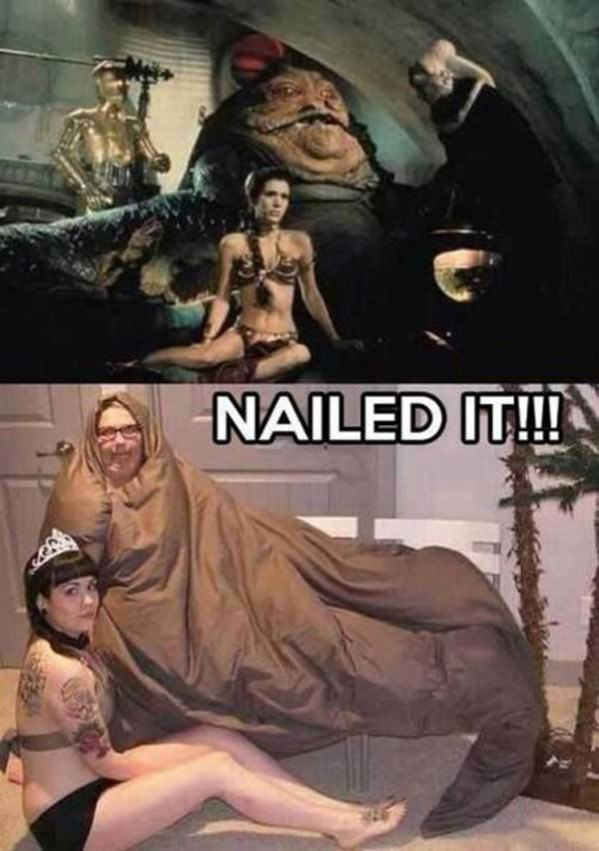
Wishing you the best! But just in case something dies go horribly wrong, a "Nailed it!" Meme would be much appreciated!

nailed-it.jpg

Edited by SkyCake

I wish you all the best. I had to stop painting finally. My fingers were starting to cramp from the old 15mm days. Too much Flames of War stuff.

Step Eight: Post photos in the Community Painting Thread for us all to enjoy.

There's two relatively easy ways to secure fighters for a spray primer (after you wash them). If you have Q-tips that are hollow, use those. They're awesome, just snip the cotton buds off (you can keep them and use them later), then cut each in half on an angle so it's like a bmboo spear. You can embed it in a sponge or a piece of foam and you have a ready made painting stick and stand. If you don't have that, then double sided tape or blue tac on a stick can work really well to secure those fighters.

In general, there's not a lot to say about it other than 'the more practice you get, the better results you'll get'. Some people are great at painting right out of the gate, and others are like me: pretty terrible. Many of the tricks that painters give are useful but also tinged by their own little idiosyncratic habits that can be contrary or just counter-productive.

What you'll need to start out is merely the willingness to start out, and the acceptance that you might not get perfect results. That's okay, it happens, and even if you've been painting for 20 years or more, you won't always get the results you want to see. When that happens, take a break, come back to it, assess what you want to do. You may find that your opinions have changed.

The materials that we list all are different, they behave differently, and you will slowly grow to intuitively 'feel' what's right for each. Honestly, I think I use 3 brushes total, I've got a few extra little dropper bottles for water, windex, flow aid, and matte varnish. Those, orange super glue, and a cheap exacto knight are basically all I use on a regular basis. It's about developing brush control and learning the qualities of the paints and tools that you're working with.

Painting can be as easy or as hard as you make it. What I do recommend (see, my own little idiosyncrasy) is plan out what colours you'll need. Look at the model and tell me what you want to see.

For instance: an X-wing has a body colour, markings, maybe a cockpit. The other stuff (engines, droids, weathering) are all extras. So what colours did you need to paint those up? Go from there, it can really help prevent you from feeling overwhelmed to have just 3-4 colours out rather than dozens, with other models in states of half-completion.

Don't worry, take a deep breath; you can always start over (Simple Green is incredible stuff). Painting is a creative outlet, just have fun with it. And if you ever need any help with anything in particular, don't hesitate to ask, eh?

I'll post some pics when I finish a few, I make no promises as to their quality. but like you've all said, if it sucks, I'll just try again. no big deal.

I'll pick up some q-tips and maybe some cheap brushes to mix and water stuff down. (I guess the qtips themselve could probably do this as well)

flow aid and windex, are these to be used instead of water to "water down" the paints?

I'm anxious to get started, I'm going to spray them in the back of my office tomorrow after work, well ventilated, and about 55 degrees. should be warm enough to spray.

here in michigan it's still winter for some reason so it's only 30 outside. and it keeps snowing.

Flow aid and windex are for "wetting" your water, that is, breaking surface tension.

I've repainted my core set neb-b something like 10 times... simple green is a blessing and a curse. Blessing because you can retry. Curse... because I ALWAYS want to retry!

I may have used simple green more than any other tool in my painting kit :P

It's always good to see new pictures, mate. And yeah, that's really the thing about it, you can always just try again. I'd recommend using a really cheap brush to transfer paint as well. Again, I also think a wet palette is a great idea (it's just a plastic tupperwear container, an old sponge, and some of that baking paper. It keeps paint from drying out).

Yep, as DUR said, it's for breaking surface tension, but I also use it for cleaning my airbrush. It's just handy when I have to use it, so it's a sort of 2-in-1 tool.

Hmm, 55 should be okay, I know that 60 is usually considered ideal for paint adherence for most aresol primers. That said, it's close enough that it should be fine. Especially with Michigan weather. (I'm in northern Alberta where it's a balmy 45 degrees).

It's exactly like DUR says. I have a little plastic gum container full of simple green that one model or another is always splashing about in. I know it's X-wing related, so I'll put it in spoilers, but bear with me.

2yo77mh.jpg

That has been repaint 4 times since Saturday. That's a lot, even for me, but it is what it is. Simple Green, it's amazing. Just... don't have it in easy reach when you're finished painting. It's far too easy to pop a model in. Thankfully, it won't hurt the plastic. I found a missing VSD antenna the other day, it had to have been in there for something like 4 months.

Edited by Vykes