This thread has de-railed beyond a few tangents. Please stop with the personal attacks, inflammatory posts, and trolling. Get back to the original topic and discuss its merits (which can be done civilly), or post elsewhere.
Games Design insistence with 'special moves'
Jericho said:
Personnally, I thought that v2 didn't give enough guidelines for adjucating skills tests, especially for combat and social interaction, but also for other skills. Making modifiers up on the fly is easy, but when the said situation comes back again and again, you need to be consistent ! And guidelines printed in a rule book help you do that. Guidelines printed on card seem even better to me. The GM doesn't even need to inform the player of the modifier or result, the player can do that for himself, silently. Less gamespeak.
This is a really good point; one of the great things about V1 that was lost in V2 was the idea of standard tests, each explained in detail how the test worked and what the results were depending on the result. The skills in V1 then modified those standard tests in some way.
In V2 all the standard tests ended up with exactly the same mechanic (unlike the V1 standard tests, whose rolls could end up being interpreted quite differently depending on the "standard" test being perfomed), and the skills just became things you needed to be able to make the roll in the first place.
I don't have V3 yet, so will have to reserve judgement until I do, but I think the action cards could be a switch back more to the V1 concept. Each action card goes into quite some detail about what the expected results are and under what circumstances they occur. Granted, they also have a more standardised mechanic in the vein of V2, but the key is in the aid the cards give to the GM in interpreting results.
As for cooldowns (in refrence to the OP) I think I would have a bit of an issue if actions had a cooldown that resulted in "once per day" usage (as this is relatively gamey, except perhaps in a spell context which you could argue was down to available power etc, but i don't think even WFRP3 spells have a once per day usage do they?), but AFAIK none of the action cards in WFRP3 have this mechanic, so I struggle to see why that is mentioned. I don't see its relevance with reference to V3.
pumpkin said:
As for cooldowns (in refrence to the OP) I think I would have a bit of an issue if actions had a cooldown that resulted in "once per day" usage (as this is relatively gamey, except perhaps in a spell context which you could argue was down to available power etc, but i don't think even WFRP3 spells have a once per day usage do they?), but AFAIK none of the action cards in WFRP3 have this mechanic, so I struggle to see why that is mentioned. I don't see its relevance with reference to V3.
Spells can be cast on a regular basis; I'm pretty sure all the recharge times (for everything) are accounted for in rounds. Alas, I had to relinquish the store's demo set and cannot check right now. This is going to be a long couple of days.
Sorry folks: I was being a ******. I promise to stay on top from now on. Peace out.
Erik Bauer said:
Necrozius said:
Hellebore said:
@Necrozius, if they wanted to have the cooldown reflect the effort, they could have done many things other than simply 'it takes X many rounds to use power again'. For example, I previously mentioned a fatigue cost of these abilities. If your character can only sustain 6 fatigue and the ability costs 3 fatigue, then it can only be used twice before resting (or even less if you suffer fatigue from other areas). Another idea would be the number of rounds required to make the attack again is =current fatigue level (afaik you gain Fatigue as you go), thus the more tired a character is the longer it takes for them to psyche themselves up for the next big hit .
These create a similar game balancing effect (that is, a 'cooldown/x times a day' mechanic) that also blend into the story in a logical manner. This is what I think is the problem with a lot of rules these days in RPGs, they favour abstraction over simulation, despite the fact that you can achieve similar results in both and simulation has the added bonus of working within the story as well. So to me, it is simply the most logical to have rules that reflect the story and work as game mechanics, you shouldn't have to sacrifice one for the other. Especially in an RPG.
Interesting. Now I have a better idea of what you mean.
I guess that my difficulty with this debate is that, from my perspective, both systems (recharge time vs. automatic fatigue poitns) achieve the same end results.
Whereas with the recharge system you allow the player to pace himself and take a bit of time to recover from such strenuous actions, while still giving them a RAW way to speed up that process by taking fatigue points or spending fortune. In the end, I don't see much a difference except that there's less book keeping with your optional rule (which is awesome, by the way).
Nice and interesting reading indeed... I loved Hellbore explanation too, that puts things into perspective. And also gived me some ideas: Hellbore, do you mind if I try houseruling your musing for my V2.5? I'll post them as soon as I've written them down.
Sure. I like good clean rules, but I place the story first. When I write my own rules I always attempt to make sure that the story is reflected through the rules in a method that makes sense (ie that people can visualise actually doing as a person because that's what an RPG is).
I've changed the v2 rules substantially myself for exactly this reason. I never liked the fact that criticals happen at the end of your wounds value, so I required a crit per TB worth of wounds suffered. That is something I like about v3 as it allows criticals to appear during the combat dynamically as opposed to at the end.
In fact, I like making rules for lots of aspects of the game but I don't like rules lite or rules heavy games. Rules that loop back on themselves I find the most pleasing because they create internal consistency. I can only carry my Strength worth of gear, I can only perform a strenuous mental exercise (taking an exam) for a number of hours equal to my WP before I start to fatigue/stress etc. I find symmetry in these things. So I have no problems with cool down mechanics if they are internally symmetrical (as given in my examples previously). It's only when a rule is purely mechanic driven that I don't like it.
I suppose you could say I like an analogue gaming experience over a digitial. It's a poor analogy but it's the difference between a continuous spectrum blended together and distinct seperate components.
So whenever I approach game rules, I want to be able to connect the dots within the gameworld and system. I want to see WHY rules exist as explained within the gameworld rather than in the game mechanics.
An example where a real cooldown mechanic would be completely in keeping with the universe would a setting where people get their magical power from the sun and expend it when they cast. Thus their storage must be rebuilt over a certain amount of time before they can use it again. As this comes from the sun it's a default effect that turns out to be a simple cooldown - it takes exactly 4 rounds for your solar battery to recharge from the sun thus your ability only works every 4th round.
I'm not even sure I'm antigamist and prosimulationist, rather I seem to be anti abstractism. However, it's pretty much impossible not to abstractify at some point because we are using numbers to represent people but I want as little of it as possible. Once you've built the groundwork and chosen the abstract system you wish to use, all other rules need to conform to that for internal consistency. I suppose if you want to keep splitting hairs I don't like abstractification of abstractifiaction.... I like rules to create a framework for the game, so I'm keen on having as many rules as needed, but not if they must be abstract. The old D&D armour class was abstract, it was 10+ bonuses. It only worked like that because you used a D20 and they couldn't get armour high enough to act as an actual opposing value without increasing it somehow. So they simply abstractified it out and said everyone has exactly 10 armour class plus other stuff.
The original topic was more a critique on this 'paradigm' of game design and it just so happens that the latest incarnation of WFRP uses it to some extent.
To those who want me to play the game, unfortunately no one I know will be buying it and no game shops around here (of which there are very few) are running demos. However, I don't think that will change anything because the way the game plays and the way the rules work aren't really what I have a problem with by themselves. If I played the game I would see that yes it is balanced and yes the game works with it, but knowing how it works won't change the above problems I have with the concept in general. In some ways it reminds me of the current WFB High Elf army book where they all get the ALways strike first special rule. Yes I know it's been balanced, I know it works, but I don't think it's a very good rule or a very good solution to what is the core problem - how initiative affects combat order.
Something can WORK without being good. There are usually many ways to solve a problem and although all work it doesn't mean they work for the right reasons. Newton solved the problem of gravity, but it doesn't mean it was the best way to do it. It was a fix, but not the best fix.
Hellebore
Along the comments of how movies, boxing and whatever else portray the cooldown abstract effect, I think that some are missing the point that in all cases its a build up to the 'big' attack or effect.
In a sword fight there are a number of other actions that build up to the hit as the opponent is manoeuvered into position to make the most of the major strike. Same as a boxer will do a number of jabs to test defences or make their opponent move into a certain position to make the most of the uppercut.
Conversly cool down work the opposite, 'big' attack then do whatever untill you can once again big hit. The card system could have realy handled combinations to setup and achieve the 'big' result instead.
Haps you need to test the trolls skills and look for its weaknesses through a couple of basic attacks before using the troll fella strike for maximum advantage.
To use backstab, you need to dodge, move into position and then be able to use it, or prehaps use a dodge some kind of blinding or distraction, a move and then be in position for the backstab. Though on a side note I dont like the idea of backstab style attacks when the opponent is aware of you.
Rather than simply go backstab, normal attack, normal attack, normal attack, and backstab again whenther ot not the situation would realistically enable the character to actually use it. (feel free to correct me if there are conditional specifics to the action as well.)
Using a series of actions to get to the position for a larger attack is far more effective, immersive, narative supporting, story assisting and even simulationist/gamist (reasonably equally) while achieveiing the same general effect of a cooldown.
Its rather a pity that nowhere outside of the US (prehaps north america) wasnt able to take part in the demo. One of the major Australia distributor (the largest I know of) of RPG parafenalia has yet to even display Warhammer as an option in their online listings or comming soon
Good points, Loswaith. Those reasons are largely why, after the demos, I've taken to the special actions, as (barring Double Strike being perhaps a bit too efficient) they're tailored quite well to special situations or training. The melee ones, at least, and the basic defensive ones. Execution Strike (IIRC), for example, represents a manoeuver that unbalances and exposes your foe to following attacks - I don't remember what the recharge was like, but players quickly learned to save that one for opportune points when friends were in position to follow up.
Spells are an exception to this (I can't remember seeing recharge on any though) as they actually do represent true "special magic actions" that need to be trained.
In the case of the former, as well as buying down recharge and exerting, you can also try it every turn by Performing a Stunt - it won't function as effectively, but your character can still do what they want. So a character pulls a cinematic or especially draining move; they can then push further to do it effectively again, or do a forced, lesser version of the same. I've never encountered an RPG that allows that before, outside of the GM just making stuff up on the fly. Nice to have the freedom with the structure to make it something of a game still.
Loswaith said:
Along the comments of how movies, boxing and whatever else portray the cooldown abstract effect, I think that some are missing the point that in all cases its a build up to the 'big' attack or effect.
In a sword fight there are a number of other actions that build up to the hit as the opponent is manoeuvered into position to make the most of the major strike. Same as a boxer will do a number of jabs to test defences or make their opponent move into a certain position to make the most of the uppercut.
Conversly cool down work the opposite, 'big' attack then do whatever untill you can once again big hit. The card system could have realy handled combinations to setup and achieve the 'big' result instead.
Haps you need to test the trolls skills and look for its weaknesses through a couple of basic attacks before using the troll fella strike for maximum advantage.
To use backstab, you need to dodge, move into position and then be able to use it, or prehaps use a dodge some kind of blinding or distraction, a move and then be in position for the backstab. Though on a side note I dont like the idea of backstab style attacks when the opponent is aware of you.
Rather than simply go backstab, normal attack, normal attack, normal attack, and backstab again whenther ot not the situation would realistically enable the character to actually use it. (feel free to correct me if there are conditional specifics to the action as well.)
Using a series of actions to get to the position for a larger attack is far more effective, immersive, narative supporting, story assisting and even simulationist/gamist (reasonably equally) while achieveiing the same general effect of a cooldown.
So basically what you are suggesting is a reverse cool down mechanic. All of your cards would start with zero recharge tokens on them and you would get one added each round. This represents you setting up the opponent for the strike. Once you have accumulated enough tokens equal to the recharge value, you can then use that attack/ability. Cards with zero recharge value are still the things you can do every round. So for example, Troll Feller Strike with a recharge of 4 means that you would spend 4 rounds doing other attacks to set up the big hit, then pow! Once you've used it, the tokens get removed and you have to accumulate 4 more before you can use it again.
That works, but after the first hit, it really isn't any different than cool down. You have to wait 4 rounds (barring other rules which allow you to add or remove recharge tokens), between using the attack and using it again. In the one case you're adding tokens while in the other you are removing them. So the only difference is that with cool down, you don't have to wait to use it that first time (assuming you meet the other requirements of the action, and yes, these do exist). This represents the fact that when first engaging the opponent, they don't know your capabilities yet. You can surprise them with a big hit right off the bat because they haven't "taken your measure" yet. After you do that once though, they are watching for it, so you can't just do it again right away, you have to set them up for it by doing other actions for a number of turns until they've relaxed their guard a bit.
You can rationalize the delay between uses the same way with either system, the existing one just doesn't make you wait before first use, which is more fun (from a game perspective). although not necessarily more or less realistic, although I think I've rationalized it pretty well above. Add to the recharge mechanic the fact that there are other requirements that have to be met to use an action and the various other ways that recharge counters can be manipulated (for good or ill) and the system works with enough variability that it's not just a boring, repetative sequence of best attack, normal attack, normal attack, best attack again every time.
Loswaith said:
Along the comments of how movies, boxing and whatever else portray the cooldown abstract effect, I think that some are missing the point that in all cases its a build up to the 'big' attack or effect.
In a sword fight there are a number of other actions that build up to the hit as the opponent is manoeuvered into position to make the most of the major strike. Same as a boxer will do a number of jabs to test defences or make their opponent move into a certain position to make the most of the uppercut.
Conversly cool down work the opposite, 'big' attack then do whatever untill you can once again big hit. The card system could have realy handled combinations to setup and achieve the 'big' result instead.
Haps you need to test the trolls skills and look for its weaknesses through a couple of basic attacks before using the troll fella strike for maximum advantage.
To use backstab, you need to dodge, move into position and then be able to use it, or prehaps use a dodge some kind of blinding or distraction, a move and then be in position for the backstab. Though on a side note I dont like the idea of backstab style attacks when the opponent is aware of you.
Rather than simply go backstab, normal attack, normal attack, normal attack, and backstab again whenther ot not the situation would realistically enable the character to actually use it. (feel free to correct me if there are conditional specifics to the action as well.)
Using a series of actions to get to the position for a larger attack is far more effective, immersive, narative supporting, story assisting and even simulationist/gamist (reasonably equally) while achieveiing the same general effect of a cooldown.
Its rather a pity that nowhere outside of the US (prehaps north america) wasnt able to take part in the demo. One of the major Australia distributor (the largest I know of) of RPG parafenalia has yet to even display Warhammer as an option in their online listings or comming soon
Loswaith said:
Along the comments of how movies, boxing and whatever else portray the cooldown abstract effect, I think that some are missing the point that in all cases its a build up to the 'big' attack or effect.
Interesting points. That would be less abstract and more "realistic".
Maybe use the cooldowns in reverse ? Play a card and add a recharge token per round of preparation. When there are as many tokens as required by the card, use it. It's not as realistic, but at least, it gets you that feeling of building up to a special strike.
Loswaith said:
-snip since it was already quoted and it's a lot of text-
Maybe a house rule that you can't use any actions that have a recharge cost on the first turn of combat?
sudden real said:
Loswaith said:
-snip since it was already quoted and it's a lot of text-
Maybe a house rule that you can't use any actions that have a recharge cost on the first turn of combat?
You could also just say that DM has final descretion and the player has to justify the manoeuver through roleplaying. *Why* a reckless double-swing when the situation isn't too dire?
I personaly wouldnt just reverse the cooldown because that doesnt realy work that well either and has the issues that mac40k mentioned in that aside from the first round its just the same. It's still normal attack, normal attack, normal attack, big hit. Also for things like backstab a leadup completly ruins the supprise nature of the attack.
Realistically to have it work well you would have a group of moves you could use to set up the strike, or a series of moves to chain togeather representing the action. I personally wouldnt limit it to just one specific manoeuver (unless the maneuver is specifically designed as a 2 stage/round process) as that limits choices and can propergate the stagnation of having a best option just as much.
For example for something like execution strike, prehaps you have to do a defencive maneuver as the action before to get it off, to represent getting in under an opponents guard, and thusly doing a more lethal strike.
Or for Troll Feller you need to have done a successful agressive strike to before following up with the Troll Feller Strike, to I guess show that the 'troll' is still a little off balance from the previous strike, which is why the Troll Fella Strike is effective at that point.
I could likely come up with a whole series of ways to do things if I knew more about the cards and the system, as this concept is just off what I have been able to gleen from resarch to date.
Ultimatly having it dynamicaly, and rewarding players as they set up and use tactics and various manoeuvers to achieve a result they are after.
Otherwise it will get just as stagnant as is mentioned alot with Swift Attack for Second Ed (though I never found that the case for my games), because given time it will likely end up with third ed being much the same. eg. Troll Fella strike used every 4th(?) round with the other actions being whatever is most effective in the interium (be it Double strike or whatever else).
This kind of thing is a strength the cards do have over say a list of actions as a player can queue up future actions over a number of rounds, changing them as circumstances require.
Good points, Loswaith. I'd like to take a good, hard look at the existing actions as soon as I have my hands on my own copy of the game with that in mind. For the demos I ran, I *didn't* take a lot of time learning and memorizing avaiable cards - I let the players manage that element of the game, and had NPCs react accordingly. It made for an easy ramp up and allowed me to focus on the story, but in the long term, I may need to make adjustments to the system. Much like what you're talking about above.
Remember that there are other requirements that have to be met to use an action other than just the recharge. The game just uses different mechanics than a rigid chain of actions. For Troll-Feller you have to be outnumbered or engaged with an opponent that is physically larger than you. Granted, many people are insisting that most opponents will be physically larger than a Dwarf, but I don't think this card was intended for use vs. a single standard human opponent. Dwarfs are not Halflings and what they lack in height they make up in bulk, so hopefully this card will get errata that clarifies that "physically larger" means "larger than human". There's also the trade off of not being able to use active defenses while Troll-Feller Strike is recharging, so if you put all your umph into that swing, you are leaving yourself open to retaliation if the TFS doesn't put your opponent down.
For backstab (at least in the Reckless Stance), not only does it have recharge 4, you add 3 misfortune dice to the attempt; however, this can be reduced by one misfortune die for each ally that is also engaged with the opponent. So this action is designed to work best with and encourage teamwork. It's very tough to pull off by yourself and more than likely bad stuff will happen if you attempt it without at least one ally to provide some kind of distraction. However, if you have your opponent surrounded, you've got a greater chance of success. And if your allies are actively aiding you rather than attacking themselves, you add fortune dice to your roll increasing the likelihood of getting the two boon result as well. So a sequence of Back Stab, normal attack, normal attack, normal attack, Back Stab, etc. isn't likely to occur since there will be a variety of other circumstances that will affect it's use in addition to the recharge of 4.
So we have another war of the edition heh?
I don`t see why people are so hung by the fact that a particular rule reminds them to much of either this than that. Like the cool-down effects is so computer game like. I don`t see it. if it works who cares where it comes from so long it works. It really don`t matter if the rule or mechanics originate from computer game. That in itself is not an argument. or is it?
Like I am going to complain around a D&D table because the Polyhedral dice reminds me too much of ancient Rome, and it feels so antique. the D20 was actually used in an ancient roman boardgame. If I am doing this right there will be a picture of a d20 found in the ruins of Pompeii around 200 AD
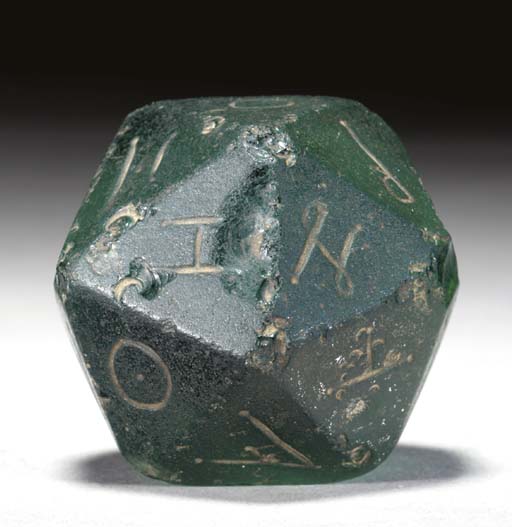
I dont think its a war of the editions, nore that it is similare to computer games. From what I can tell its more about using a completly gamist and out of character factor to balance the effect of an action as so it doesnt become the only used ability.
mac40k Said:
... For backstab (at least in the Reckless Stance), not only does it have recharge 4, you add 3 misfortune dice to the attempt; however, this can be reduced by one misfortune die for each ally that is also engaged with the opponent. ...
Fair enough, given the missfortune dice (which will average a failure) thats added its the "flanking" bonus rather than any kind of stealthed based attack as the name (from an RPG influence) and picture imply. As adding the missfortune to the effect of a 'supprise' attack seems totally irrational since the target wont be all that hard to hit proided the target is unaware of the attacker.
Also on that does a character assisting another count as also being engaged or does at that point the group of attacker and assistants become one efffective entity engaged with the target?
All in all my example was simply to show a way that fits balance, narative, simulation and gamist factors, while still having the same desired effect.
Necrozius said:
And I can't help but scoff at the elitist RPG sneering derision of "gamist" concepts in these... uh... games.
THESE ARE ALL MAKE BELIEVE GAMES IN WHICH WE PRETEND TO BE MAGICAL ELVES AND DWARFS.
Scoff all you like mate, but you know as well as I do that a good RPG holds a decent equilibrium between game mechanics (the "gamist" aspects) and abstractionist fluff and imagination (the "narrativist" aspects), and the two do not clash with eachother too much.
Just imagine an RPG taking the gamist concepts too far, where you as a player can't (as per the RAW) even choose what your character says in game but you have to roll a die and consult a table based on that characters Eloquence skill to determine if the character says "Greetings!" or "Good Morrow!" to the NPC that the character is interacting with.
Personally I wouldn't play that game even if I got paid to do it, it just reeks of crappyness all over. Such a game would be just that, "a game". the "Role Playing" bit would have been completely left out and thus wouldn't turn me on in the slightest as a proposed RPG.
If we want to play make believe games in which we pretend to be magical elves and dwarves, then wouldn't it be reasonable to expect that there are some parts of the game where you can actually make believe and don't have to be ruled over bu a bunch of dice rolls and table results?
Now, im not accusing WFRP 3rd edition to actually be such a crappy game (in fact im one of those who defended it during it's production and insistend on waiting and seeing exactly how good or bad it was), although I agree with Hellebore that I would instantly dislike the concept of cooldowns (it isn't reasonable at all to only be able to preform one decapitation per day, that's just silly. And also it reeks too much of MMORPG shenanigans). My point here is to adress that particular piece of your argument.
A good RPG should be balanced between reasonable gaming aspects and narrative aspects. When the latter overshadows the former it becomes more a case of "storytelling" rather than an RPG. If the former overshadows the latter it becomes more of a "game" rather than a ROLE PLAYING game.
Though I certainly understand the resistance to recharge counters; they *are* mechanically oriented after all - I don't really get the dislike of them. They factor so little into a session of WFRP, as, in practice, they have almost no impact on play. As GM, I barely knew my players were using recharge times, and it had no impact on the narrative in the least. It's an odd thing to take issue with; not in concept (I get that, certainly) but in terms of impact and overal effect on the game. It has the exact same effect as dropping more fatiue for certain manoeuvers, but is a bit easier for players (*not* the GM) to manage.
Varnias Tybalt said:
A good RPG should be balanced between reasonable gaming aspects and narrative aspects. When the latter overshadows the former it becomes more a case of "storytelling" rather than an RPG. If the former overshadows the latter it becomes more of a "game" rather than a ROLE PLAYING game.
I wholeheartedly agree, Varnias.
Actually, in the post of mine that you referred to, I mis-used the term "gamist". I was actually trying to be a smart ass, and my poor argument boiled down to:
<smugness>
"Heh. RPG nerds are being condescending to other RPG nerds for BEING RPG nerds. Hehh heh hehhhh...."
</smugness>
So I wasn't really making any constructive contributions to the debate. I have since apologized.
morskittar said:
Though I certainly understand the resistance to recharge counters; they *are* mechanically oriented after all - I don't really get the dislike of them. They factor so little into a session of WFRP, as, in practice, they have almost no impact on play. As GM, I barely knew my players were using recharge times, and it had no impact on the narrative in the least. It's an odd thing to take issue with; not in concept (I get that, certainly) but in terms of impact and overal effect on the game. It has the exact same effect as dropping more fatiue for certain manoeuvers, but is a bit easier for players (*not* the GM) to manage.
Yes, but recharge actually doesn't enhance the narrative aspect either. If it is something that doesn't enhance the play experience (which for me focuses on how it effects the story rather than the mechanics) then why use it at all. You see Fatigue and Stress actually enhance play, they add depth to the story with the negative effects playing out directly in character. Recharge does not do that. It's simply a mechanical issue to relay how often super smash can be done over basic attacks, not really adding much flavor there, just altering the amount of damage delivered per turn. Also, as I've said many a time, it does have some impact as it relates (from a player's perspective) as focusing combat more on resource management than actual combat. It all becomes a lengthy planned ordeal per turn. Where is my conveservative/reckless slider at. How much Fatigue will this gain me? I have to fight four beastmen and a big, tough beastmen. Do I use my active defenses now or save them when I engage the big guy. I've been shooting with my bow, but now charged, I have to ramp myself over to Reckless or I'll be wasted in this fight. Do I Nimble Strike now or later?
This simply adds a forced-tactical situation. Combats rather than being focused on the conflict and objectives, it becomes solely and squarely focused on the task. Additionally, the entire action card mechanic sort-of lynch pins the freedom of the dice to specific effects and charts on cards as I outlined in some of my previous posts in this very thread and several other threads throughout the board. Boons can't give knockdowns for example if there isn't a knockdown card. That may be a bad example because such a card may not exist but I think you get my point.
Now I know games love their special actions, so despite the fact I think they could have been cut, I would rather have seen cards that augmented basic abilities at a higher risk. This is what I'd like to have happened: Each weapon plays out like a basic attack card. Then, you could additionally an Action card that enhances the basic function. Boons, Banes, and Successes rolled would activate powers on both the weapon attack and the action card. The action card, however would come with some form of penalty such as fatigue, stress, wounds, etc if a certain number of banes were scored. That way, the players would get to choose how often they use it and what the risks would be if they were involved. Many other clever things could have been done to give them more limits as well based on the situations, such as when first engaged you may activate this card. You may activate this card when outnumbered. You may activate this card when your opponent has missed you or you block the attack or whatever.
All of this is actually in the action card system and to me, are limits enough for them. Your Troll Slayer cannot simply Troll Feller his way off to oz because he has to be fighting something bigger, and if he rolls bad, he's taking wounds. These kinds of penalties could have been levied higher maybe, but I haven't seen the cards enough to know for sure. With that being said, the system now plays on two fronts of resource management (the card effect and the recharge effect). I'd rather seen the game choose one and go with it rather than go with both (obviously, in my taste, not the recharge).
The same can be said for the stance meter. Again, great idea, but I think being more reckless or conservative could have simply been talent cards you tap or put counters on or whatever when you want to go more conservative and reckless, that way the character's could bounce between the two sides of the coin quicker.
For instance, lets say a character is in a deep debate with a reluctant king about the need to go to war. He's being careful to convince the king so he's got himself 3 stepped on conservative because he's being very patient. When suddenly chaos marauders charge the place. Well now he's ready for a fight and realizes he the king, and the few others there are ill equipped to deal with this threat so he recklessly throws himself at them. To reflect this he has to move his slider all the way up to the reckless side, but it costs him 3 fatigue. The penalty is rather steep for a simple change of tone scenario in my opinion and could have been softened if this was done on cards and happen a bit quicker. Additionally, the meter track is the one token I've seen getting banged around during all the dice, counter, and card movement with players constantly "losing" track of where they are at on the meter.
Don't want to get into the argument here....play your games however you want to. it is obvious that an RPG is an extremely personal thing. At the end of the day, however, i could have stopped buying game products with AD&D. Now that we have the internet there is so much fan material that you never have to spend money again!
I have playtested the game and I may house rule recharges by making them cost fatigue or stress to use them before they recharge. That way its in the players hands of when to use it. For example: I think Dodge has a recharge of 2. Now in round one you use the action (woo hoo!). Round 2 comes along and you really want to try to avoid another swing of the Beastman's axe. Your exerting energy and need to breathe for a second or two before to use your dodge again (my feeling is like a football player avoiding a tackle...it takes a good amount of energy)...instead of waiting to recharge (catch your breath) you decide it's important enough to become a little more tired and use it again and take fatigue for the cost of the recharge (2). This, IMO, keeps in line with the mechanics, keeps things balanced in the game system, and keeps the narrative going.
Good luck everyone...life's too short to be so angry about this....after all remember THACO? There will always be a part of a game that is not to someone's liking. Play it or not, house rule it or not.
happy thanksgiving!
You, Limelight, are being far to reasonable.
As far a Commoners comments about not being able to knock some one down, because you lack a card to do so...isn't that preciscely what the "Preform stunt" card is suppose to be for? I dunno, maybe I am wrong......
True....during out playtest I played the envoy....the GM built up the scene as one where we "had" to get to the coachman before he died! I decided to charge the Beastman and tackle him out of the way....I used the maneuver card but the GM thought is was a cool move so he added a Fortune die to the pool....very easy and free form. If you play with a GM that won't let you do something without a "card" ...its time for a new GM
Actually, not that heated at all about it, just engaging in a dialogue about it, it's always fun to kick around about systems. Also, I only briefly outlined in my original post what I meant about the knockdown effect. This is copied from an earlier post of mine, but I figured I'd bring it up again since this part of the conversation has rolled back around to this point:
My only personal problem with the cards is how the ones I've seen detract from the power of the dice and in ways counter the effectiveness of both tools. For a climb check, there are no card so Boons and Bane effects are decided by Players and GM'S alike. Then combat rolls around and Boons and Banes are decided by the cards and the GM and Players have little room to say what happens without stepping on a card effect. You see Troll Feller has an effect off of boons that gives a +1 critical and ignores armor. If you act without the card you can't do that effect. This way, the system limits the narrative power of the dice because a player without Troll Feller may roll the same amount of boons, comets and whatever, but the GM (or player) can't decide they do the effect of Troll-Feller because those effects are specifically governed by a card. Sure you can house rule it and say it can, but by doing so you're destroying the need of the cards (hence the two tools work against each other). To focus this point, if you have a dock hand and a Troll Slayer in the same party and the Dock Hand rolls all the required dice effects to activate all the powers on Troll-Feller you can't give him all (or even any) of the effects of Troll-Feller because the Slayer spent points to get Troll-Feller. If you did, the Slayer would wonder why he had to pay points for something the GM would reward automatically. Just as someone with two weapons won't be able to use double strike (even though they are armed with two weapons which meets the requirement) because they haven't purchased the card, therefore they can't do it because someone else has already purchased it or could purchase it.
Furthermore, the Stunt card actually counter-acts the rest of the cards. Here's a card that says you can do anything. Here's 152 other cards that say you can do this specific thing, think outside the box. Then why so many other boxes? They sort of threw everything into these cards and really want them to be great (and they are, don't get me wrong here) but the cards themselves work against each other, work against the dice, work against each other.
Sure, you can house rule all you want around this, but that does not change the criticism of the system...there is simply too much when it comes to actions and some streamlining I feel needs to be done to make each tool as effective as it can be. There is a lot of system redundancy, conflicting notions (Stunt card versus other cards, card effects versus dice effects, character choice versus card effects). Someone, I feel, needed to sit down and say this is what we want this system to do, picked only the mechanics that support it, and ran with it.
To me, the dice become the most obvious choice because they are extremely innovative and a great tool. That tool then becomes watered down by the number of x amount rolled activate specific effects and are limited, in ways, to those effects. It just seems like too much and a few more critical choices could have been made.
With that said, I love the game and plan on house ruling it all to hell. It's great, it really is. I'm simply looking at ways the game itself could have been improved. If I were a play-tester I would have said the same thing, but I wasn't, so I'm just saying it now.
commoner said:
Furthermore, the Stunt card actually counter-acts the rest of the cards. Here's a card that says you can do anything. Here's 152 other cards that say you can do this specific thing, think outside the box. Then why so many other boxes? They sort of threw everything into these cards and really want them to be great (and they are, don't get me wrong here) but the cards themselves work against each other, work against the dice, work against each other.
Rather than counteracting or contradicting, I feel that the Stunt card explains and defines the intent for the rest of the action cards; *none* are intended to be boxes, but rather pre-packaged or trained abilities. Perform a Stunt, then, is the untrained version of *all* actions.
Take Troll-Feller, for example. Our doughty Example Slayer wants to a slobbering Chaos Troll in a final, single blow. Shifting his grip on his axe, as he learned to do many times before, he delivers a massive strike; accurate, but utilizing the odd grip to increase the force of the blow - Troll-Feller Strike. The troll is resilient though, and does not die. Seeing it still glaring balefully at him, Example Slayer wrenches his axe free; he can't perform a perfect Troll-Feller Strike again, as his grip is all wrong and he's off balance. At this point he can choke up and deliver a regular swing (Melee Strike), or try his massive-swing-technique again, but rushing the grip and off-balance. Whether you use recharge or house-rouled fatigue (and the player doesn't want to spend it), he needs to Perform a Stunt, which may not be as effective as the original chop.
Example Roadwarden is nearby and sees our Slayer try to end the troll menace in a series of massive swings (one being clearly cleaner and better set up than the later attack). He tries to emulate this, leaping at the troll with his sword in both hands. Because he's not trained in the proper felling of trolls, he doesn't gain the mechanical, pre-packaged, benefits of Troll-Feller. The GM mimics that action as a lesser version (perhaps with extra misfortune, less crit chance) and it's triggered via Perform a Stunt.
The advantage to the recharge/Perform a Stunt model (over just adding fatigue) is that the GM can then modify the action on the fly, while staying within the bounds of the rules (for consistency's sake). If a player were to simply take fatigue and perform a second, successful Troll-Feller, the printed results are the same (unless the GM modifies those on the fly... and you're essentially using Perform a Stunt).