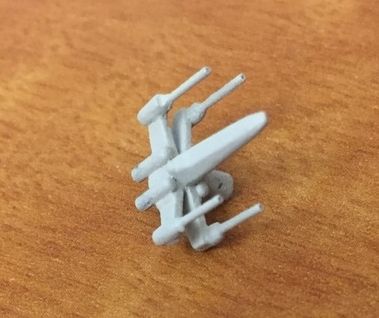
There are many tips and tricks from the world of scale modeling that seem to never make it into the miniature world and vice versa. I'm hoping this can be a parallel to the show and tell repaint thread that just has techniques.
Hopefully this can save some people who are just starting out from many nights of scrubbing simple green off of their miniatures 
I'd like to kick this thread off with:
Before you paint...
+Simple Green. This stuff is the magic undo button of painting with acrylics (which I recommend for selection, toxicity, and convenience reasons). You will inevitably want to repaint something once you've got the bug. Buy a gallon of it, a bucket, and keep it for years and years. It doesn't lose much stripping power over time and is totally safe to the FFG paint, so worst case you get your prepaint back if you screw up.
+Clean up the model. No amount of gradients, blending, or airbrushed details can cover a mold line or a crooked/bent component. FFG is pretty good about this on the Imperial models and pretty horrendous on this with Nebulon B's and fighters. Jeweler's files and a 100 pack of x-acto blades are your friends. Nice to do this while you have the latest Rebels episode playing (or twitch stream going). For the final touch, I fill gaps that are too big with super glue, allow them to cure, then sand them down using a combination of emery board, jeweler's file, and x-acto knife. For very large gaps (read: neb-b) you may want to try using an actual epoxy putty.
+Use a good paint brush for brush work. This really, really, REALLY changed my experience of painting. Raphael Kolinsky 8404 No. 1- the lightsaber of paintbrushes! Also, learn how to clean/store your brushes- use brush soap, don't abuse the bristles, etc.
+Thin acrylic paints using "wet water." Wet water is water with some kind of surface tension breaking additive- windex, flow enhancer, isopropyl alcohol, even dish soap all work for this, I prefer liquitex flow enhancer myself. The consistency you're going for is something like skim milk. It should take multiple layers of paint to produce opacity.
+If at all possible, try an airbrush with thinned paint. You can get an el-crappy one from Amazon for $50 as a starter or even an external mix badger + walmart compressor for about $80 total. This isn't absolutely necessary, but it makes painting FAST and opens up a whole world of effects. It lets you basecoat with the actual identical pigment you're going to later brush with- this will save you many, many, many headaches if you ever make a mistake.
The Next Level tips/tricks:
+If you want to accent panel lines or raised surface details without tinting your basecoat, apply gloss varnish first (I just use future acrylic floor wax). You can always go back and dull it later. Yes, this does increase paint thickness, so you generally want to save this step for after you've got your basic colors in place and are happy with them. What this does is makes a slick surface that washes will not stick to- that means the pigments stay in the recesses, where you want them.
+If painting with acrylic, use a oil or watercolor paints to do your lining, NOT acrylic. This allows you to wipe and fade the paint without affecting your basecoat to your heart's content without having to simple green the model if you screw up. It also allows for a lot more control. Watercolor washes are my favorite way of doing this now: the only thing you need to be careful of is remembering to seal them in with acrylic varnish once you're happy, as the moisture from your fingers can and will remove pigment even days/months after they have "dried."
+If you're like me and HATE edge highlighting, try watercolor pencils. This technique, brought to you by the award winning Mister Justin, is the most time saving, awesome technique I have for y'all. The best part: you can shape the tip of your pencil with jeweler's files to match the work you're doing. Want to highlight the little boxes on your ISD? Grind the edge flat like a spatula, and wipe across- you'll be done in 15 minutes with the whole model. Want to highlight EVERY FRIGGIN edge on the ISD bridge shield projector? Grind the tip blunt and circle 'round the globe like a light dry brush.
Quick and Dirty Tricks specific to FFG models
+My number one complaint of FFG models is the panel lines are way, way too high contrast- this is what really kills the realism on the models. If you just want to address this part, gloss coat the model, then use diluted white watercolor paint (I like to use China white since the slight off-whiteness helps it looks like weathering dustiness if you leave any on hte surface) to "reverse" the panel line effect. The watercolor will apply pretty translucent in wash consistency, so you'll just be tinting the black lines to a lighter gray- repeat as necessary till you're happy. Once finished, matte varnish and you're ready to go.
+Like the original FFG scheme overall, but wish it were desaturated and darker like in the movies (looking at you, MC80 and Neb-B). If you have an airbrush, load up a 50/50 mix of heavily thinned neutral gray and spray from a pretty generous distance. You'll get the dimmed look within a couple coats. If you want even darker, add a little black to the mix. You can do this with watercolor, then let dry, and then go back over the model with a slightly damped q-tip to fake edge highlights (really just selectively revealing the original, lighter basecoat) to pull of a pretty good effect. You can do the q-tip thing on acrylic if you use 91% isopropyl and don't wait for the full cure (within an hour is plenty fine).
+Alternatively, get some black RIT dye and some warmed water (just under boiling is best, or even a mason jar and microwave works). Dunk the model in the hot liquid and pull out (don't leave it in there too long or the model will warp) until it's tinted to your desired darkness.
+Want some details picked out, but don't want to go through the whole varnish/wash/clean up/varnish cycle? Get a copic .03 tipped liner (gray works for light models, black for dark, sepia for warm colored, blue for cool or near white) and trace out the details you want. It's alcohol soluble so easily correctable.