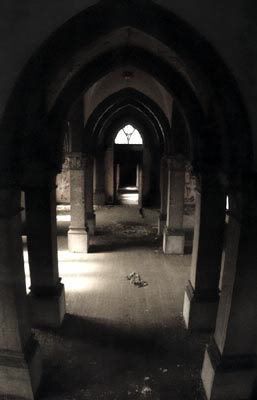
Hive inside visual representation problem

By egalor, in Dark Heresy

Despite reading lots of w40k books for years, playing DH, fantasising a lot - I still seem to have problems with getting an image inside my head of how a hive looks from the inside.

It looks like I just cannot imagine:

- rockrete ceiling at the height of a bird's flight,

- street-wide corridors,

- how do buildings look like in a hive,

- does it feel to be outdoor or indoor while in the hive.

I would appreciate if you could post here some art on the inside of a hive, or a close-up of its outside. If there are none available, I think a detailed verbal description will do. Also, I'd want some comparisons to the real world environments.

Thanks!

Yeah, Hives are tricky, and I'm not sure that they've ever been represented that well. Necromunda (the game) had a lot of pictures of huge open areas within a hive, which never made much sense to me. I imagien they'd be quite cramped!

I seem to recall A 40K article somewhere about how hives develop: imagine a city with a downtown financial district with a selection of vast skyscrapers. Imagine that this is then aged 1,000 years - the skyscrapers grow taller, bridges between them grow into a network of passageways, the streets get darker, more buildings grow up around them like bushes under the canopies of great trees in a rainforest...

As the city grows, the countryside around it empties, slums erupt, agriculture peters out, fields become ash waste, poolution increases, until eventually the vast finaicial district grows into a single great protected spire, cinsisting of the tallest skyscrapers welded toghter under a protective stel covering. Billions of people live within each spire. The slums at the edge of the spire die out in the poisonous atmosphere of the planet. Eventually the planet is dotted with spires in a vast grey ash desert of soot and smog...

Have you played Final Fantasy VII? A Hive City is sort of like the city Midgar in that game, where the low and middle classes have their view of the sky blocked off by several levels of cityscape.

However hive's differ from eachother alot and it also depends on exactly how bad the planet's enviroment is. Some worlds (like Scintilla for instance) are not in such a bad state so a normal person can be "outside" without suffering extreme enviromental hazards, which means that many of the hives of Scintilla have outdoor areas as well as huge indoor areas.

But if you compare that to, Necromunda for instance then it is a different story. Since Necromunda's enviroment is so heavily polluted a normal person can't be "outdoors" without several means of protection (enclosed hazard suit, gasmask etc.). Which is why Necromundas hive is "sealed off" from the outside and every one dwell's in a total "indoor" enviroment.

Then there are the more unique hive city constructions, like Hive Tarsus or Ambulon on Scintilla. Hive Tarsus being a more "inverted" hive where the lowest levels are the most luxurious and provides the best protection from the heat and scorching sunlight and Ambulon being built on and under a huge walking machine.

To summarize, no hive city seems to be an exact copy of another, but to standardize it imagine a huge thermite mound made from piled up buildings of steel and rockcrete with most or all of the city being located indoors. As I said, Midgar from Final Fantasy VII would be a pretty good reference...

As for scale, I'd just look at the tallest buildings in your nearest big city and make them 7-8 times taller, with a volume 10-20 times that of the great pyramid of Giza.

I quite like architecture...and I quite like 40k, so I'm quite interested in the "Brutalist industro-gothic baroque" architecture of the Imperium. There are a lot of 60's sub-La Corbusier "hab blocks" like the poor tower blocks you see everywhere in the world, but the default style of the Imperium is a sort of techno-gothic. The plastic architecture sets GW make these days are really nice, they have an interesting look to them, uesful for visualising a Hive city.

I often look for buildings that inspire me to think in 40k terms. I loved St Peter's in Rome - it's genuinely big enough to fly a helicoptor down the nave. I always saw that as a provincial cathedral in the Imperium!

Varnias Tybalt said:

However hive's differ from eachother alot and it also depends on exactly how bad the planet's enviroment is. Some worlds (like Scintilla for instance) are not in such a bad state so a normal person can be "outside" without suffering extreme enviromental hazards, which means that many of the hives of Scintilla have outdoor areas as well as huge indoor areas......To summarize, no hive city seems to be an exact copy of another, but to standardize it imagine a huge thermite mound made from piled up buildings of steel and rockcrete with most or all of the city being located indoors.

I agree with everything Mr. Tybalt has said here...I particularly also agree that every Hive world is different. If anything though , I don't think the visual background reflects this enough.

Obviously, as Mr T says, every hive world is going to be different...so why do they always end up looking like Necromunda!?

I really liked the picture of the city in Dark Heresy - the picture with the tyrant star at the top, in the background section that describes Scintilla's hives. This fitted in rerally well with the description of a city that was a mixture of architectural styles. I was then very disappointed with the plan view of the city that showed a ruddy great hive spire sticking out of it - exactly like Necromunda!

The fiction usually describes hive worlds in unique terms (Ian Watson's Inquisitor series described the Hive world of Stalinvast as resembling mountainous coral reefs) so why are they always portrayed as looking the same?

Lightbringer said:

I agree with everything Mr. Tybalt has said here...I particularly also agree that every Hive world is different. If anything though , I don't think the visual background reflects this enough.

Obviously, as Mr T says, every hive world is going to be different...so why do they always end up looking like Necromunda!?

I really liked the picture of the city in Dark Heresy - the picture with the tyrant star at the top, in the background section that describes Scintilla's hives. This fitted in rerally well with the description of a city that was a mixture of architectural styles. I was then very disappointed with the plan view of the city that showed a ruddy great hive spire sticking out of it - exactly like Necromunda!

The fiction usually describes hive worlds in unique terms (Ian Watson's Inquisitor series described the Hive world of Stalinvast as resembling mountainous coral reefs) so why are they always portrayed as looking the same?

I guess it's because the Necromundan Thermite mound style is one of the most common shapes that a hive city ends up looking like. Why that is I can only speculate. Perhaps it is because of the architecture being based on the whims of wealthy nobles. At first the city starts out as a normal urbanized area. The nobility wants to outshine eachother, so they build taller and taller buildings in the urban area not even bothering to tear down old ones to make room and without a coherent plan for the infrastructure, so they start to build more buildings on top of the old ones and the lower levels start to suffer from the high weight, resulting in the "hive crush" that forms the base of the "mound". Let this develop for a couple of centuries and presto you have yourself the common thermite mound model!

The reason why there are different looking hives on some planets is probably because how the area looked like before the hive started to form. Perhaps certain enviroments demand that the hive must be built different than standard (like Ambulon for example, where a giant thermite mound of steel would've easily fallen of the great machines back if anyone tried to build one).

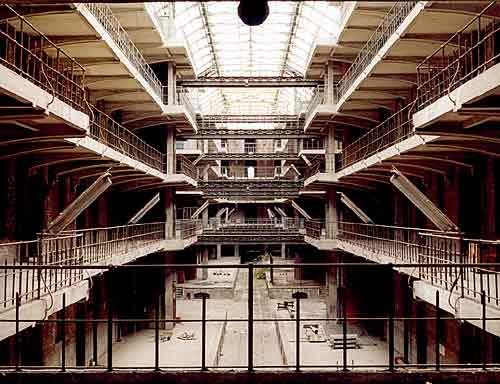
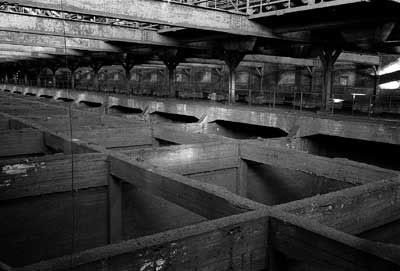
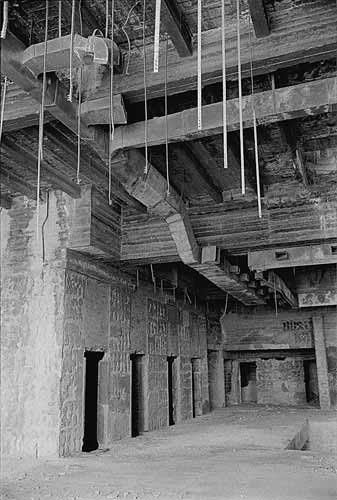
Hive can look radically different from one another. Sibellus, for example, is composed almost entirely of stone, a far cry from the metal domes of necromunda. That said, there are a few examples in the real world of what the interior of a hive city might look like.

hive_example1.jpg

hive_example2.jpg

I can't remember where these are from, unfortunately, but they convey the mind boggling scale of structures that might exist within a hive. I've seen other examples as well, but I lack pictures and the names of such places escape me.

Wow! Where such buildings on Earth are?

Very groovy images! Reminds me of Jeremy Bentham's Panopticon, a theoretical/philosphical concept for a prison: a tower within a vast drum, with thousands of cells on the inside of the drum, so warders in the tower could watch them every minute of every day and control every aspect of their lives.

Very 40k pictures, Snidesworth!

Just read through the post, and I keep seeing refrence to Thermite Mounds. Are these supposed to be Termite Mounds? Though the idea of mounds made of high explosives is cool, it doesn't sound like a good contruction process.

BlacKat

blackat said:

Just read through the post, and I keep seeing refrence to Thermite Mounds. Are these supposed to be Termite Mounds? Though the idea of mounds made of high explosives is cool, it doesn't sound like a good contruction process.

BlacKat

Yeah, sorry. I was reading about thermite at the same time I was writing, and the word sort of caught on.

Multitasking at its worst. preocupado.gif

@BlacKat, you obviously know little of proper Imperial construction techniques. Why, it's heresy for a hive not to be formed from enough highly volatile explosive materials that the entire world would be burnt to a cinder if someone lit a match. Granted countless trillions are lost in massive planet breaking "hivesplosions" every day, but that's the price humanity must pay to live in highly explosive thermite mounds. Now that's grimdark! ;-p

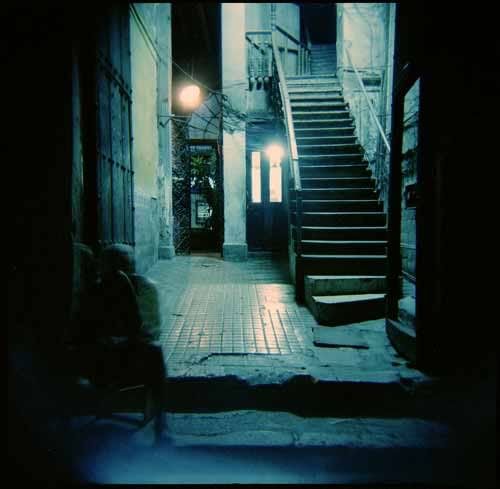
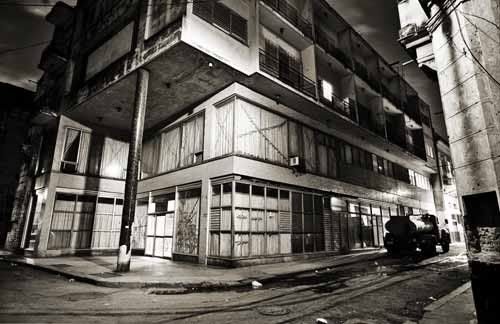
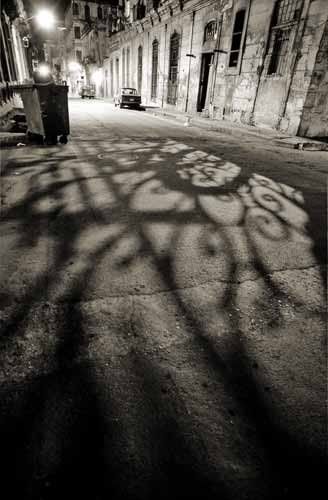
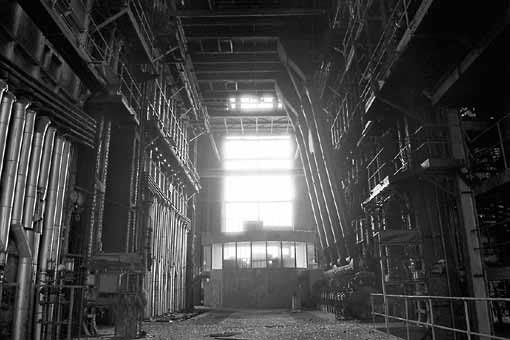
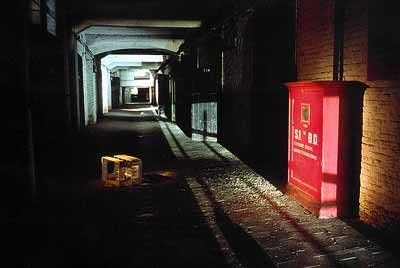
Here's a few pictures (not as impressive as Snidsworth's!) I look at for inspiration before running a story set in a hive. Just imagine every conceivable space packed full of people, make the structures and space twice as large, and put spikes and spires on everything, and you have a generic hive interior ;-)

wolf2.jpg

kowloon3.jpg

havana-holga32.jpg

Just imagine beams, lights, and darkness streatching accross the patches of sky in this pic connecting one building with the next.

havana-night01.jpg

hall2.jpg

havana-night02.jpg

tr-zolder01.jpg

b0017.jpg

fl-halweb.jpg

cellar-3.jpg

angel_anscester-1.jpg

Each Hive is totally different, as the above have stated. The pictures in themselves are superb :D

My campaign insofar has featured 2 hives and a city on a forge world, I'll go through what I described each as:

Scintillia for Edge of Darkness:

The players arrived in a vast, cyclindrical chamber, with windows running up the walls, suspended walkways criss crossed the chamber above ground level, there was no sky, but instead, a vast globe hung by wires supplied the light, in this area of the hives, to be at the bottom (amongst the shops, bars, brothels etc etc) was the best, since being up high meant constant exposure to the light globes. The players went down a crack, 3 metres wide, where 2 of the shops had had structual differences. This path lead to the Maglev station, which took them to the underhive.

The Underhive I imagined as Moria frmo the Fellowship of the rings. Vast pillars holding the hive up, some collasped, and structures clinging tp the pillars themselves, connected again, with suspended walkways. Some had collapsed utterly, allowing the Middlehive to spill through, along with the precious light from the glow globes. The players were headed to the base of the pillars, where the suspect was last seen alive, industrial waste dripped frmo the ceiling , pipes burst and the settlement was plunged into darkness randomly due to failing lights.

Hesh (Forge world landing city)

The players visited here to for a place to land their shuttle and dig up some clues. The landing pad area itself stretched for a kilometre square, with pads dotted on it in a grid pattern. A vast slope lead down into the settlement itself, which I described as a warren. Like a god had reached down and scooped paths out of the rockrete with it's hands. Certain areas of path dipped down, into the undercity where off duty menials could relax and drink. It was a claustrophobic area, with light stripes lining the ceiling, leading to bars with crackling neon signs advertising drinks.

The area above was a lot more...classier. There was no litter, guns were illegal, everyone dressed identically but there was no..life. Everyone was indoors by seven o'clock, people formed lines headed to certain destinations. At cross sections, there were traffic lights to stop human traffic while vehicular means were limited to taking passages across the rooftops.

Larunder (To visit the Adeptus Arbites fortress).

Since my players were limited to pretty much a single buildinghere (The Arbites fortress) I'll describe the interior and exterior of there instead.

The players burst through the Cloud layer of the building, towards the Adeptus Plaza. It was seperated from the rest of the hive by a collosal statue, easily a mile high, it showed a space marine, unarmoured on one knee, braced, holding the plaza on his shoulders. Lift shafts hung from the edge, connecting it to the lower hive. The Plaza consisted of 4 buildings, each massive, built in the Style of the Greek Pantheon (that is, pillars. Lots of 'em). With statues standing between the pillars, looking over the masses beneath.

Hope it was useful, it might not be all entirley true to fluff, but 40K is run by the rule of cool and well.....a mile high statue :P

Thanks, people! That really sparks the imagination :)

Graver, those pictures are FANTASTIC! Hugely inspirational for 40k. Got any more?

All those pictures of hallways and corridors has given me an idea....

Barnacles from Half Life :D

There's a film called Damnatus that takes place within a hive and is generally worth watching despite being a (quite good) fan-grade production. I'd tell you where to find it, but I'm not sure if linking material that Games Workshop tried to ban is permitted. Anyway, if you do track it down it should give you ideas about in-hive environments.

Snidesworth said:

There's a film called Damnatus that takes place within a hive and is generally worth watching despite being a (quite good) fan-grade production. I'd tell you where to find it, but I'm not sure if linking material that Games Workshop tried to ban is permitted. Anyway, if you do track it down it should give you ideas about in-hive environments.

Thanks! I've already got this from the Immaterium :)

One of the best questions ever, this one :)

I had huge visualization problems running Edge of Darkness in the Coscarla District in Sibellus. Supposed to have a steel ceiling, but wind and rain did have their effects down there. I kind of want some patches of sky visible, in between dark and derelict towering structures, and canyons broad enough to accomodate guncutter craft, and a maze of transit railworks that crisscross the sky overhead. So I have never felt comfortable with the idea of hive life always taken place indoors.

Ofcourse, there would also be giant underground highways stretching for miles (the arteria), hab blocks gazing out at stone ceilings and covered streets with stale, dead air.

The Laughing God said:

I had huge visualization problems running Edge of Darkness in the Coscarla District in Sibellus. Supposed to have a steel ceiling, but wind and rain did have their effects down there

That would probably be because a hive is such a gigantic structure that several areas form their own form of biosphere, where weather effects (or what seem like weather effects) can occur indoors. Rain comes from massive amounts of condensation fluids falling from the high ceiling, winds can be felt even though their source are from huge unnatural air filtration fans etc. etc.

Just another aspect to theses rather impressive structures. gran_risa.gif

I'd never thought about the internal bios[heres as such :/

It's a brilliant idea, like each section is it's own minature greenhouse :D

This is something I've been struggling with too. I'll admit that I don't have a engineering degree, but the whole concept doesn't make any sense to me, how this would work, and how you build massive skyscrapper on top of rubble, how the different layers work etc etc. It's a very cool concept for the setting, but when I start to try to picture it I hit a brick wall, it just doesn't make any sense. What's really lacking in canon from GW is how the ordinary person lives and how his environment looks like and works, in my opinion, though it might be biased.

Hopefully, you people can enlighten me somewhat, these forums have been great for answers in the past.

The pictures and descriptions posted do help a lot with pictures individual areas within the cities.

I determined a structure and some details for Sibellus as a primarily stone hive. I'm not sure that this is actually supported by anything that has been published; the original descriptions of Sibellus hint strongly at stone, but don't say for sure. Anyway, my Sibellus notes are here:

http://forum.rpg.net/printthread.php?t=410651&pp=200

Reason said:

I determined a structure and some details for Sibellus as a primarily stone hive. I'm not sure that this is actually supported by anything that has been published; the original descriptions of Sibellus hint strongly at stone, but don't say for sure. Anyway, my Sibellus notes are here:

http://forum.rpg.net/printthread.php?t=410651&pp=200

I highly recommend people read this. One the games I run has been entirely contained within Hive Sibellus and I've thoroughly plundered that thread for ideas.

As for the structure of the hive, I was under the impression that the "standard" Imperial Hive wasn't so much a planned structure but a case of "upwards, and **** whatever lies below!" The nobility and Adeptus Terra, both in possession of vast wealth and influence, constantly built atop what came before. The spires of old become the mid-hive of today and are converted for mass-use by the populace. This is certainly the case in Sibellus, where spaces are cleared and new habs dug into the massive rock structures. Coscarla strikes me as a noble-estate that was repurposed for mass habitation, with pre-fabricated hive blocks being constructed where there were once gardens and other open spaces. Eventually, though, all this weight takes its toll and the lower levels begin to collapse, falling into ruin, being crushed and forgotten. The Administratum realises it'd be more trouble than it's worth to support life in such an area and pulls the plug. Thus the underhive grows, a vast wilderness of steel or stone depending on what materials were used in its construction.

Grand Vizier said:

This is something I've been struggling with too. I'll admit that I don't have a engineering degree, but the whole concept doesn't make any sense to me, how this would work, and how you build massive skyscrapper on top of rubble, how the different layers work etc etc. It's a very cool concept for the setting, but when I start to try to picture it I hit a brick wall, it just doesn't make any sense. What's really lacking in canon from GW is how the ordinary person lives and how his environment looks like and works, in my opinion, though it might be biased.

Hopefully, you people can enlighten me somewhat, these forums have been great for answers in the past.

The pictures and descriptions posted do help a lot with pictures individual areas within the cities.

Found some info:

"Pylon" Spires

Spires are an almost impossible feat of accidental architecture. The need to build higher as lower sections collapse, or slag heaps grow higher around or gas gets thicker the base, necessitates building upon ruins and buildings. Spires are supported by vast colums made of the strongest materials that hold levels up. Sometimes anti-gravity technology is used, but only in the richer upper Hive. If one were to stand at the ground level of a Spire and look up, one would see building upon building, criss-crossed with bridges, support colums and pylons, cables and arches, railings and scaffolds, walls and anti-gravity platforms. One would not be able to see the top, only the "floor" of the next level which is really a web of supported roads and streets, hanging in the air from cables and arches. Theoretically, one could fall from the top of a Spire like this, all the way to the ground floor - so long as one fell through all of the right gaps. Though this is a rather fragile way of building Spires, it is the cheapest and allows for constant rebuilding and maintainance, resulting is smaller "side-Spires" and refitting of an outer-shell.

"Honey-comb" Spires

Sometimes levels do have floors and ceilings, Old buildings and streets are filled in with plas-crete to provide solid foundations and a floor paved atop the roofs. This method is repeated hundreds of years later. This creates a sealed honey-comb effect, where level upon level rise above each other, largely self-cotained. However, the plas-crete does not fill all of the gaps and Hivers still live in these older, abandoned levels. Often there are routes between the individual honey-comb levels, so they are not truely sealed. This routes may be owned by gangs, undiscovered or just very dangerous, unstable or inhabited by spiders, rats or mutants. This sandwiching creates solid foundations and can be used to seal off contaminated or irradiated levels.

Found it here: http://www.confrontation.8k.com/hive.html

Seems to be some kind of fan project about making an RPG out of the Necromunda game so it has a lot of info concerning Necromunda and hive's in general. Hope the text give you some answers...