How hard are two agressors going to be to kill

By Hrathen, in X-Wing

Let's compare them to two Decimators (I love double decimation, that's right I will reduce your total population by 20%)

16 hits each, so a total of 32 total hit to take them both out. Let's assume that on average when they get shot at they the shooter has a focus or a TL but not both. That means 75% of rolls will result in a hit.

32 / .75 = about 42 rolls

On average it will take a total of 42 attack dice rolled at my decimators, that may seem like a lot, but it is 21, 2 attack dice attacks, of 14 three attack dice attacks.

It is a little more complicated with the Aggressors 3 AGILITY.

On average 2 a two attack dice attack will do about 3/8 of a point of damage if the attacker has a focus or TL and the defender has nothing.

Two Aggressors have about 16 Hits all together.

16 divided by 3/8 = 43 attacks. - Compare that to the 21 attack rolls required to kill the Decimators.

Things aren't quite so bad with three attack dice, but consider

3 attack dice with a TL of Focus vs 3 agility is about 1.125 points of damage per attack (1 1/8)

16 divided by 1.125 is a little more than 14 attacks to kill the Aggressors. The Aggressor comes pretty close.

[Note to MathWingers - My calculations are estimations. They were intended for comparison purposes and as such are good enough for me. Juggler- if you want to give the exact numbers I would be thrilled to see them, but don't really care to calculate them myself.]

So what did we learn - TIE Swarms will not be that good at killing Aggressors, their 3 agility will be just to high against the 2 attack of the TIEs.

Note to MathWingers - My calculations are estimations. They were intended for comparison purposes and as such are good enough for me. Juggler- if you want to give the exact numbers I would be thrilled to see them, but don't really care to calculate them myself.

The numbers have been buried in the details post under "Calculating Expected Durability" of my MathWing thread for a while now.

Durability, defined as shots required to kill a ship (and then applying a small weighting to crits that aren't double damage), normalized to a TIE Fighter, copied directly from that thread:

Calculating Expected Durability

Durability was previously being calculated based on the ship's overall hit points, divided by its average damage intake. This was a good first-order approximation, but I am now using a more accurate method. Durability is now being based on the actual number of shots required to kill a given statline.

The net effect is that high hit point ships see an overall decrease to their durability compared to calculating it only based on average damage numbers. This is because the final "kill shot" never reflects the average damage number, since a ship with 1 hit point doesn't care if it takes 1 damage or 5. Lower hit point ships have more kill shots relative to their health, giving them an effective boost to overall durability. For example, a TIE Defender is slightly less durable than a pair of TIE Fighters, even though the Defender's has 3 shields + 3 hull vs 6 hull on the TIE Fighters.

The probability density function for the likelihood of exactly N number of shots killing the target is computed, so you get the entire curve, and then take the mean. Critical hits that do double damage are explicitly considered in the number of shots required to kill a target. Critical hits that do not do extra damage are weighted as one-third of a hit, resulting in the following two different critical hit weightings:

weighting #1: 2x damage only: 1 + 7/33 + (3/8)*2/33

weighting #2: All critical hits: 1 + 7/33 + (3/8)*2/33 + (1/3)*(33-7-2)/33

The average damage intake using each weighting is then calculated, and the ship's net durability is calculated as:

(mean rounds to destroy) * (avg damage intake w/ weighting #2) / (avg damage intake w/ weighting #1)

All results are then normalized to a x/3/3/0 statline (standard TIE Fighter).

The following action economy and meta assumptions were used:

  • The attacker has no action 1/3 of the time, and focus 2/3 of the time.
  • The defender has focus 1/2 the time.
  • The range bins probabilities are [30% 45% 20% 5%] for [R1 R2 R3 R3+obstacle].
  • The attacker base attack dice is meta dependent, see below.

The number of attack dice was evaluated in three different "meta" environments:

[{2 attack dice} {3 attack dice} {4 attack dice} {Heavy Laser Cannon}]:

  • low attack meta: [45% 45% 5% 5%]
  • "standard" attack meta: [35% 45% 10% 10%]
  • high attack meta: [30% 40% 15% 15%]

These numbers are based on the current wave 4 meta and extrapolating into the anticipated wave 5 meta. The Heavy Laser Cannon shot will exclude all range effects except for range 3 through an obstacle, which still adds one die. It is assumed that the HLC will still have an alternative shot while in the range 1 bin.

----------------------------------------------------------------------------------
Ship Durability
----------------------------------------------------------------------------------
| normalized durability | normalized std dev |
| vs attack meta | vs attack meta |
ship | low | std | high | low | std | high |
IG-2000 | 2.506 | 2.482 | 2.464 | 0.384 | 0.382 | 0.381 |
YT-2400 (Hi D) | 2.408 | 2.411 | 2.412 | 0.323 | 0.322 | 0.32 |
YT-2400 | 2.257 | 2.271 | 2.279 | 0.319 | 0.317 | 0.315 |
Firespray | 2.232 | 2.248 | 2.258 | 0.32 | 0.318 | 0.316 |
Named YT-1300 | 2.141 | 2.192 | 2.226 | 0.252 | 0.251 | 0.25 |
VT-49 | 2.006 | 2.085 | 2.139 | 0.197 | 0.197 | 0.197 |
TIE Defender | 1.925 | 1.91 | 1.898 | 0.437 | 0.435 | 0.433 |
ACD TIE Phantom | 1.855 | 1.817 | 1.791 | 0.553 | 0.552 | 0.55 |
Lambda Shuttle | 1.693 | 1.734 | 1.761 | 0.283 | 0.282 | 0.281 |
TIE Advanced (Hi D)| 1.796 | 1.772 | 1.754 | 0.482 | 0.479 | 0.477 |
ORS YT-1300 | 1.677 | 1.718 | 1.746 | 0.284 | 0.283 | 0.281 |
E-wing | 1.652 | 1.639 | 1.629 | 0.472 | 0.47 | 0.467 |
TIE Advanced | 1.617 | 1.607 | 1.6 | 0.475 | 0.472 | 0.469 |
StarViper | 1.581 | 1.573 | 1.568 | 0.478 | 0.475 | 0.471 |
B-wing | 1.395 | 1.429 | 1.452 | 0.311 | 0.31 | 0.309 |
Y-wing | 1.362 | 1.397 | 1.422 | 0.314 | 0.313 | 0.311 |
TIE Bomber | 1.34 | 1.357 | 1.369 | 0.407 | 0.403 | 0.401 |
A-wing | 1.343 | 1.336 | 1.33 | 0.522 | 0.519 | 0.516 |
X-wing | 1.188 | 1.202 | 1.21 | 0.435 | 0.431 | 0.428 |
HWK-290 | 1.164 | 1.178 | 1.189 | 0.438 | 0.434 | 0.43 |
Scyk | 1.033 | 1.031 | 1.028 | 0.593 | 0.589 | 0.585 |
TIE Fighter | 1 | 1 | 1 | 0.595 | 0.59 | 0.586 |
Z-95 | 0.988 | 1 | 1.008 | 0.478 | 0.475 | 0.472 |

Comments:

  • Ships with the "(Hi D)" flag are assumed to have a better defensive action economy, which is simulated by increasing the chance for defensive focus from 50% to 67%.
  • The normalized standard deviation is calculated as: (the standard deviation of probability density function of the shots required to kill the ship), divided by (the mean of the shots required to kill the ship).

For the meta assumptions you'll have to see the post.

Note to MathWingers - My calculations are estimations. They were intended for comparison purposes and as such are good enough for me. Juggler- if you want to give the exact numbers I would be thrilled to see them, but don't really care to calculate them myself.

The numbers have been buried in the details post under "Calculating Expected Durability" of my MathWing thread for a while now.

Durability, defined as shots required to kill a ship (and then applying a small weighting to crits that aren't double damage), normalized to a TIE Fighter, copied directly from that thread:

Calculating Expected Durability

Durability was previously being calculated based on the ship's overall hit points, divided by its average damage intake. This was a good first-order approximation, but I am now using a more accurate method. Durability is now being based on the actual number of shots required to kill a given statline.

The net effect is that high hit point ships see an overall decrease to their durability compared to calculating it only based on average damage numbers. This is because the final "kill shot" never reflects the average damage number, since a ship with 1 hit point doesn't care if it takes 1 damage or 5. Lower hit point ships have more kill shots relative to their health, giving them an effective boost to overall durability. For example, a TIE Defender is slightly less durable than a pair of TIE Fighters, even though the Defender's has 3 shields + 3 hull vs 6 hull on the TIE Fighters.

The probability density function for the likelihood of exactly N number of shots killing the target is computed, so you get the entire curve, and then take the mean. Critical hits that do double damage are explicitly considered in the number of shots required to kill a target. Critical hits that do not do extra damage are weighted as one-third of a hit, resulting in the following two different critical hit weightings:

weighting #1: 2x damage only: 1 + 7/33 + (3/8)*2/33

weighting #2: All critical hits: 1 + 7/33 + (3/8)*2/33 + (1/3)*(33-7-2)/33

The average damage intake using each weighting is then calculated, and the ship's net durability is calculated as:

(mean rounds to destroy) * (avg damage intake w/ weighting #2) / (avg damage intake w/ weighting #1)

All results are then normalized to a x/3/3/0 statline (standard TIE Fighter).

The following action economy and meta assumptions were used:

  • The attacker has no action 1/3 of the time, and focus 2/3 of the time.
  • The defender has focus 1/2 the time.
  • The range bins probabilities are [30% 45% 20% 5%] for [R1 R2 R3 R3+obstacle].
  • The attacker base attack dice is meta dependent, see below.

The number of attack dice was evaluated in three different "meta" environments:

[{2 attack dice} {3 attack dice} {4 attack dice} {Heavy Laser Cannon}]:

  • low attack meta: [45% 45% 5% 5%]
  • "standard" attack meta: [35% 45% 10% 10%]
  • high attack meta: [30% 40% 15% 15%]

These numbers are based on the current wave 4 meta and extrapolating into the anticipated wave 5 meta. The Heavy Laser Cannon shot will exclude all range effects except for range 3 through an obstacle, which still adds one die. It is assumed that the HLC will still have an alternative shot while in the range 1 bin.

----------------------------------------------------------------------------------
Ship Durability
----------------------------------------------------------------------------------
| normalized durability | normalized std dev |
| vs attack meta | vs attack meta |
ship | low | std | high | low | std | high |
IG-2000 | 2.506 | 2.482 | 2.464 | 0.384 | 0.382 | 0.381 |
YT-2400 (Hi D) | 2.408 | 2.411 | 2.412 | 0.323 | 0.322 | 0.32 |
YT-2400 | 2.257 | 2.271 | 2.279 | 0.319 | 0.317 | 0.315 |
Firespray | 2.232 | 2.248 | 2.258 | 0.32 | 0.318 | 0.316 |
Named YT-1300 | 2.141 | 2.192 | 2.226 | 0.252 | 0.251 | 0.25 |
VT-49 | 2.006 | 2.085 | 2.139 | 0.197 | 0.197 | 0.197 |
TIE Defender | 1.925 | 1.91 | 1.898 | 0.437 | 0.435 | 0.433 |
ACD TIE Phantom | 1.855 | 1.817 | 1.791 | 0.553 | 0.552 | 0.55 |
Lambda Shuttle | 1.693 | 1.734 | 1.761 | 0.283 | 0.282 | 0.281 |
TIE Advanced (Hi D)| 1.796 | 1.772 | 1.754 | 0.482 | 0.479 | 0.477 |
ORS YT-1300 | 1.677 | 1.718 | 1.746 | 0.284 | 0.283 | 0.281 |
E-wing | 1.652 | 1.639 | 1.629 | 0.472 | 0.47 | 0.467 |
TIE Advanced | 1.617 | 1.607 | 1.6 | 0.475 | 0.472 | 0.469 |
StarViper | 1.581 | 1.573 | 1.568 | 0.478 | 0.475 | 0.471 |
B-wing | 1.395 | 1.429 | 1.452 | 0.311 | 0.31 | 0.309 |
Y-wing | 1.362 | 1.397 | 1.422 | 0.314 | 0.313 | 0.311 |
TIE Bomber | 1.34 | 1.357 | 1.369 | 0.407 | 0.403 | 0.401 |
A-wing | 1.343 | 1.336 | 1.33 | 0.522 | 0.519 | 0.516 |
X-wing | 1.188 | 1.202 | 1.21 | 0.435 | 0.431 | 0.428 |
HWK-290 | 1.164 | 1.178 | 1.189 | 0.438 | 0.434 | 0.43 |
Scyk | 1.033 | 1.031 | 1.028 | 0.593 | 0.589 | 0.585 |
TIE Fighter | 1 | 1 | 1 | 0.595 | 0.59 | 0.586 |
Z-95 | 0.988 | 1 | 1.008 | 0.478 | 0.475 | 0.472 |

Comments:

  • Ships with the "(Hi D)" flag are assumed to have a better defensive action economy, which is simulated by increasing the chance for defensive focus from 50% to 67%.
  • The normalized standard deviation is calculated as: (the standard deviation of probability density function of the shots required to kill the ship), divided by (the mean of the shots required to kill the ship).

For the meta assumptions you'll have to see the post.

See that is why I did estimations

From what my math-incompatible brain has gathered, the answer is "hardest"

Let's compare them to two Decimators (I love double decimation, that's right I will reduce your total population by 20%)

19% surely?

Let's compare them to two Decimators (I love double decimation, that's right I will reduce your total population by 20%)

19% surely?

Depends on whether you Decimate then Decimate, or Decimate twice simultaneously.

Auto damage is good. Vader, ramming decimator, bombs, feedback array, autoblaster, fletchette torpedoes for stress....

It would depend on how well they were piloted ;)

Ask Boba Fett....He did it.... :3

Ask Boba Fett....He did it.... :3

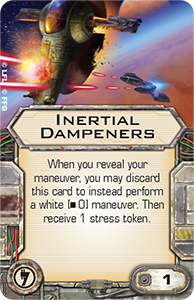
Inertial Dampers for the win! (not Dampeners, silly card)

From what my math-incompatible brain has gathered, the answer is "hardest"

Yes. It is on the top of the list. It is more obvious with pretty pictures.

C-3PO or other upgrades not included.

Once you start adding passive upgrades and abilities, these things become unbelievable monsters. Lone wolf and auto thrusters will make these guys tough nuts to crack.

Inertial-dampeners.png

If someone uses this card to destroy not just 1, but 2 Aggressor's with the aftermath of using the card, in a firespray, I will declare them to be the real Boba Fett.

looking at 2 builds with Serissu:

IG88A and C with VI, Auto Thrusters, and Inertial Dampeners

OR

Same pilots with Stealth Devices and Inertial Dampeners

Want to test out both of them to see which is generally the more durable.